
Why Only Big People? Tayebwa Orders Physical Verification of Tax Waiver Applicants to End Corruption Suspicions
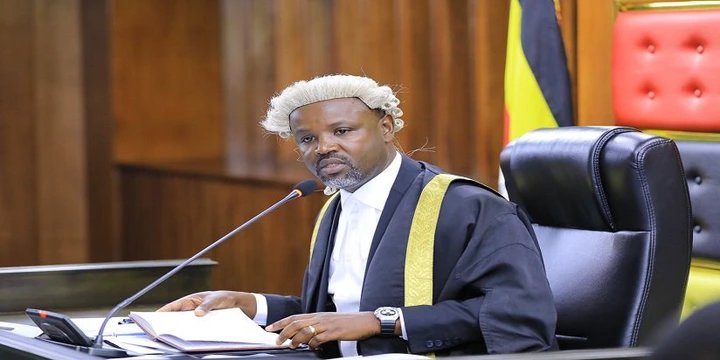

Deputy Speaker, Thomas Tayebwa
Thomas Tayebwa, the Deputy Speaker of Uganda’s Parliament
The Deputy Speaker, Thomas Tayebwa has asked Parliament’s Finance Committee to tighten its noose on the scrutiny of proposal brought by Government to extend tax waivers to private individuals by paying physical visits to these companies.
This is aimed at ruling out suspicions of corruption, unfairness that have riddled the awarding of tax waivers in Uganda.
He issued the directive during the 18th August 2026 plenary sitting, following the presentation of the statement on the criteria and procedure for accessing the tax waivers, by Henry Musasizi, Minister of Finance.
Tayebwa noted, “I think it is an issue of trust and fairness, people believing that for you to get a tax waiver, you have to be connected. Because when we go back, we receive people asking, how can a taxpayer from Mitooma get on this list, because when you look at the people who are benefiting, Kampala, so the big guys who are around and yet we have very small people who are even struggling most.”
The Deputy Speaker added, “But maybe this time I think we should instruct the committee on finance that since the Minister has given very clear parameters, before bringing us a report, go visit these businesses, establish, you will find some of them are doing extremely well. There are some who are genuinely struggling, but you will find some who are doing well. So Honourable Minister, I request that you look into that issue deeply, the trust of people believing that there is a fair process which can be accessed by anyone, small or big and they can have a chance, not only the big, connected people who have access to URA, to the Minister, to the President, that can benefit.”
In his statement the Minister of Finance defended Government’s decision to award tax waivers to private businesses arguing that during implementation of tax administration processes, some taxpayers face challenges that inhibit them from paying their respective tax liability and in most cases, for a number of years, the tax liability remains on the taxpayer’s ledger, raising audit queries.
Musasizi noted, “The objective of tax administration is to secure the greatest practicable net revenue while administering the law fairly, consistently and efficiently. By establishing objective criteria, transparent procedures and clear institutional responsibilities, this policy seeks to ensure that remission is exercised only in those exceptional cases where continued recovery no longer serves the interests of sound tax administration or the public interest. In doing so, it preserves confidence in the integrity of Uganda’s tax system.”
The Leader of Opposition, Joel Ssenyonyi however pointed out that the criteria used to grant tax waivers is full of ambiguity as there is no clear definition of hardships and asked the Ministry of Finance to start conducting assessment of the impact of tax waivers on the economy.
Ssenyonyi noted, “There is a lot of ambiguity when you mention reasons like hardship, illness, inability and yet they should not be, especially for the public, which is seeking to benefit, so that they get to know this is what hardship means. I don’t know why the Ministry does not do post-waiver evaluation, so that it informs decisions on future requests. So, you need to establish these waivers that we allowed, what was the impact on the economy, did they do what we intended?”
He added, “Government says this company, if it closes down, we are going to lose all these jobs and so on, do you actually go and do a post-waiver analysis to establish, did we actually save these jobs? Or did we enrich a particular individual? It’s important that that gets to happen.”
The same sentiments were re-echoed by Karim Masaba (Mbale Industrial Division) who noted that the criteria was being abused due to the failure to clearly define some of the terms used.
He noted, “We have seen cases where they are bringing these waivers, for example on rental tax, someone has been sick for a while and the Minister states that this person is under difficult conditions but the person owns properties in Kampala and those properties are still earning income from them. So why would they bring such a waiver? These cases, in my view, some of them are not justifiable.”
Jinja South East’s Paul Mwiru sought clarification on what criteria is used to feature on the list of the tax waivers granted by the President noting, “This statement falls short of talking about the blue paper where the Ministry of Finance pays taxes for selected business people, so we want to know what is the criteria for Ministry of Finance paying taxes for selected people, but you aren’t speaking to those blue papers, maybe also, your statement would show us, how many people have benefitted from the blue paper and how actually they were arrived to?”
Samuel Kungu (Kigulu North) admitted to having worked with Uganda Revenue Authority for 12 years revealing that during that time, he noticed that the tax waivers section is highly abused because it is not really definite.
“As you have seen, the definitions the Minister used here, the definition of hardship and so on, are not defined in the Act. The indicators he gave us here are not here. We want the Act to be specific. Let there be a practise note so that we know what is hardship, we don’t want a situation where someone says, this is hardship, this is not hardship Because the section says, if the Commissioner is of the opinion, this is opinion. We don’t want subjectivity in these words,” said Kungu.
Patrick Katabazi (Rukiga County) argued that the statement from the Ministry of Finance only talks of hardships but the statement falls short of expanding the definition of hardships in order to protect the system from potential abuse.
“There could be those individuals who might transfer assets, who might decide to move assets out of this country. And the person is creating artificial hardships. So, we need this to be expanded, to include those protections, so that we give waivers to those who deserve them. There’s also an issue of government hardship at the administrative level that the Minister talked about. There could be those hardships that are occasioned by government delay, for example to pay a supplier. You have supplied, you have indicated this as income earned, and the URA has registered it, and then it starts attracting penalties and penalties and government takes 10 years to pay, those are some of the hardships that we might talk about,” remarked Katabazi.
In response to MPs concerns, Minister Musasizi noted that MPs are right to be suspicious, because when there is suspicion, the remedy for suspicion is controls.
“If you are managing an entity, in order to prevent me from doing what I am not supposed to do, you put controls in place. What controls have we put in place to ensure that this aspect of suspicion protection from abuse is dealt with? At every stage, this criterion I have defined should be checked, that is the importance of internal control mechanisms. And where you find a loophole, you flag it, you say, no, here, this one should not qualify because of the following reasons,” explained Musasizi.
The Minister also defended President’s decision to extend tax waivers to private companies arguing that the President is the chief executive of this country and he listens to the concerns of the people of Uganda, adding that when the President sends a blue letter, the last paragraph mainly is asking me to ascertain whether the law, whether what he wishes to provide fits within the law.
The Ministry of Finance detailed the procedure followed for anyone to be granted a tax waiver, noting that the process begins when the taxpayer makes an application to the Commissioner General requesting for a tax waiver in line with the law, which application includes, the taxpayer’s tax liability (includes principal tax, interest and penalty), the grounds for waiver and amount sought to be remitted, and provides relevant financial, insolvency, asset or other evidence to support the tax waiver.
Following the first stake, the Commissioner General then evaluates the application and independently determines whether the liability cannot be effectively recovered in line with Section 43 of the Tax Procedures Code Act and when satisfied, the Commissioner General refers the matter to the Minister responsible for Finance with the evidence, amount proposed for remission, reasons, fiscal implications and consideration of alternatives.
Upon receipt of the letter recommending a tax waiver from Commissioner General, the Minister responsible for Finance reviews the case and may request further information if necessary. All the relevant information is analysed in line with law, if satisfied, submit the proposal for a remission to Parliament seeking approval; and later, Parliament then debates the merits and demerits for granting the remission and determines whether the whole or part of the tax liability should be remitted or not.
Government also provided a breakdown of the criteria used to determine eligibility of a tax waiver in which case for an individual, URA considers whether payment would deprive the taxpayer or the taxpayer’s dependants of reasonable accommodation, clothing, medical care, essential living requirements. access to education or food.
“The relevant circumstances may include; serious illness or disability; permanent incapacity; loss of employment or livelihood; exceptional medical expenses; death of the principal income earner natural disasters or other catastrophic events; and any other circumstance resulting in genuine financial distress,” said Musasizi.
The Minister also added that for a business, URA considers; current liquidity and cash flow; realistic access to finance; working capital requirements; existing financial obligations; the viability of the enterprise; the likely effect of recovery on employment, production and future tax compliance; and whether enforcement would unnecessarily affect an otherwise viable business.
“Hardship does not include temporary cash-flow constraints, reduced profitability, commercial inconvenience, a preference to use available funds for expansion or investment, dissatisfaction with the assessment, or a mere unwillingness to pay. During the analysis, URA also considers the extent to which the taxpayer contributed to the creation or escalation of the tax liability. The determination considers whether there was fraud, deliberate tax evasion, concealment of assets, and reckless disregard of tax obligations or serious corporate governance failures,” said Musasizi.
According to the Ministry of Finance, the other criteria followed is the impossibility of Recovery where the decision to grant the tax waiver is based on URA establishing that there is no realistic legal or practical means by which the liability can be recovered, either presently or within the foreseeable future.
Parliament was also informed that tax waivers can be granted in circumstances where URA establishes the complexity and duration of the proposed enforcement and under this, Government considers the location, ownership and value of available assets; Legal or evidential obstacles; The likely amount ultimately recoverable; The taxpayer’s ability to comply under a structured arrangement; The effect of enforcement on a viable business, employment or essential services; and; Whether Government action or administrative failure contributed materially to the accumulation of the liability.


 Government will not gazette Kijanangoma as King of Tooro for now - Attorney General insists
Ultimate Uganda
Government will not gazette Kijanangoma as King of Tooro for now - Attorney General insists
Ultimate Uganda
 King Oyo’s Body to Arrive Thursday
Ultimate Uganda
King Oyo’s Body to Arrive Thursday
Ultimate Uganda
 Besigye, Lukwago expected to meet Gen. Salim Saleh today at Kapeeke
Ultimate Uganda
Besigye, Lukwago expected to meet Gen. Salim Saleh today at Kapeeke
Ultimate Uganda
 Rwabwogo Advised to ‘Eat His Bishop’ As MK Prepares to Enter State H’se: PREZ MUSEVENI ON HIS WAY OUT
Ultimate Uganda
Rwabwogo Advised to ‘Eat His Bishop’ As MK Prepares to Enter State H’se: PREZ MUSEVENI ON HIS WAY OUT
Ultimate Uganda
0 Comments