
HUAWEI HORROR! Migrant workers executing Ugandan projects decry harsh conditions…workers say Huawei seizes Passports, silences complaints
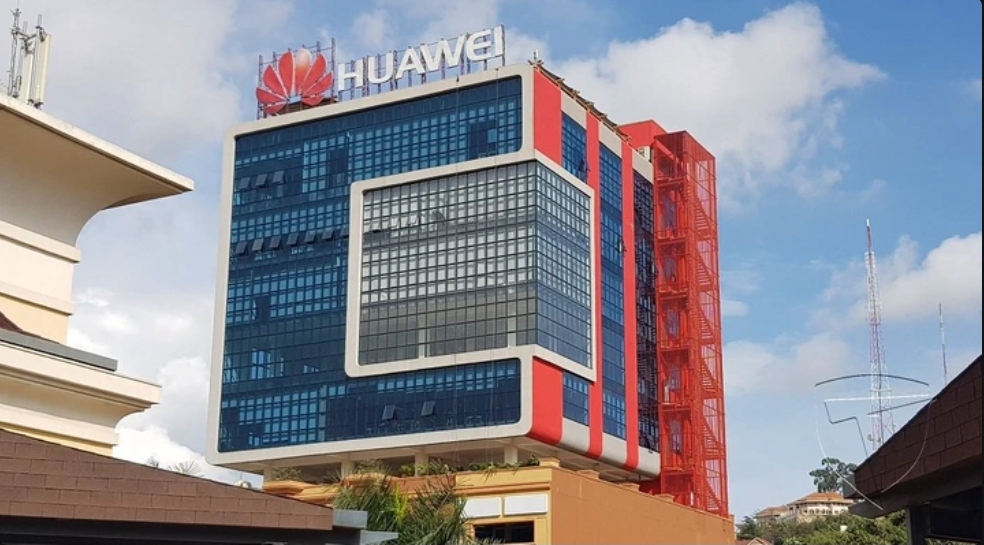

Beneath the glossy billboards bragging about 5G speeds and “Digital Uganda Vision 2040,†a far darker story is unfolding in the dust and heat of Uganda’s network extension sites. While Huawei basks in praise for powering Uganda’s next-generation networks, a growing number of migrant Chinese workers claim they are paying the true price of the tech giant’s expansion.
One such worker, 32-year-old engineer Wang Li from Shenzhen .
He arrived in Uganda 18 months ago on a short-term visa to install Huawei’s 5G infrastructure, part of the company’s push toward “Digital Uganda Vision 2040.â€
He spoke to this publication through encrypted messages from a dormitory outside Kampala — messages Huawei would likely prefer the world never sees.
“We work 14 hours a day in brutal heat,†he wrote. “No days off. No protective equipment. Our passports are held by supervisors. You complain — you’re on the next flight home.â€
His account echoes whispers circulating across fibre-laying camps from Wakiso to Mukono, where teams of expatriate technicians reportedly labour under punishing conditions. Workers allegedly brought in for Huawei’s 5G rollouts, Safe City CCTV expansions, and the new Intelligent Transport Monitoring System say their reality feels less like cutting-edge innovation and more like high-tech hardship.
Wang represents a hidden cadre of thousands of Chinese migrant workers powering Huawei’s operations in Uganda, from the $126 million Safe City CCTV rollout since 2019 to ongoing 5G tower builds and the Intelligent Transport Monitoring System launched in November 2025. Huawei, which dominates 70% of sub-Saharan Africa’s 4G and emerging 5G infrastructure, relies heavily on expatriate labour for these Belt and Road Initiative-funded projects. In neighbouring South Africa, Huawei Technologies South Africa faced a 2022 lawsuit from the Department of Employment and Labour after audits revealed 90% of its workforce consisted of foreign nationals, violating equity quotas that mandate at least 60% local hires. The case, settled out of court, highlighted excessive overtime, withheld wages, and isolation from local protections, issues echoed in Uganda’s regulatory gaps.
The exploitation follows a pattern documented across Chinese firms in Africa. Workers endure “military-style managementâ€: segregated housing, mandatory loyalty training in Mandarin, and bonuses docked for dissent. Many arrive in debt bondage, recruitment fees of $2,000 to $5,000 deducted from initial paychecks, leaving salaries as low as $500 monthly for skilled engineers. In Uganda, where the Ministry of Gender, Labour and Social Development’s oversight is minimal for inbound migrants, these expatriates fall into a void. The 2025 U.S. Trafficking in Persons Report flagged risks of forced labour among Chinese nationals on BRI worksites, including withheld documents and coercive contracts. Unwanted Witness’s June 2025 report noted similar strains at Naguru’s Huawei-linked monitoring hub, where technicians reported 16-hour days syncing drones to facial recognition systems without mandated breaks or health checks.
There are reportedly up to 50,000 Chinese workers in the country, many on various infrastructure projects.
Local officials, including Kiryandongo district administrator James Okumu, have decried social fallout: abandoned Ugandan women left with children fathered by expatriates, driven by poverty and isolation. Huawei’s 2014 internal audit admitted graft in African deals, yet its 2023 Modern Slavery Statement claims full compliance. Critics argue opacity in contracts hides abuses, sidelining Ugandan engineers and worsening 20% youth unemployment.
As January 2026 elections approach, Huawei’s expatriate influx surges for vehicle trackers and 5G expansions amid opposition rallies. Activist Anthony Natif’s July 2025 social media thread accused favoritism in bids, amassing 90,000 views: “They import labour to undercut locals, where are our jobs?†Economist David Sarpong’s 2022 study on Chinese labour regimes in Uganda and Ethiopia warns of persistent casualisation and abuse.
The toll is human. Wang describes colleagues suffering heatstroke, denied leave; one was sent home after a fall, his family saddled with debt. Transparency International Uganda’s Arthur Mugisha calls for BRI audits: “These projects capture elites while migrants and locals pay the price.†International Labour Organization data shows 53 million idle African youth, yet Huawei’s expatriate-heavy model blocks skills transfer.
Huawei maintains: “All staff hold valid visas and adhere to local laws.†But Wang’s words linger: “We’re the invisible fuel for their empire.†Watchdog urges UCC-mandated audits, 30% foreign staffing caps, and labour probes. Without them, Huawei’s Digital Silk Road in Uganda isn’t development, it’s a shadowed chain of exploitation.
For now, the workers remain invisible — to the public, to regulators, and to the giant whose network they are helping to build.
“We’re ghosts,†Wang says. “Ghosts building a future we’ll never be part of.â€
Whether Uganda’s digital revolution is being built on innovation — or exploitation — is a question Huawei may soon have to answer.
It goes without mention that Huawei Uganda had been previously accused of favouring foreigners (Indians, Chinese expatriates) yet Ugandans do donkey work.
Sometime back there were allegations that in Huawei ITO , the departments are two—Front office and back-office. The back office used to be the heart as this is the place where you would find the most talented Ugandans.
Huawei reportedly brought these Chinese and Indians and asked Ugandans to train them. Ugandans were reportedly forced to do this or no pay.
“These Chinese and Indians come posing as experts and yet it’s Ugandans training them. They collect data and leave sometimes. This has nothing to do with expenses as many of the Ugandans are paid less,†said a source.
Whereas Huawei Uganda insists these issues arose in one of old projects in partnership with MTN but they have since been addressed, insiders say such issues still exist.
There are also issues to do with work permits for some Chinese and Indians there, NSSF cooperation and as well harassment of all kinds


 Starlink goes live in Uganda; price comparisons against MTN, Airtel
Ultimate Uganda
Starlink goes live in Uganda; price comparisons against MTN, Airtel
Ultimate Uganda
 NSSF sets September 24 for Annual Members Meeting as savers await interest rate declaration
Ultimate Uganda
NSSF sets September 24 for Annual Members Meeting as savers await interest rate declaration
Ultimate Uganda
 Boda boda riders launch e-commerce, digital loans platform
Ultimate Uganda
Boda boda riders launch e-commerce, digital loans platform
Ultimate Uganda
 Rwanda: We Cannot Sit and Watch As Illicit Alcohol Kills People - Kagame
Ultimate Uganda
Rwanda: We Cannot Sit and Watch As Illicit Alcohol Kills People - Kagame
Ultimate Uganda
0 Comments