
BREAKING: AFC/M23 Rebels Announce Withdrawal from Uvira After U.S. Pressure on Rwanda
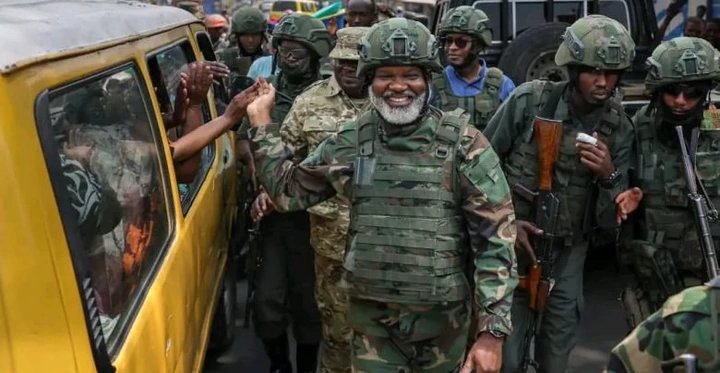

Congo’s M23 rebel group said on Monday it would “unilaterally withdraw†its forces from the strategic eastern city of Uvira, following what it described as a request from United States mediators, in a move analysts say may reflect mounting pressure on Rwanda amid threats of U.S. sanctions.
In a statement issued at 5:00am on December 15, the Alliance Fleuve Congo (AFC), the political wing of M23, said it had decided to pull out of Uvira as a “trust-building measure†to give the Doha peace process the “maximum chance†of success.
The group said the withdrawal was requested by U.S. mediation and called for the city’s “demilitarisation and deployment of a neutral force†to protect civilians and monitor the ceasefire.
The announcement comes days after senior U.S. officials publicly accused Rwanda of directing and sustaining the M23 offensive that led to the capture of Uvira, a key city near the Burundi border, and warned that Washington could take action if Kigali failed to honour commitments made under the U.S.-brokered Washington Accords.
U.S. Secretary of State Marco Rubio said over the weekend that Rwanda’s actions in eastern Congo were a “clear violation†of the Washington peace agreement signed earlier this month and that President Donald Trump would act to ensure promises made to him were kept.
Deputy Secretary of State Christopher Landau separately described the Uvira offensive as a “grave mistake†and warned that U.S. partnership with Rwanda could not continue under such conditions.
The sudden M23 announcement has fuelled speculation that Kigali may have instructed the group to withdraw from Uvira to ease international pressure and avert potential sanctions, including targeted economic measures and restrictions on military cooperation.
M23 claimed past experience showed that Congolese forces and allied militias had exploited previous withdrawals to retake territory and target civilians perceived as sympathetic to the group.
It urged guarantors of the peace process to ensure protection of the population and infrastructure during the pullback.
The group also said it would not allow armed groups hostile to Burundi or the Congolese government to use areas under its control as rear bases for cross-border attacks, a reference to regional concerns raised by Burundi following the fall of Uvira.
Congo accuses Rwanda of backing M23 with troops, weapons and command support, allegations supported by U.N. experts and recently reiterated by the United States, while Kigali denies the claims, saying it is acting in self-defence against hostile militias operating from Congolese territory.
Uvira fell to M23 forces earlier this month after days of heavy fighting, triggering mass displacement and alarm across the Great Lakes region.
Burundi warned at the United Nations that the offensive risked a regional war, while Western powers urged Rwanda to withdraw its forces from eastern Congo.
It was not immediately clear when or how the M23 withdrawal from Uvira would be implemented, or who would take control of the city once the rebels pulled back. Congo’s government has not yet commented on the announcement.
The move comes as international mediators scramble to salvage the Washington and Doha peace frameworks, which were intended to halt decades of conflict in eastern Congo but have come under severe strain following the Uvira offensive.
7,000 Rwandan troops in DRC
About 7,000 Rwandan troops were present in Congo as of early December, with possible increases during the latest advance, according to U.S. representative Mike Waltz.
Waltz last week told the United Nations Security Council that Rwanda and M23 launched a coordinated offensive that culminated in the midnight capture of Uvira, a strategic city in South Kivu near the Burundi border.
He said Rwandan forces were co-located with M23 fighters along the front lines during the assault.
“For years now, the Rwanda Defence Forces have provided materiel, logistics and training support to M23, and have fought alongside them inside the DRC,†Waltz said, estimating 5,000 to 7,000 Rwandan troops were present in Congo as of early December, with possible increases during the latest advance.
He added that Rwanda had deployed surface-to-air missiles and other sophisticated heavy weaponry into North and South Kivu, enabling M23 operations and significantly altering the military balance on the ground.


 DRC opposition urges Tshisekedi to abandon constitutional changes
Ultimate Uganda
DRC opposition urges Tshisekedi to abandon constitutional changes
Ultimate Uganda
 US military transport plane lands in Moscow
Ultimate Uganda
US military transport plane lands in Moscow
Ultimate Uganda
 Putin puppet slaps UK with terrifying 2-word warning over drone factories
Ultimate Uganda
Putin puppet slaps UK with terrifying 2-word warning over drone factories
Ultimate Uganda
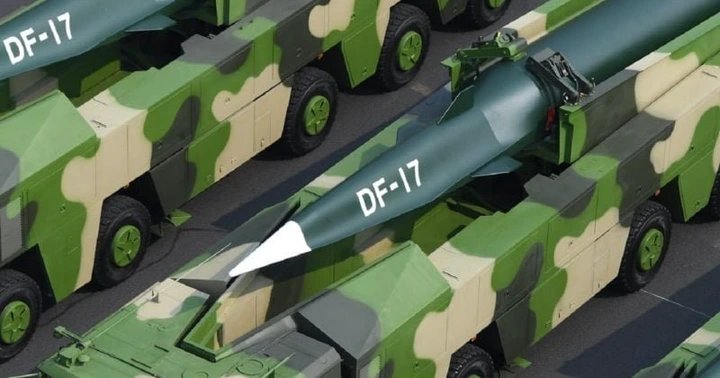 China develops hypersonic weapon to hunt US command aircraft thousands of miles away
Ultimate Uganda
China develops hypersonic weapon to hunt US command aircraft thousands of miles away
Ultimate Uganda
0 Comments