
When climate risk becomes a budget risk
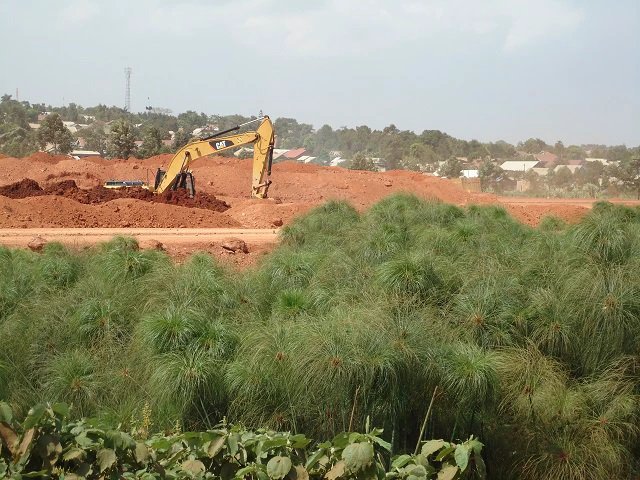

Despite legal buffer requirements of 100 metres from rivers and 200 metres from lakes,wetlands are increasingly encroached upon by settlements, farming, sand mining, and industrial activity, largely because oversight and enforcement remain underfunded.
Here is why climate change is no longer just an environmental but a public finance issue
When harvests fail after prolonged droughts, when floods cut off roads and markets, when heat waves strain health services, and when infrastructure crumbles under extreme weather, the damage is often described as a natural disaster. Increasingly, however, these events are also budget disasters. Roads must be rebuilt, relief supplied, and health systems supportedÂ, all at a cost to the national budget.
Uganda does not lack policies. The National Development Plan IV recognizes climate and environmental risks and calls for resilience and sustainable natural resource management. The National Budget strategies echo commitments to climate adaptation and disaster risk reduction year after year. Yet budget allocations tell a different story: environmental programmes remain among the most under-resourced areas of public spending, widening the gap between climate ambition and budget reality.
Funding gaps lie at the heart of this problem, and they are evident in recent budget trends. In FY 2024/25, the Climate Change, Natural Resources, Environment, and Water Management Programme had an approved allocation of about UGX 473.7 billion. Yet in FY 2025/26, the proposed allocation declined to UGX 411.5 billion, with the approved budget settling even lower at UGX 360.0 billion. Although the FY 2026/27 proposed allocation rises slightly to about UGX 418.6 billion, it still remains below the level of funding seen two years earlier. While these figures may appear substantial, they remain modest relative to the scale of environmental degradation, restoration needs, and the rising fiscal costs of floods, droughts, and landslides.
At the operational level, the gap is even more pronounced. According to the 2025 Auditor General’s report, the Ministry of Water and Environment required UGX 6 billion for wetland demarcation but received only UGX 660 million (11%). Enforcement capacity is similarly constrained: just 45 officers are tasked with protecting 8,614 gazetted wetlands across 146 districts and 11 cities. The same report shows that of the 4,150 sq km planned for wetland demarcation over three years, only 739.34 sq km (18%) were achieved. In addition, while the National Environment Management Authority (NEMA) issued 319 restoration orders in FY 2024/25, only 146 (46%) were implemented, leaving more than half pending. These figures make it clear that the challenge is not lack of policies or legal frameworks, but insufficient resources to enforce and implement them.
Uganda has about 33,762.6 sq km of wetlands essential for flood control and water regulation, yet degraded wetlands now account for 6.3% of the country’s total land area. Despite legal buffer requirements of 100 metres from rivers and 200 metres from lakes, these areas are increasingly encroached upon by settlements, farming, sand mining, and industrial activity, largely because oversight and enforcement remain underfunded.
Underfunding climate protection carries costs that extend far beyond environmental degradation. Wetland loss increases flooding, damages infrastructure, and disrupts transport and markets. Water contamination raises public health expenditures, while reduced ecosystem resilience weakens agricultural productivity, affecting incomes and domestic revenue mobilization. In this sense, underfunding climate protection today creates recurring fiscal pressure tomorrow, as resources are diverted from planned development to emergency response and repairs.
This directly undermines the aspirations of NDP IV, which highlights the need for climate resilience, sustainable natural resource management, and efficient public investment. While the budget strategies acknowledge environmental priorities, allocations remain inconsistent with the scale of risk. The pattern that emerges is reactive spending: responding to disasters after damage occurs rather than preventive investment that lowers long-term costs.
Climate protection must be treated as a core budget priority, not a peripheral programme. Restoration targets should be financed in line with commitments, environmental enforcement agencies adequately staffed, and climate-related spending clearly reflected in the budget framework and monitored through effective oversight. Strengthening investment in natural systems is not an optional environmental expense; it is a prudent financial strategy. Climate change is no longer just an environmental but a public finance issue.


 Government will not gazette Kijanangoma as King of Tooro for now - Attorney General insists
Ultimate Uganda
Government will not gazette Kijanangoma as King of Tooro for now - Attorney General insists
Ultimate Uganda
 King Oyo’s Body to Arrive Thursday
Ultimate Uganda
King Oyo’s Body to Arrive Thursday
Ultimate Uganda
 Besigye, Lukwago expected to meet Gen. Salim Saleh today at Kapeeke
Ultimate Uganda
Besigye, Lukwago expected to meet Gen. Salim Saleh today at Kapeeke
Ultimate Uganda
 Rwabwogo Advised to ‘Eat His Bishop’ As MK Prepares to Enter State H’se: PREZ MUSEVENI ON HIS WAY OUT
Ultimate Uganda
Rwabwogo Advised to ‘Eat His Bishop’ As MK Prepares to Enter State H’se: PREZ MUSEVENI ON HIS WAY OUT
Ultimate Uganda
0 Comments