
Water & Environment Ministry Explains Unusual February Rains


February is typically characterised by hot, dry and sunny conditions, marking the tail end of Uganda’s December–February dry season.
However, several parts of the country — particularly the Central region, areas around the Lake Victoria Basin, and southwestern Uganda — are currently experiencing heavy rainfall, while other regions are recording isolated showers.
The unexpected rains have disrupted daily activities and raised public concern over why rainfall is occurring during what is normally a dry period.
Explaining the phenomenon, the Permanent Secretary at the Ministry of Water and Environment, Alfred Okot Okidi, attributed the rains to the Madden–Julian Oscillation (MJO) — a large-scale tropical weather system that influences rainfall patterns.
“The MJO signal is currently strong and has remained nearly stationary over our region, with a reduced eastward movement. This has resulted in sustained rainfall over many parts of the country,†Okidi said. “These conditions are expected to persist, with a gradual relaxation towards the end of February.â€
He further explained that high-pressure systems over southern Africa — the St. Helena High and the Mascarene High — have pushed the rain belt northwards from the southern Equatorial region into East Africa, contributing to the ongoing rainfall across Uganda.
According to the Ministry, the current rainfall is expected to continue and gradually spread to most parts of the country before slightly easing towards the end of the month.
Regions expected to experience enhanced rainfall during this period include:
Header advertisement
Western Uganda
Central Uganda
Parts of Eastern Uganda, especially the Mount Elgon sub-region and districts surrounding Lake Victoria Basin
Meanwhile, Northern and parts of Eastern Uganda are expected to receive moderate, isolated rainfall.
Towards the end of February, heavier rainfall is forecast mainly over the Kigezi region, as well as parts of Central and Eastern Uganda, particularly the Elgon areas. Other regions are expected to experience a gradual reduction in rainfall intensity.
In response to the evolving weather conditions, the Office of the Prime Minister (OPM) has issued a public weather advisory, urging citizens to remain vigilant.
The OPM warned of potential impacts including:
Flash floods in low-lying and flood-prone areas
Urban flooding, particularly in towns and cities
Disruptions to transport and business activities
Landslides, mudslides and rockfalls in the Mount Elgon and Kigezi regions
Strong winds and possible hailstorms
The public has been advised to observe the following safety measures:
Avoid crossing flooded roads and bridges
Clear drainage channels around homes and business premises
Local authorities should assess high-risk zones and issue timely guidance to residents
In landslide-prone areas, residents are advised to:
Stay alert, especially those living on steep slopes
Activate contingency plans and RCATS
Avoid cultivation and construction on unstable slopes
Authorities continue to monitor the situation and have urged the public to follow official updates as weather conditions evolve.


 Government will not gazette Kijanangoma as King of Tooro for now - Attorney General insists
Ultimate Uganda
Government will not gazette Kijanangoma as King of Tooro for now - Attorney General insists
Ultimate Uganda
 King Oyo’s Body to Arrive Thursday
Ultimate Uganda
King Oyo’s Body to Arrive Thursday
Ultimate Uganda
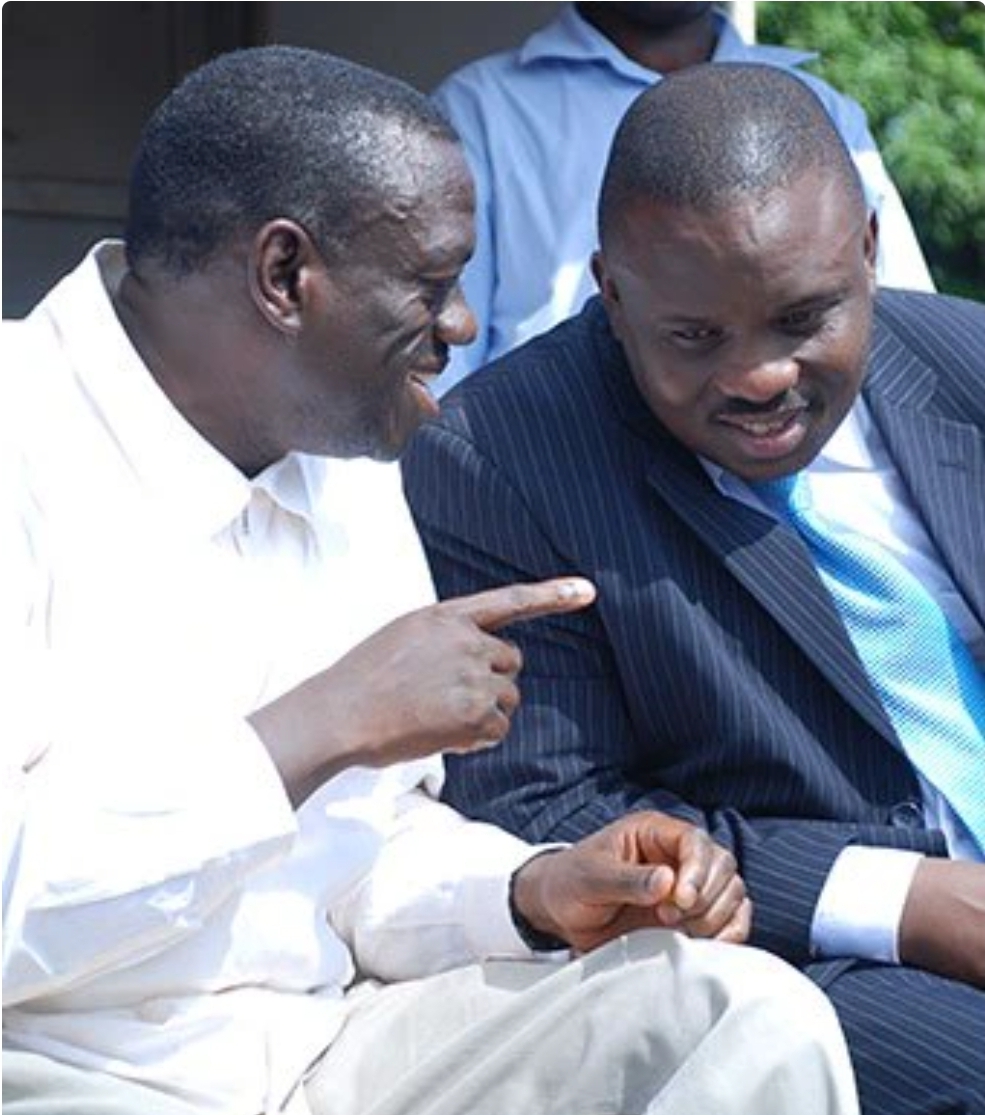 Besigye, Lukwago expected to meet Gen. Salim Saleh today at Kapeeke
Ultimate Uganda
Besigye, Lukwago expected to meet Gen. Salim Saleh today at Kapeeke
Ultimate Uganda
 Rwabwogo Advised to ‘Eat His Bishop’ As MK Prepares to Enter State H’se: PREZ MUSEVENI ON HIS WAY OUT
Ultimate Uganda
Rwabwogo Advised to ‘Eat His Bishop’ As MK Prepares to Enter State H’se: PREZ MUSEVENI ON HIS WAY OUT
Ultimate Uganda
0 Comments