
Iran Confirms Death of Supreme Leader Ayatollah Ali Khamenei
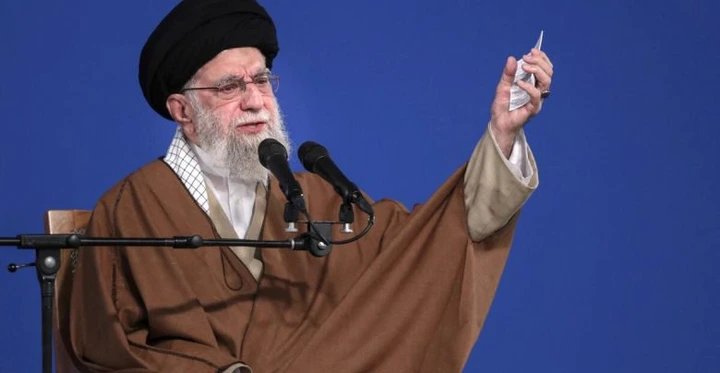

TEHRAN — Iran confirmed Sunday that Supreme Leader Ayatollah Ali Khamenei was killed early Saturday at his office while “performing his assigned duties,†according to state-linked Fars and Tasnim news agencies, marking the most consequential leadership shock in the Islamic Republic’s 47-year history.
The announcement followed pre-dawn U.S.–Israeli strikes targeting Iranian military and security infrastructure.
Tehran declared a 40-day period of public mourning, ordered flags lowered to half-mast and suspended regular programming on state television as clerics urged unity and restraint.
President Donald Trump publicly acknowledged the operation in a statement posted on social media, writing that Khamenei “is dead,†and describing him as “one of the most evil people in history.â€
Trump added that the strikes were intended to secure “peace throughout the Middle East and, indeed, the world,†and said U.S. forces would continue “heavy and pinpoint bombing… as long as necessary to achieve our objective.â€
Iran’s leadership has yet to outline the full chain of command following Khamenei’s death. Senior officials described him as having died in service to the state and framed the episode as martyrdom.
Security was tightened across Tehran, with Revolutionary Guard units deployed around key government and religious sites.
A Leader Who Defined an Era
Header advertisement
Khamenei, 86, was Iran’s second Supreme Leader, succeeding Ayatollah Ruhollah Khomeini in 1989.
Born in Mashhad in 1939 to a clerical family, he rose to prominence during the 1979 Islamic Revolution and later served as president from 1981 to 1989 before assuming the country’s highest office.
As Supreme Leader, Khamenei held ultimate authority over Iran’s armed forces, judiciary, intelligence services and state broadcasting.
He shaped Iran’s regional strategy, expanding support for allied militias in Lebanon, Syria and Iraq, while overseeing the country’s nuclear and ballistic missile programs.
Though he did not hold the highest traditional clerical rank, his political authority was unmatched within the Islamic Republic’s hybrid system of elected institutions and clerical oversight.
His tenure spanned periods of war-by-proxy, sanctions pressure and intermittent diplomatic engagement with Western powers.
Domestically, he navigated waves of protest over economic hardship and political freedoms, reinforcing the role of the Revolutionary Guard in governance and commerce.
Regional Fallout
Global markets reacted swiftly. Oil prices climbed amid concern over potential disruption to shipping lanes through the Strait of Hormuz, a critical artery for energy exports.
Gulf states moved to heightened security postures, and several airlines rerouted flights to avoid Iranian airspace.
The United Nations Security Council held an emergency session, while European governments called for restraint. Russia and China condemned the strikes and warned against broader escalation.
Attention now turns to the Assembly of Experts, the clerical body tasked with selecting a new Supreme Leader.
The transition will test the cohesion of Iran’s political elite and could reshape the country’s posture toward Washington and its regional rivals.


 DRC opposition urges Tshisekedi to abandon constitutional changes
Ultimate Uganda
DRC opposition urges Tshisekedi to abandon constitutional changes
Ultimate Uganda
 US military transport plane lands in Moscow
Ultimate Uganda
US military transport plane lands in Moscow
Ultimate Uganda
 Putin puppet slaps UK with terrifying 2-word warning over drone factories
Ultimate Uganda
Putin puppet slaps UK with terrifying 2-word warning over drone factories
Ultimate Uganda
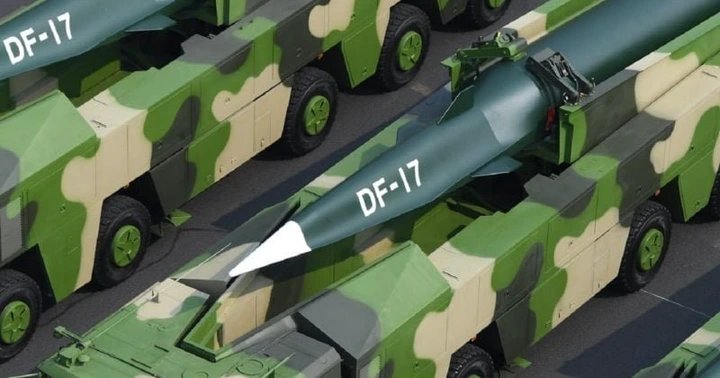 China develops hypersonic weapon to hunt US command aircraft thousands of miles away
Ultimate Uganda
China develops hypersonic weapon to hunt US command aircraft thousands of miles away
Ultimate Uganda
0 Comments