
UGANDA LIVESTOCK INDUSTRIES EXPOSED! Land Grab, Ghost Cattle Cash & Rotting Machinery—Probe Lifts Lid On Years of Mismanagement Under Watch of MAAIF
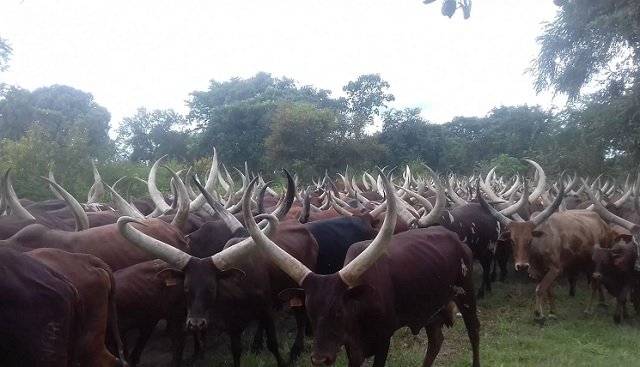

A shocking Auditor General’s report has blown the lid off years of chronic mismanagement, weak oversight, and questionable financial handling at Uganda Livestock Industries Limited (ULI), painting a grim picture of a once-strategic national asset now plagued by inefficiency, neglect, and systemic failures.
Despite receiving an “Unqualified Opinion†for FY 2023/2024, the underlying findings read like a catalogue of institutional decay—raising serious questions about the competence of those entrusted with managing Uganda’s livestock resources and the oversight role of their supervisors at the Ministry of Agriculture.
At the centre of the storm is massive underutilisation of land. Out of 2,072 acres leased to FICA, only about 65% is being utilised each planting season, leaving vast swathes of land idle. In a country where agricultural land is a prized resource, this revelation is nothing short of scandalous. The Auditor General flags this as a glaring inefficiency, a sign that prime land is lying wasted under the watch of those meant to maximise its productivity.
Even more baffling is the failure to resume seed production despite the completion of an irrigation scheme in 2022. The infrastructure is in place, the investment already made—yet production remains stalled. It is a classic case of a project delivered on paper but abandoned in practice, raising questions about planning, follow-through, and accountability.
The rot is visible on the ground. At the Masindi Processing Plant and Kisindi farm, machinery has been left abandoned and obsolete, turning what should be productive assets into scrap. The audit points to a “failure to maintain the assets,†a damning indictment of management’s stewardship over public investments.
Meanwhile, in Kasese, land meant for organised livestock and agro-industrial use is slowly slipping away. Out of 452 hectares opened up, 4.0116 hectares have already been encroached upon by communities who have constructed structures within concession boundaries. This creeping land grab exposes weak enforcement and a dangerous lack of control over government property.
Financial management tells an equally troubling story. Trade and other payables amounting to UGX 1.87 billion could not be adequately supported, with the Auditor General noting that documentation was insufficient “to enable the assessment of the authenticity, accuracy, and collectability of these payables.†In essence, millions of shillings sit in the books without clear backing—raising red flags about transparency and accountability.
The audit also exposes a failure to monitor lease agreements. ULI did not evaluate whether conditions set out in these agreements were being met, effectively allowing lessees to operate without proper oversight. The situation is worsened by “inadequacies in the lease agreement between ULI and one of the lessees,†suggesting weak contract management that could cost the government dearly.
Perhaps most alarming is the governance vacuum at the top. The company is operating without a fully constituted Board, with only two members instead of the required minimum of four. The Auditor General warns that this “stifles the Company’s strategic stewardship,†leaving critical decisions hanging in limbo and accountability structures severely weakened.
But the 2023/2024 findings are only the latest chapter in a long-running saga of unresolved audit queries stretching back years.
As far back as FY 2017/2018, ULI reported trade receivables of UGX 912.37 million without supporting documentation. A staggering UGX 852.64 million—93% of that amount—was linked to a single supplier for undelivered cattle, yet no evidence was provided to confirm the debt. The same pattern repeated in FY 2018/2019, with identical figures and the same lack of documentation, suggesting a persistent failure to clean up the books.
The situation did not improve in subsequent years. In FY 2019/2020, receivables rose to UGX 912.85 million, again unsupported. Long-outstanding liabilities of UGX 1.867 billion also lacked documentation, making it impossible to verify their legitimacy.
By FY 2020/2021, the story remained unchanged. Out of UGX 887.05 million in receivables, UGX 852.65 million—over 96%—was still tied to the same supplier for undelivered cattle, with no supporting documents. The liabilities, standing at UGX 1.86 billion, were equally unsupported.
The pattern persisted into FY 2021/2022, where receivables of UGX 887.04 million again featured UGX 852.64 million linked to the same unresolved cattle transaction. The Auditor General highlights that this balance remains unsupported, a glaring anomaly that has survived multiple audit cycles without resolution.
At the same time, long-term liabilities amounting to UGX 1.86 billion—including a UGX 1.72 billion debt swap owed to the Ministry of Finance and UGX 141.38 million owed to suppliers dating back to 1999—also lacked documentation. Decades-old debts with no clear records point to deep-rooted financial mismanagement.
All this unfolds against the backdrop of the historic Maruzi Ranch, a vast government-owned facility in Apac District once envisioned as a cornerstone of Uganda’s beef production. The ranch, leased to ULI in 1968 for 99 years, collapsed during the insurgencies of the late 1980s and has since undergone attempts at revitalisation.
In 2018, ULI issued a 50-year lease for 54 square kilometres of the ranch to a private firm for palm oil cultivation, while portions were allocated to National Animal Genetic Resources Centre and Data Bank for breeding and National Agricultural Research Organization for research. Yet even with these interventions, the audit findings suggest that governance and oversight remain weak.
The Auditor General’s conclusions leave little room for doubt. While ULI sits on vast resources and strategic assets, its operations are undermined by persistent failures in financial management, land utilisation, governance, and accountability.
What emerges is a troubling picture of an institution drifting without direction—where land lies idle, machinery rots, debts remain unverified, and the same audit queries resurface year after year without resolution.
For a sector central to Uganda’s agro-industrialisation agenda, the implications are serious. The big question now is whether those in charge—both within ULI and at the supervising Ministry—will finally act, or whether this cycle of neglect and mismanagement will continue unchecked.


 The women who have been in King Oyo’s life
Ultimate Uganda
The women who have been in King Oyo’s life
Ultimate Uganda
 Ex Kagame Guard Commander Tom Byabagamba Dies in Rwandan Prison After 12 Years
Ultimate Uganda
Ex Kagame Guard Commander Tom Byabagamba Dies in Rwandan Prison After 12 Years
Ultimate Uganda
 Government begins salary payments for public sector workers – Reform Committee
Ultimate Uganda
Government begins salary payments for public sector workers – Reform Committee
Ultimate Uganda
 Temangalo land: NSSF, Nzenyi reach agreement
Ultimate Uganda
Temangalo land: NSSF, Nzenyi reach agreement
Ultimate Uganda
0 Comments