
BIG INTERVIEW: Boda-bodas will be reduced in the city under new transport plan - Gen Katumba
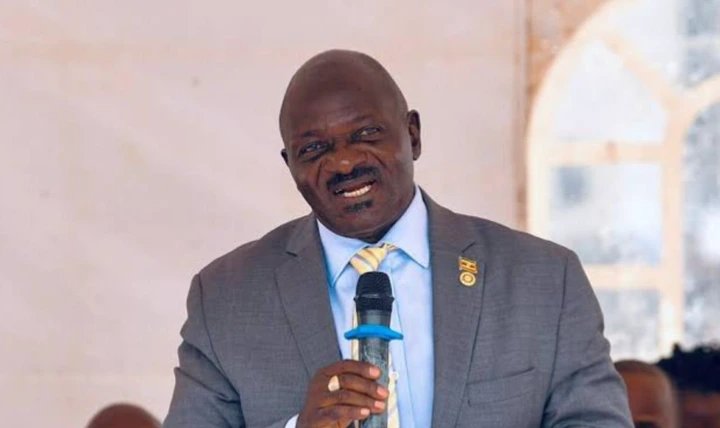

'Boda-bodas have provided employment. If tomorrow we decided to remove them, what would happen to the young men who depend on them? Each rider supports several people. So, they have benefits, but they also present challenges. They need to be better organised, and we had already started that process. However, some politicians interfered and said they knew how to organize the city better. We stepped back.'
As the city struggles with gridlock, rapid urbanization, and increasing transport demand, government is rolling out plans to modernize mobility through mass transit systems that will transform how people move while addressing long-standing inefficiencies in Kampala’s transport network and infrastructure.
In an interview, the Minister of Works and Transport Gen Edward Katumba Wamala said the transition to mass transport will gradually reduce the dominance of boda-bodas and taxis, though they will remain part of the system as government improves organized and efficient urban mobility solutions.
Excerpt;
Millions of shillings have been spent on roads and infrastructure, yet many projects remain incomplete, like the Kampala–Jinja Expressway. What is the progress?
First correction: we have not spent money other than money for compensation. That project has not started yet. The only thing we are doing on that project is acquiring land. We are still in negotiation with the potential investor. That is a PPP Public-Private Partnership project and it is going to be executed in such a way that investors put in the money, because we are negotiating on the terms of payment and also the rates at which you charge. It is going to be a toll road, and so the government is not investing its money in the construction.
What about the oil roads?
Most of the oil roads have been completed. Most of the oil roads have been completed. If you visit the Bunyoro area and the Albertine region, you will just drive on what I think are the best tarmac roads in the country as of now.
In all these projects, the locals are saying that they have been sidelined the local contractors say they have been sidelined
First of all, there are projects which are ring-fenced. For example, if a project is funded by, say, an Islamic Development Bank, they have some restrictions because that is where the funding is coming from. They may insist on having, for example, a contractor from that relationship. Most of the oil roads were financed by China, and so most of the projects were executed by foreign companies.
That is what we call local content. In all these projects, there is local content by local companies. But we are not deliberately sidelining them; actually, if anything, we are deliberately trying to promote local contractors. I will give you an example: the rehabilitation of Matuga–Semuto–Kapeeka Road these are being executed fully by a local contractor because these are Government of Uganda-funded projects.
To what extent has the current land tenure system brought about project delays, including long court battles?
If there is any big impediment to the timely execution of projects, it is land. The law provides, and the Constitution states, that before the government uses land, you must pay the owner adequately and promptly. Now, “adequate†is relative what is adequate to one person may not be adequate to another.
So, government comes in, and our land acquisition team makes an assessment and puts a value, guided by the Chief Government Valuer, who is the final authority in land valuation for government. This determines the value of the land.
Sometimes the landowner accepts straight away. Sometimes there are disputes—even among landowners themselves. You may find families not agreeing on whose account the money should be paid into. That delays the process. In some cases, you find absentee landlords, which becomes another challenge.
But what makes it even more complicated is the value attached to land vis-Ã -vis the value for the execution of the project. In many cases, you will find the valuation of the land is more than even what it takes to execute the project itself.
So, you are saying that there are inflated compensation claims, and that is already impeding your work?
Land is property, and the valuation changes from area to area. The value of land in Kampala is not the same as land, for example, in Jinja. So, it depends on where the project is going to be executed. That also determines how fast you can acquire the land.
In some cases very rare cases I will cite one example: for the first time, the community accepted us to do a road without compensating them for the land. We acquired the land, but without compensation. That is a unique situation, extremely rare. But as time goes on, we hope for more cooperation.
Do you intend, as a ministry, to influence policy changes, especially in Parliament?
Yes, I think it is a question of Ugandans being fair to themselves. When a project is executed when a road is improved from gravel to tarmac the value of the property along that road will definitely go up. So, your property appreciates in value just by allowing the government to use a few meters of your land.
There are allegations that sometimes it is people within government who buy this land in advance and then give government a headache when infrastructure improvements begin.
I cannot totally rule that out. I may not have evidence, but I cannot rule it out. The designs are done by Ugandans; the concepts are developed by Ugandans. They would know where the road is going to pass. So, it is possible, but I cannot say that it applies across the board.
From the great roads in Kampala to the deadliness on the roads and untapped lakes and airports, the transport system seems to be failing many Ugandans. Greater Kampala remains paralysed by traffic. Do you have a solution?
Yes, it is quite a challenge. The rate at which Ugandans have acquired vehicles SUVs and personal vehicles has possibly outpaced the infrastructure. When you look at Kampala roads, most were built many years ago, when vehicles were very few. We even used to know who owned which vehicle in the city.
That is no longer the case today.
The population has grown. Ugandans have bought vehicles in large numbers. Trade has greatly improved there are many trucks, medium and large, moving across the city. So, it is true: the city is now choked with traffic. But we have plans. Just a few days ago, we signed a memorandum of understanding with a company from Egypt, which will conduct a feasibility study on improving mass transport using a monorail system.
That promise has lasted more than a decade now.
As I said, we signed a few days ago. The company has 90 days to complete the feasibility study and plan for implementation. We lost mass transport systems like buses, and in their place came what I would call a necessary evil the boda-bodas. If we move into proper mass transport, then boda-bodas and taxis will eventually be displaced not entirely removed, but reduced.
We tested this with a simple trial: five train coaches from Kampala to Mukono. The number of passengers carried was impressive. It showed us that we need to do more in that direction.
So, the plan is to extend routes to other areas, and eventually introduce the monorail, which will improve the situation.
What timelines are you looking at?
We are looking at 2028, assuming the feasibility study is completed quickly. Construction may not take long, as the company has experience, they have done similar work elsewhere within a year.
Is there space to accommodate rail infrastructure in Kampala?
Yes. The rail will be on pillars not underground so space can be created for pillars and stations at strategic points.
Let us talk about road safety. Road crashes claim thousands of lives every year. Is there a plan to reverse this trend?
Reversing this is not just the ministry’s responsibility it is everyone’s responsibility. About 80–90% of road crashes are due to human error: speeding, reckless driving, indiscipline. We have poor road discipline. That is the main issue. We introduced the Express Penalty Scheme (EPS), but it was misunderstood. People thought it was about raising revenue. It was about restoring order on the roads. Look at boda-bodas you cannot predict their movement. That is part of the problem.
What about inland water transport, which remains untapped and unsafe?
Yes, it is part of our development strategy. Lake Victoria is a major resource, not just for fishing but for transport. With proper investment in vessels, someone could travel from Entebbe to Jinja faster than by road. We are encouraging private investors to explore such opportunities.
There are concerns about Uganda building roads in neighbouring countries like DR Congo. How does Uganda benefit?
That is strategic investment. The roads in eastern Congo serve Uganda’s biggest trade market. Many Ugandan industries depend on that region. The revenue generated goes into the national treasury, not directly back to the ministry, and is then redistributed based on national priorities.
Let us talk about the controversial digital number plates. What explains the delays?
I do not know why it is called controversial. Yes, people had concerns about cost and accessibility. There were initial challenges production was slower than demand, and some individuals exploited the situation by overcharging. Some were arrested. But now production has improved, and issuance is faster.
What about the cost?
The cost was debated and approved by Parliament. It is not arbitrarily set.
There are fears these plates could be used for surveillance.
If you are not a criminal, why worry? The system is for security to track stolen vehicles and criminals. It has already helped recover stolen cars.
What explains the initial delays?
There were challenges with suppliers and global conditions, but those have been resolved.
How long does it take to get a plate now?
Once all payments and paperwork are complete, it should not take more than 40 days.
Are there cases of tampering?
Yes, there have been attempts, but perpetrators are being tracked and arrested.
Let us talk about EPS again. Will it be reintroduced?
Yes, but with improvements. There were issues camera inconsistencies, incorrect speed limits, and misinterpretations. We have reviewed the feedback and formed a multi-sector committee including police, civil society, and transport operators to address these concerns. We are working on correcting the system to ensure fairness and effectiveness.
Some other roads, especially highways, had situations where you would find somebody driving at 30 kilometers per hour. We got all this feedback from the population. We put up a multi-sector committee of the ministry, the police, civil society, taxi operators, organizations, and bus operators, and we went back to the drawing board and asked: what are the issues at hand?
Those issues were documented, and our team and committee went back and studied them. We now have many new proposals.
We are also looking at the ongoing road constructions around Kampala. The EPS system was suspended here in Uganda due to public resistance. But Honourable, what has the ministry learned?
Among the things we learned from the outcry were issues related to the rates for example, the Shs600,000 penalties which will come back with a post-review rate. I cannot say what it is now, because our report has to go back to Cabinet, and then from Cabinet before statutory instruments are issued explaining what is to be done.
There were also issues like the 72 hours given to pay. Should it remain 72 hours? What should be the fine in case you do not pay within that time? All these are being examined.
There was also an observation that we were charging people for speeding, yet many of our roads did not have proper markings. Speed limit signs were absent. All these issues are being addressed before the system is reintroduced.
There is also the question of who bears the penalty; the driver or the vehicle owner?
Yes. Especially in ministries and departments, if you are behind the wheel, you are the one responsible. If you jump a traffic light, it is not the ministry it is you. However, the penalty is sent to the Permanent Secretary or the head of the institution. That means the ministry must ensure discipline among its drivers. They must bring them to order.
What is going on? Why does the ministry not plan to work at night or during off-peak hours?
If you want to eat an omelet, you must break an egg. Do you remember the time when newspapers and social media were dominated by complaints about potholes? We are now getting rid of that. We understand the inconvenience, and we are sorry that this work is happening in many places at the same time. But the pain you are experiencing now is the same pain people experienced because of potholes.
When we received funding to support the Greater Kampala Metropolitan Area, we realized that improving only roads in the Central Business District would not be enough. If roads in areas like Kira and other suburbs remain poor, traffic will still clog when it moves toward the city. So we had to work on roads across the entire metropolitan area.
Let us talk about boda-bodas. What is it about them that has made them difficult to manage?
Human beings adapt to opportunities, especially when there is a livelihood involved. Boda-bodas have provided employment. If tomorrow we decided to remove them, what would happen to the young men who depend on them? Each rider supports several people. So, they have benefits, but they also present challenges. They need to be better organised, and we had already started that process. However, some politicians interfered and said they knew how to organize the city better. We stepped back.
There were similar fears when vendors were relocated that they would lose their jobs. But today, we have a more organized downtown. We believe the same can happen with the boda-boda industry. We had reached a stage where every rider would have an identity, including a standardized jacket designed with security agencies.
We had even introduced zones for operation. Each rider would have a QR code on their jacket. You could take a screenshot of the code and send it to someone, and it would contain all the details of that rider.
For example, you could inform your family about the rider taking you home, in case anything happened. All this was part of improving safety and accountability.
But the process was interrupted. Now, after seeing the challenges that have emerged, we are moving again to organize the sector. The minister has already given direction for this to resume.
Why do these efforts to organise boda-bodas keep failing, just like earlier attempts with vendors?
Change is not always easy. There are many interests involved, and sometimes resistance comes from different quarters. But we believe that with time and persistence, it will succeed.When you speak to doctors in Mulago Hospital, they will tell you that when the EPS system was active, road accidents reduced significantly.
As you organise the boda-boda sector, is there also a plan to improve safety?
Yes. Safety is very important. It should not be possible for a rider to operate without proper protective gear, including helmets for both the rider and the passenger.Many of these riders are young men trying to earn a living, but they face difficult and dangerous conditions on the roads. Organizing them will also improve their safety.
Many Ugandans feel let down by unfulfilled promises, especially regarding roads in rural areas. What message do you have for them?
It is not realistic to expect that every road in the country will be tarmacked at once. That is why the government adopted a phased approach. We started with trunk roads and national roads those that connect Uganda to neighboring countries and those that link regions. These were prioritized because they support trade and economic activity. That is why you now see improved connectivity from the central region to the eastern, northern, and northeastern regions.
But the government also recognises the importance of local access roads the roads that take a grandmother from her home to the hospital or a child to school.
That is why equipment has been provided to districts so they can maintain these local roads. These roads may not all be tarmacked, but they can still be improved and made passable. So, while progress may seem slow in some areas, there is a structured plan in place to ensure that all parts of the country benefit over time.


 Government will not gazette Kijanangoma as King of Tooro for now - Attorney General insists
Ultimate Uganda
Government will not gazette Kijanangoma as King of Tooro for now - Attorney General insists
Ultimate Uganda
 King Oyo’s Body to Arrive Thursday
Ultimate Uganda
King Oyo’s Body to Arrive Thursday
Ultimate Uganda
 Besigye, Lukwago expected to meet Gen. Salim Saleh today at Kapeeke
Ultimate Uganda
Besigye, Lukwago expected to meet Gen. Salim Saleh today at Kapeeke
Ultimate Uganda
 Rwabwogo Advised to ‘Eat His Bishop’ As MK Prepares to Enter State H’se: PREZ MUSEVENI ON HIS WAY OUT
Ultimate Uganda
Rwabwogo Advised to ‘Eat His Bishop’ As MK Prepares to Enter State H’se: PREZ MUSEVENI ON HIS WAY OUT
Ultimate Uganda
0 Comments