
NIRA decries poor local language proficiency by applicants
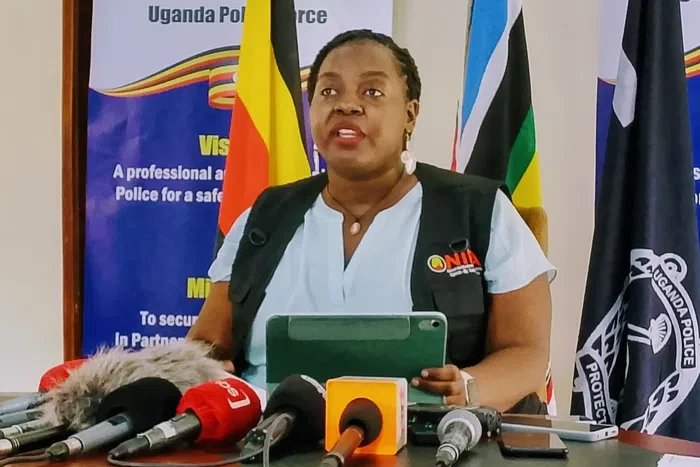

NIRA Registrar Clair Ollama says many applicants coming to their offices nowadays struggle to express basic cultural identity details, which affects service delivery.
The National Identification and Registration Authority (NIRA) has raised concern over what it describes as declining knowledge of local languages among Ugandans seeking services.
NIRA Registrar Clair Ollama says many applicants coming to their offices nowadays struggle to express basic cultural identity details, which affects service delivery. says many applicants coming to their offices nowadays struggle to express basic cultural identity details, which affects service delivery.
Ollama, who speaks up to 13 local and international languages, said the problem has become more visible during interviews for national IDs, passports and other services.
She noted that some applicants fail to identify their tribe, clan or totem without seeking help from relatives.
“You ask them for their totem and they have to call someone else. People need to try to tell their children that is okay to be who they are and celebrate their identityâ€
‘Children are being misled’
She blamed the trend on changing attitudes in schools and society. According to Ollama, many children are discouraged from speaking their mother tongue and grow up believing it is wrong.
“As a country, if we do not intentionally and aggressively promote the use of our local languages in daily life, there is a problem,†she said.
She added that young people are being “brainwashed†into abandoning their linguistic and cultural roots.
Ollama urged parents to encourage children to embrace their identity and take pride in their background.
Government efforts to promote local languages
Uganda is a multilingual country with dozens of indigenous languages, and government policy has over the years sought to promote their use, especially in education.
The national curriculum requires that children in lower primary are taught using familiar local languages before transitioning to English in later classes.
Recent efforts by the National Curriculum Development Centre have also recommended the use of up to 26 local languages as mediums of instruction in early education to improve understanding and learning outcomes.
In addition, authorities have translated key public documents such as the Constitution into several local languages to improve access to information and strengthen cultural identity.


 Government will not gazette Kijanangoma as King of Tooro for now - Attorney General insists
Ultimate Uganda
Government will not gazette Kijanangoma as King of Tooro for now - Attorney General insists
Ultimate Uganda
 King Oyo’s Body to Arrive Thursday
Ultimate Uganda
King Oyo’s Body to Arrive Thursday
Ultimate Uganda
 Besigye, Lukwago expected to meet Gen. Salim Saleh today at Kapeeke
Ultimate Uganda
Besigye, Lukwago expected to meet Gen. Salim Saleh today at Kapeeke
Ultimate Uganda
 Rwabwogo Advised to ‘Eat His Bishop’ As MK Prepares to Enter State H’se: PREZ MUSEVENI ON HIS WAY OUT
Ultimate Uganda
Rwabwogo Advised to ‘Eat His Bishop’ As MK Prepares to Enter State H’se: PREZ MUSEVENI ON HIS WAY OUT
Ultimate Uganda
0 Comments