
Opposition Unveils Alternative Budget, Warns of 'Illusion' of Economic Growth
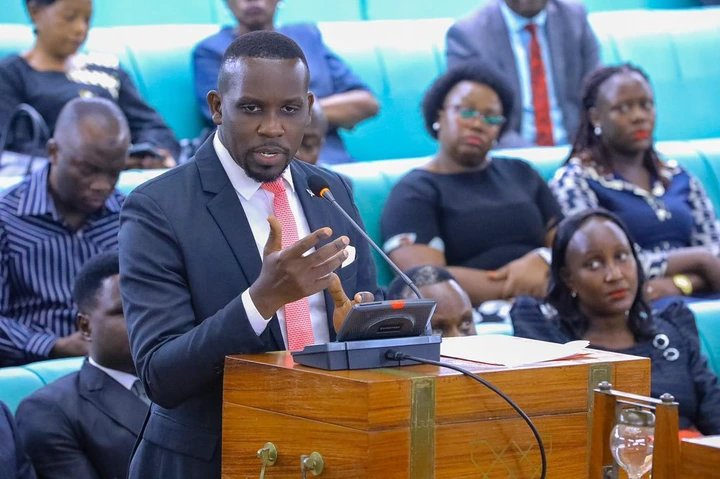

Uganda’s opposition has tabled an alternative Shs71.4 trillion budget, warning that rising debt obligations and rigid expenditures are squeezing service delivery, while drawing parallels with last year’s fiscal plan that faced similar criticism over debt sustainability and limited fiscal space.
The Opposition has released a stark alternative budget for the 2026/27 financial year, warning that the country’s apparent economic growth masks deep fiscal strain and a shrinking capacity to deliver essential public services.
Presenting the proposal in Kampala, opposition leaders described the government’s projected Shs78.2 trillion budget as misleading, arguing that more than half of the funds are already pre-committed to debt servicing and administrative costs.
According to the alternative framework, approximately 56% of the proposed budget is earmarked for debt interest payments, domestic refinancing, and fixed expenditures, leaving limited resources for critical sectors such as education, healthcare, and infrastructure development.
“This is the illusion of growth,†the statement reads. “While the figures suggest expansion, the funds available for actual service delivery continue to diminish.â€
The critique echoes concerns raised during the 2025/26 budget cycle, when Parliament approved a roughly Shs72 trillion spending plan that was similarly dominated by debt servicing, wage obligations and statutory commitments.
At the time, the opposition also tabled an alternative framework that argued the government was overstating fiscal space and underestimating the long-term risks of borrowing, particularly as Uganda accelerated infrastructure financing ahead of anticipated oil revenues.
Shrinking Fiscal Space
The opposition further argues that the government’s reported discretionary resources—estimated at Shs34.2 trillion—are overstated.
A significant portion of these funds, they say, is tied up in statutory obligations such as salaries, wages, and gratuity payments, leaving far less available for new investments.
In response, the alternative budget proposes a revised and “realistic†resource envelope of Shs71.4 trillion, significantly lower than the government’s estimate. This recalibration factors in historical budget performance, domestic arrears, and anticipated oil revenues expected in mid-2026.
The approach mirrors last year’s opposition proposals, which sought to realign the budget with actual absorption capacity and revenue performance after repeated supplementary expenditures and shortfalls disrupted planned allocations.
Citing audit reports from the financial years 2020/21 to 2022/23, the opposition highlighted a consistent pattern of underperformance in budget execution.
They noted discrepancies between approved budgets, issued warrants, and actual expenditures, arguing that government planning has repeatedly failed to translate into real outcomes.
“Budgeting as a tool for economic management has not been effectively utilised,†the report states, calling for more credible forecasting and disciplined implementation.
These concerns were also reflected in findings presented during scrutiny of the 2025/26 budget, where accountability reports pointed to unspent funds in some sectors alongside accumulation of domestic arrears in others, underscoring inefficiencies in both planning and execution.
Mounting Debt Concerns
A central theme of the alternative proposal is Uganda’s growing debt burden, which opposition leaders describe as a “debt trap.†They estimate that for every Shs1,000 collected in revenue, Shs331 goes directly to servicing interest on loans.
The report also criticizes the cost of “idle debt,†where the government continues to pay commitment fees on loans tied to stalled or delayed projects.
Major infrastructure initiatives, including the Kampala–Jinja Expressway and the Busega–Mpigi Expressway, were cited as examples of projects incurring costs without corresponding progress.
“In the transport sector, only about 30% of borrowed funds translate into completed projects,†the report claims, with the rest lost to penalties and administrative inefficiencies.
Similar concerns were raised in the previous financial year, when lawmakers questioned delays in externally financed projects and the rising cost of debt, particularly domestic borrowing, which carries higher interest rates and crowds out private sector credit.
Proposed Reforms
To address the growing fiscal pressure, the opposition outlined several policy recommendations:
Debt Control Measures: Introduce a legal cap limiting interest payments to no more than 20% of domestic revenue.
Oil Revenue Management: Allocate a fixed portion—proposed at 30%—of future oil revenues to retire high-interest domestic debt through a dedicated sinking fund.
Reduced Borrowing: Lower domestic borrowing from Shs8.9 trillion to Shs5.1 trillion.
Clearing Arrears: Increase funding to settle domestic arrears from Shs200 billion to Shs1.4 trillion, aimed at boosting liquidity for local businesses.
The emphasis on arrears clearance builds on last year’s alternative budget proposals, which similarly argued that unpaid government obligations were constraining business cash flow and slowing economic activity.
The government’s plan to raise domestic revenue to Shs41.5 trillion—an 11.5% increase—was also criticized as unrealistic given current economic growth levels.
The opposition warns that such targets could lead to aggressive tax enforcement by the Uganda Revenue Authority, potentially burdening businesses and discouraging investment.
“This creates a dangerous growth-revenue gap,†the report notes, adding that excessive taxation risks undermining private sector confidence and economic stability.
During the 2025/26 budget debate, similar concerns emerged over ambitious revenue targets, with analysts cautioning that overestimation could result in mid-year adjustments, increased borrowing or cuts to planned expenditures.
With oil production expected to begin later in 2026, both the government and opposition see a pivotal moment for Uganda’s economy.
However, the opposition cautions that without disciplined fiscal management, new revenues could be consumed by debt obligations rather than driving development.
The debate over the 2026/27 budget is expected to intensify in Parliament in the coming months, as policymakers grapple with balancing growth ambitions against mounting fiscal realities.


 Government will not gazette Kijanangoma as King of Tooro for now - Attorney General insists
Ultimate Uganda
Government will not gazette Kijanangoma as King of Tooro for now - Attorney General insists
Ultimate Uganda
 King Oyo’s Body to Arrive Thursday
Ultimate Uganda
King Oyo’s Body to Arrive Thursday
Ultimate Uganda
 Besigye, Lukwago expected to meet Gen. Salim Saleh today at Kapeeke
Ultimate Uganda
Besigye, Lukwago expected to meet Gen. Salim Saleh today at Kapeeke
Ultimate Uganda
 Rwabwogo Advised to ‘Eat His Bishop’ As MK Prepares to Enter State H’se: PREZ MUSEVENI ON HIS WAY OUT
Ultimate Uganda
Rwabwogo Advised to ‘Eat His Bishop’ As MK Prepares to Enter State H’se: PREZ MUSEVENI ON HIS WAY OUT
Ultimate Uganda
0 Comments