
The geography of power and the price of ignorance

When commenting on the 1980–1988 Iraq–Iran war, Henry Kissinger once remarked that it was “a pity both sides can’t loseâ€. It was a chilling distillation of a worldview in which distant conflicts are not tragedies to be resolved, but instruments to be managed. Alongside Zbigniew Brzezinski, Kissinger helped shape a half-century of American foreign policy that treated regions like the Middle East, Southeast Asia, and Africa not as homes to peoples but as theatres of strategy.
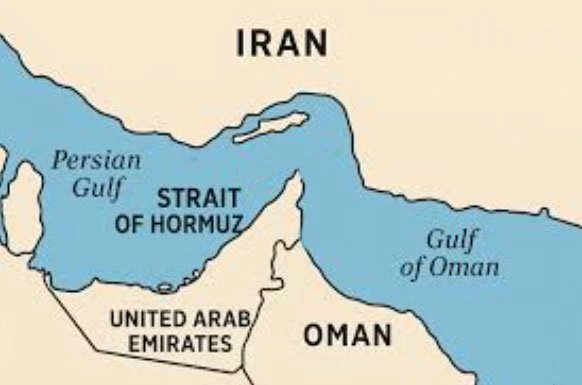
Until the recent escalations pitting Israel and America against Iran, the Strait of Hormuz was, to many East Africans, little more than an obscure name on a distant map. But obscurity does not diminish importance. For students of geopolitics, the world’s narrow waterways, among them Hormuz, Bab el-Mandeb, Malacca, Gibraltar, the Mozambique channel, etc., are more than mere geographic features; they are the arteries through which the lifeblood of the global economy flows. To control them is to influence the fate of nations.
The value of these chokepoints lies not just in their geography but in the dependencies they create. Oil from the Gulf, goods from Asia, and energy all converge through these narrow passages. Consequently, a disruption in any one of them sends ripples across continents, raising prices in Kampala as surely as it rattles markets in London or Shanghai. Geography, in this sense, is destiny.
And here lies the deeper concern for East Africa, especially. We are too often spectators to contests whose consequences we feel but whose rules we do not shape. The Strait of Hormuz becomes relevant only when fuel prices spike; the Red Sea matters only when supply chains falter. These are not distant problems, but structural vulnerabilities. Our economies remain tethered to routes and resources we neither control nor sufficiently study.
This is no accident. It is the residue of a world order that positioned Africa as a consumer at the end of the pipeline, whether of energy, goods, or ideas. Colonial cartography did more than divide land; it disconnected us from strategic awareness. The Cold War deepened this condition, turning states into clients rather than thinkers and reactors rather than actors. This lack of strategic agency is most visible in our economic dependency; we have mastered the art of being used, but not the art of using what we have.
It is this legacy that makes our current rhetoric a hollow rebellion. In Uganda, President Museveni has frequently spoken about the necessity of value addition—the transition from a “supermarket†for foreign goods to a factory for our own. He is right: the real revolution is to build our own refineries, process our agricultural produce for domestic, regional, and global consumption, and manufacture our own medicines.
Yet, in a cruel twist of irony, the president’s vision is increasingly undone by the very system he presides over. His ambitions for an industrial leap are hindered by an inefficient civil service and a government that seems unable or unwilling to excise grand corruption. You cannot build a modern industrial state on the back of a bloated, lethargic bureaucracy where “who you know†matters more than “what you produceâ€.
Such ambitions demand a foundation that, sadly, is currently being eroded – a deliberate investment in quality education for all. In Uganda today, the cost of education is spiralling out of the reach of many, while public schools, once the great equalizers, deteriorate. It is a bitter irony that the generation currently in power, themselves products of these very institutions, no longer trusts them with their own children. A society that abandons its public schools, preferring instead to tolerate a civil service and political elite that loots the funds intended to fix them, abandons its future industrial capacity before it is even born.
Today, as the great powers of America, China, Russia, Europe, and India once again circle each other, the global chessboard is being redrawn. East Africa risks approaching this new contest with the same outdated playbook: fragmented, reactive, and perilously inhabiting an information desert.
The lesson of the world’s chokepoints is ultimately about leverage. Those who understand the map shape the game; those who do not are shaped by it. Now that the Strait of Hormuz is part of our vocabulary, it should not be a passing curiosity but a warning.
In a world defined by narrow passages, it is not only ships that get trapped. Nation-states do too.


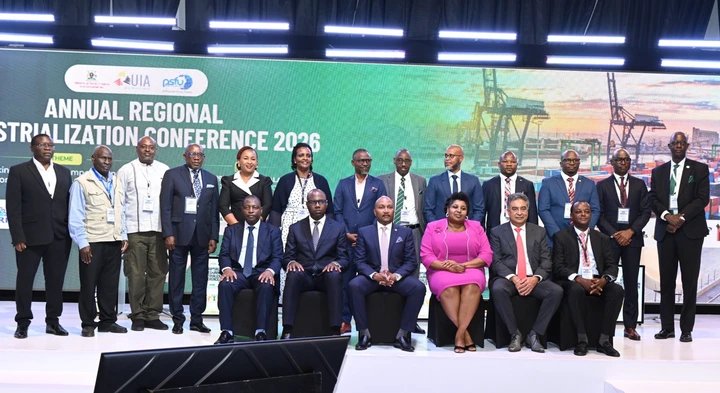 DRC opposition urges Tshisekedi to abandon constitutional changes
Ultimate Uganda
DRC opposition urges Tshisekedi to abandon constitutional changes
Ultimate Uganda
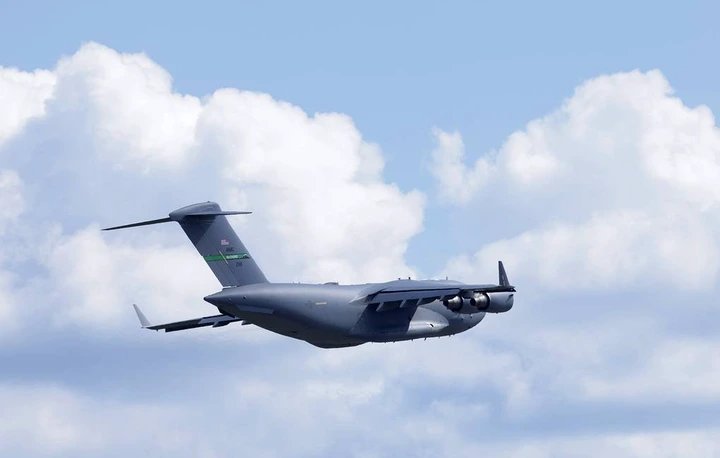 US military transport plane lands in Moscow
Ultimate Uganda
US military transport plane lands in Moscow
Ultimate Uganda
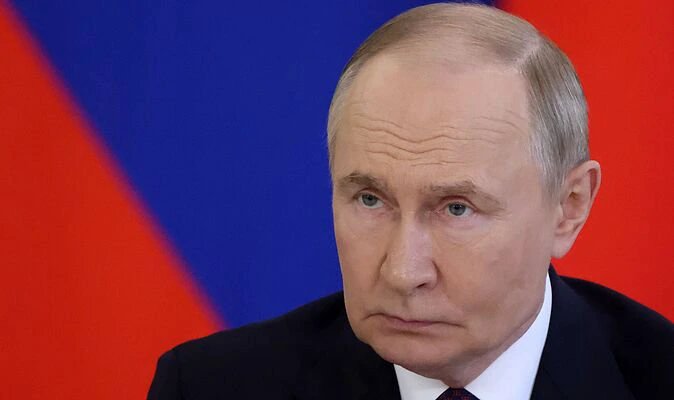 Putin puppet slaps UK with terrifying 2-word warning over drone factories
Ultimate Uganda
Putin puppet slaps UK with terrifying 2-word warning over drone factories
Ultimate Uganda
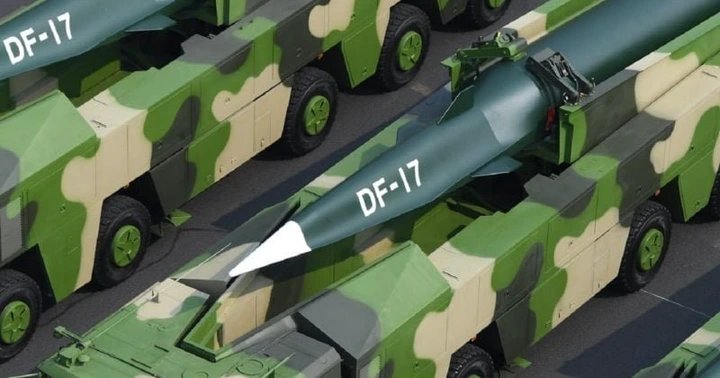 China develops hypersonic weapon to hunt US command aircraft thousands of miles away
Ultimate Uganda
China develops hypersonic weapon to hunt US command aircraft thousands of miles away
Ultimate Uganda
0 Comments