
Gov’t to Address Myths Associated with New HIV Injection in PrEP Strategy Review
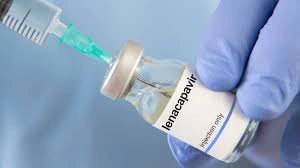

Faced with growing myths and misconceptions surrounding the newly rolled out HIV prevention injection Lenacapavir, the Ministry of Health (MOH) has embarked on a review of its Pre-Exposure Prophylaxis (PrEP) communication strategy to include comprehensive information about the drug.
Dr Herbert Kadama, the MOH Coordinator for PrEP, told URN that although Lenacapavir—the six-monthly injection—has largely been well received by users, there is still considerable misinformation surrounding its use. He said the most common skepticism relates to sexual function and fertility, with some users expressing fears and questioning why the injection is administered near the private parts.
Uganda has so far received 19,200 doses of the drug, which is offered to HIV-negative individuals at very high risk of infection. The country is expected to receive a similar number of doses in the coming month as it prepares to administer second doses to early beneficiaries in October.
Kadama said that as the drug becomes more widely available, with plans to expand coverage to health facilities in Kampala, such as Kisenyi Health Centre IV, the Ministry wants to ensure communities are fully informed before scaling up access. Like Kadama, HIV/AIDS activist Dr Lydia Mungherera said many questions remain unanswered about the injection, which is being promoted as a game changer in HIV prevention. She cited concerns within communities about whether the drug affects fertility or breast milk.
Mungherera spoke shortly after Kenneth Mwehonge, Executive Director of the NGO Coalition for Health Promotion and Social Development (HEPS), revealed at a meeting that the organisation is working with the Ministry of Health to review the PrEP communication strategy to include accurate information about the injection. He said science-based messages have already been developed to guide community health workers in providing verified information to users.
Mwehonge, who also noted collaboration with the Health Journalists Network Uganda (HEJNU), said efforts are underway to simplify scientific information for communities. He added that at its introduction, Lenacapavir was mistakenly perceived as a vaccine against HIV, whereas it is an antiretroviral (ARV) drug used for treatment in HIV-positive individuals and as a preventive tool for HIV-negative individuals at high risk.
However, while the review process is ongoing, URN raised concerns about infertility and impotence to Dr Flavia Matovu Kiweewa, a Senior Research Scientist at the Makerere University–Johns Hopkins University (MUJHU) Research Collaboration, who dismissed them as unfounded. Kiweewa, the lead researcher in the study that confirmed the efficacy of Lenacapavir as PrEP in Uganda, explained that throughout the study period, 510 pregnancies were recorded among 487 participants, 80 percent of whom were Ugandans—an indication that the drug does not affect fertility as feared.
She further revealed that at Mityana Hospital, one of the three study sites under MUJHU, pregnant and breastfeeding women are still being prioritised for access to the injection. On concerns about possible effects on male sexual performance, Kiweewa noted that the Ugandan cohort did not include men. However, she said studies conducted in other countries among men who have sex with men did not report impotence as a side effect.
On her part, Dr Pamela Achii, Health Products Management Specialist at the Ministry of Health, encouraged users who have already received the injection to report any side effects to the National Drug Authority through established pharmacovigilance systems. She also warned against misuse of the drug, emphasizing that beneficiaries must return for the second dose on schedule to ensure full protection and effectiveness-URN.


 The women who have been in King Oyo’s life
Ultimate Uganda
The women who have been in King Oyo’s life
Ultimate Uganda
 Ex Kagame Guard Commander Tom Byabagamba Dies in Rwandan Prison After 12 Years
Ultimate Uganda
Ex Kagame Guard Commander Tom Byabagamba Dies in Rwandan Prison After 12 Years
Ultimate Uganda
 Government begins salary payments for public sector workers – Reform Committee
Ultimate Uganda
Government begins salary payments for public sector workers – Reform Committee
Ultimate Uganda
 Temangalo land: NSSF, Nzenyi reach agreement
Ultimate Uganda
Temangalo land: NSSF, Nzenyi reach agreement
Ultimate Uganda
0 Comments