
Uganda forced to rethink financing as donor cuts disrupt UN programmes
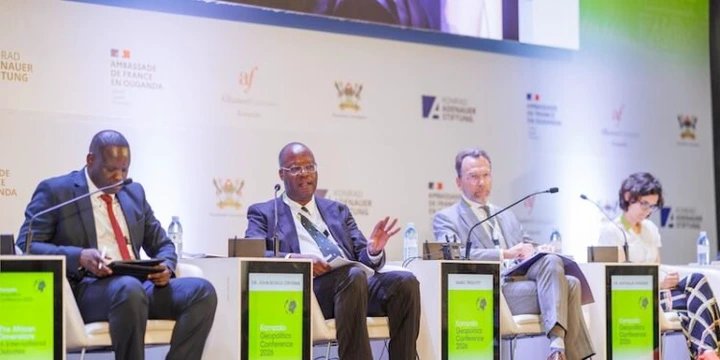

KAMPALA — A sudden withdrawal of donor funds has pushed Uganda and its development partners to confront a difficult reality: the era of relying heavily on external aid is becoming increasingly uncertain.
The shift comes into sharper focus as the Kampala Geopolitics Conference 2026 opened at Makerere University, placing Africa’s voice at the centre of global policy debates ahead of the upcoming G7 summit.
Held under the theme “The African Dimensions in International Debates,†the two-day forum has drawn scholars, policymakers and analysts seeking to redefine Africa’s role in an increasingly volatile global order. Organisers say outcomes from the discussions are expected to feed into wider engagements at both G7 and G20 levels.
Amid these high-level discussions, a major financing gap has dominated conversations. The United Nations system in Uganda recently lost about $65 million (approximately Shs240 billion) in previously committed funding — a development that has disrupted planning across key programmes.
At the same forum, UN Resident Coordinator Leonard Zulu revealed that the broader picture is even more concerning, noting that UN agencies lost up to $165 million last year alone.
Rather than focusing solely on the loss, discussions at the conference shifted toward what the shortfall signals — a structural shift in global financing that could reshape Uganda’s development path.
The immediate consequence of the funding gap has been strain on programmes that support vulnerable populations, particularly refugees. Uganda hosts close to two million refugees, making it one of the largest refugee-hosting countries globally. Many of the services they rely on — including healthcare, education, sanitation, and nutrition — are heavily dependent on donor-backed programmes.
Zulu noted that the withdrawn funds had already been allocated across multiple UN agencies, leaving planners scrambling to adjust.
The ripple effects have been felt in areas such as school feeding initiatives, youth programmes, and public health interventions, raising concerns about sustainability if similar funding trends persist.
Speakers at the conference framed the funding loss as part of a broader global pattern, where Official Development Assistance (ODA) is shrinking amid shifting geopolitical and economic priorities.
For Uganda, this shift is being interpreted less as a temporary setback and more as a wake-up call to accelerate domestic financing strategies.
Data presented at the forum highlighted that Africa is not necessarily short of resources. The continent holds vast pools of capital, including pension funds estimated at $1.3 trillion, alongside significant domestic revenues, private savings, and diaspora remittances.
The challenge, participants noted, lies in effectively mobilising and channeling these resources into productive sectors.
Asumani Guloba, Director for Development Performance at the National Planning Authority, said Uganda is already recalibrating its strategy under its current development framework.
He pointed to the country’s long-term blueprint, Vision 2040, which aims to transform Uganda into a modern, prosperous economy. However, he acknowledged that current growth rates remain insufficient to meet those ambitions.
Uganda is now targeting a dramatic expansion of its economy — from about $58 billion to $580 billion within the next decade or so — a goal that will require more reliable and internally driven financing.
But fiscal constraints remain significant. A large share of the national budget is allocated to debt repayment, limiting the government’s ability to invest in development programmes.
A key part of Uganda’s strategy lies in strengthening its domestic private sector, which already plays a dominant role in the economy. According to Guloba, local businesses contribute roughly 80 percent of GDP, tax revenue, and employment.
However, the sector faces structural weaknesses. Much of it operates informally, with enterprises struggling to scale, access credit, or attract long-term investment.
Efforts are underway to address this, including engagement with financial institutions to expand access to capital, particularly for young entrepreneurs who need venture financing.
Despite the shift in focus, the UN maintains that its support remains critical, especially in providing technical expertise and catalytic funding that helps unlock broader investments.
However, the message from the conference was clear: external aid can no longer be treated as a dependable foundation for national development.
The funding shock has instead reinforced the urgency for Uganda to build a more resilient financing model — one that leans on domestic resource mobilisation, private sector growth, and strategic investment partnerships.
As global financial systems continue to evolve, Uganda’s response to this moment may well determine how effectively it can sustain its development agenda in the years ahead.


 Government will not gazette Kijanangoma as King of Tooro for now - Attorney General insists
Ultimate Uganda
Government will not gazette Kijanangoma as King of Tooro for now - Attorney General insists
Ultimate Uganda
 King Oyo’s Body to Arrive Thursday
Ultimate Uganda
King Oyo’s Body to Arrive Thursday
Ultimate Uganda
 Besigye, Lukwago expected to meet Gen. Salim Saleh today at Kapeeke
Ultimate Uganda
Besigye, Lukwago expected to meet Gen. Salim Saleh today at Kapeeke
Ultimate Uganda
 Rwabwogo Advised to ‘Eat His Bishop’ As MK Prepares to Enter State H’se: PREZ MUSEVENI ON HIS WAY OUT
Ultimate Uganda
Rwabwogo Advised to ‘Eat His Bishop’ As MK Prepares to Enter State H’se: PREZ MUSEVENI ON HIS WAY OUT
Ultimate Uganda
0 Comments