
Refugee crisis: Uganda turns to China amid US funding cuts
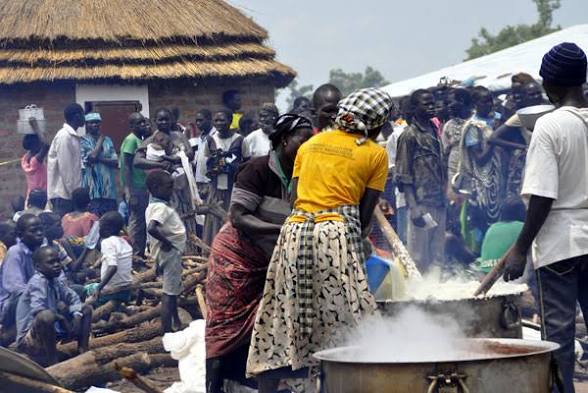

The Government of Uganda has appealed to financially capable countries to each contribute at least $1 million (Shs3.7 billion) towards refugee support, following significant funding cuts by the United States to United Nations agencies.
The Office of the Prime Minister said the country’s refugee response programmes have suffered a major setback after the UN system lost up to $65m (Shs240b) in previously committed funding.
The cuts have affected several agencies, including the United Nations High Commissioner for Refugees, (UNHCR) which plays a central role in refugee protection and assistance.
While receiving a $1 million donation from China on Tuesday, the Minister for Relief, Disaster Preparedness and Refugees, Mr Hillary Onek, said Uganda is facing mounting pressure as donor support declines.
“Previously, America was the main donor for refugee programmes, especially in logistics and feeding. However, under the new administration, they have withdrawn much of their funding to UN organisations. For countries like Uganda that host refugees, the burden now falls on us,†Mr Onek said.
He welcomed China’s intervention and called on other countries, particularly in Asia, to step in.
“We are encouraged by good Samaritans like the Chinese government. We appeal to other countries with capacity, such as India and others in the East, to come forward. Even a contribution of $1 million each would make a significant difference,†he added.
Uganda currently hosts more than 1.6 million refugees, the largest number in Africa and the third highest globally, placing increasing strain on national resources.
The remarks came as the government yesterday launched implementation of China’s $1 million emergency humanitarian assistance, targeting vulnerable groups, including new arrivals, women and children.
Humanitarian funding for Uganda’s refugee response has declined sharply over recent years. Data from UNHCR shows contributions stood at $490m in 2018 and peaked at $500m in 2019, before falling to $491m in 2020, $370m in 2021, $414m in 2022, and dropping further to $294m in 2024. In 2025, funding is projected at between $130m and $140m.
The shortfall has forced reductions in food rations, strained healthcare services and weakened education support, with some refugee households receiving only 30 to 60 percent of their basic needs.
Mr Onek noted that the situation is particularly challenging because UNHCR relies largely on voluntary contributions rather than the UN’s central budget. “When donors withdraw, the agency is left without adequate resources to manage refugee operations,†he said.
China’s Chargé d’Affaires ad interim, Ambassador Fan Xuecheng, said the $1 million assistance has already been disbursed and will provide essential supplies.
“Starting today, hot meals, bread, hygiene supplies and other basic necessities will be delivered to those in urgent need,†he said.
Amb Xuecheng attributed displacement largely to conflict and urged the international community to prioritise peace efforts. “Wars and conflicts are the root causes of large-scale displacement.
The international community should promote ceasefires and advance political solutions,†he said.
He added that China would continue supporting Uganda’s development agenda, including Vision 2040, through investments in infrastructure, agriculture and industrialisation.
Commissioner for Refugees Mr Patrick Okello said the funds will support operations in Nakivale and Kyangwali refugee settlements.


 The women who have been in King Oyo’s life
Ultimate Uganda
The women who have been in King Oyo’s life
Ultimate Uganda
 Ex Kagame Guard Commander Tom Byabagamba Dies in Rwandan Prison After 12 Years
Ultimate Uganda
Ex Kagame Guard Commander Tom Byabagamba Dies in Rwandan Prison After 12 Years
Ultimate Uganda
 Government begins salary payments for public sector workers – Reform Committee
Ultimate Uganda
Government begins salary payments for public sector workers – Reform Committee
Ultimate Uganda
 Temangalo land: NSSF, Nzenyi reach agreement
Ultimate Uganda
Temangalo land: NSSF, Nzenyi reach agreement
Ultimate Uganda
0 Comments