
Public Ignorance on National Sovereignty Bill Sparks Alarm as Parliamentary Debate Intensifies
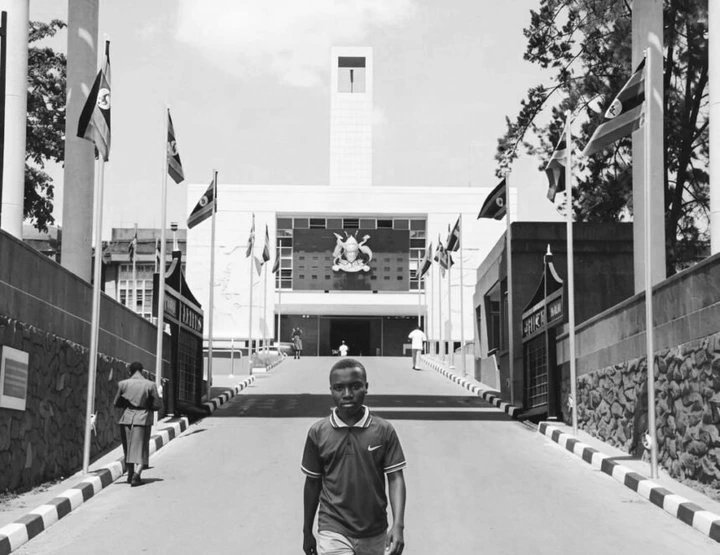

KAMPALA — As debate surrounding Uganda’s proposed National Sovereignty Bill gains momentum, fresh concerns are emerging over the low level of public awareness, with critics warning that many citizens remain dangerously disconnected from a process that could directly reshape their lives.
The controversial bill, currently before the Parliament of Uganda and tabled by State Minister for Internal Affairs David Muhoozi, seeks to regulate foreign influence and strengthen Uganda’s control over its internal affairs.
But for businessman Martin Luther Nyanzi, the biggest problem may not even be the contents of the bill itself—it is the silence and ignorance surrounding it.
Speaking after a visit to Parliament, Luther said he was shocked by how little ordinary Ugandans know about legislation that could soon carry legal consequences for them.
“I moved around and asked people about the National Sovereignty Bill, and honestly, most of them told me they don’t know it,†he said.
“This is dangerous because once it becomes law, those same people will be the first to make mistakes and claim they were never informed.â€
According to Luther, the situation exposes a wider problem of civic detachment, where major national decisions are being made while the public remains distracted by daily survival.
“Right now, Parliament is passing the national budget and debating serious laws, but many Ugandans are not paying attention,†he said.
“Some are simply going on with their daily lives—sleeping, eating, hustling—without realizing how these decisions will affect them.â€
He warned that such public disengagement could prove costly, especially if the law introduces strict compliance measures affecting citizens, NGOs, religious institutions, businesses, and community organizations.
Mixed Reactions Over the Bill
Government officials have defended the proposed law, insisting it is designed to protect Uganda’s sovereignty from undue foreign interference and ensure national interests remain paramount.
Sources within the Ministry of Justice and Constitutional Affairs argue that the legislation is necessary to shield the country from external manipulation disguised as aid, activism, or foreign-backed influence.
Veteran politician Yusuf Nsibambi is among those backing the proposal, saying Uganda must define clear legal boundaries.
“It is important that Uganda sets clear boundaries to protect its sovereignty while ensuring accountability among all actors,†he said.
However, critics insist the bill may carry dangerous loopholes if not carefully revised.
Political analyst Charles Onyango-Obbo has questioned the structure of the bill, warning that poorly drafted provisions could open doors for abuse.
Civil society actors, including Chapter Four Uganda, have also raised concerns over possible restrictions on civic freedoms and democratic participation.
“There must be clarity and wide consultation to avoid creating laws that could be misused,†a representative noted.
Meanwhile, Alliance for Finance Monitoring has called for urgent public sensitization, arguing that enforcement without awareness would create unnecessary conflict.
“A law of this nature requires citizens to fully understand it. Otherwise, enforcement becomes problematic,†an analyst observed.
Former minister Miria Matembe has equally warned that the bill could produce unintended social and economic consequences, especially for families dependent on foreign support and international partnerships.
Growing Demand for Civic Awareness
Across Kampala and beyond, reactions remain sharply divided.
While some citizens support stronger national control and reduced foreign interference, others admit they are only hearing about the National Sovereignty Bill for the very first time.
As parliamentary deliberations continue, the bill is increasingly becoming more than just a legal proposal—it is now exposing the dangerous gap between policy-making and public awareness in Uganda.
For voices like Luther’s, the warning is simple but urgent: if citizens remain asleep, they may only understand the law when enforcement begins.
And by then, it may be too late.


 Government will not gazette Kijanangoma as King of Tooro for now - Attorney General insists
Ultimate Uganda
Government will not gazette Kijanangoma as King of Tooro for now - Attorney General insists
Ultimate Uganda
 King Oyo’s Body to Arrive Thursday
Ultimate Uganda
King Oyo’s Body to Arrive Thursday
Ultimate Uganda
 Besigye, Lukwago expected to meet Gen. Salim Saleh today at Kapeeke
Ultimate Uganda
Besigye, Lukwago expected to meet Gen. Salim Saleh today at Kapeeke
Ultimate Uganda
 Rwabwogo Advised to ‘Eat His Bishop’ As MK Prepares to Enter State H’se: PREZ MUSEVENI ON HIS WAY OUT
Ultimate Uganda
Rwabwogo Advised to ‘Eat His Bishop’ As MK Prepares to Enter State H’se: PREZ MUSEVENI ON HIS WAY OUT
Ultimate Uganda
0 Comments