
Mojtaba Khamenei: Three scenarios for the fate of Iran’s “paper leader” and the power struggle in Tehran
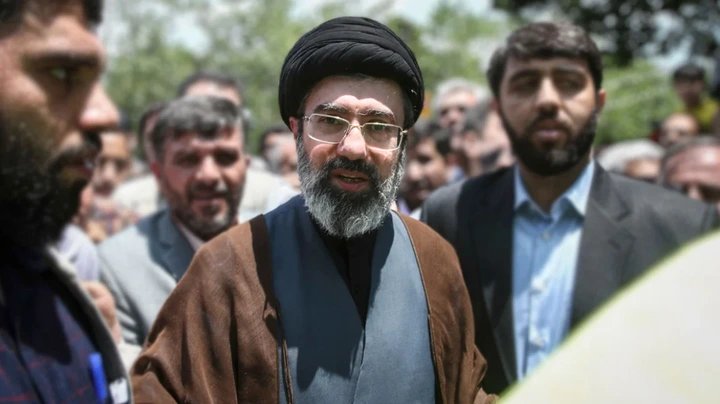

More than five months have passed since the death of Iran’s former Supreme Leader, Ali Khamenei, in a U.S.-Israeli airstrike on Tehran, an attack that effectively triggered the war in the Middle East.
He was killed alongside his daughter, one of his grandchildren—the gender of whom has not been disclosed—as well as his son-in-law and daughter-in-law.
Among those injured was his eldest son, 56-year-old Mojtaba Khamenei, who succeeded him (despite having expressed opposition to the idea while his father was alive) as the leader of the Islamic Republic.
According to reports that circulated in international media, Mojtaba Khamenei suffered severe and disfiguring facial injuries, as well as serious trauma to one or both legs.
Since then, the central question has remained: Where is Iran’s new Supreme Leader today?
Since he officially assumed office on March 9, Mojtaba Khamenei has not made a single public appearance.
His absence was initially considered understandable, as U.S. and Israeli strikes against Iranian military targets and senior regime officials were continuing almost daily.
However, even under those circumstances, he never addressed the Iranian people through a recorded video or audio message.
His first statement as Supreme Leader was read by a state television presenter, while the screen displayed only a still photograph of him.
His absence became even more noticeable during his father’s funeral on July 4, with the regime citing security reasons.
He also failed to appear during the Nowruz celebrations on March 20, breaking a three-decade tradition, as Ali Khamenei had customarily delivered a televised New Year message to Iranians every year.
Doubts over his health condition
At a time when the United States resumed airstrikes against Iranian military targets following Revolutionary Guard attacks on tankers in the Strait of Hormuz, Donald Trump escalated his rhetoric, declaring that Washington would “crush Iran.”
Despite the seriousness of the situation, Mojtaba Khamenei remained completely silent.
A former Mossad official, who now works with the Jerusalem Centre for Security and Foreign Affairs (JCFA), told the Daily Mail that it is “extremely doubtful” whether Mojtaba Khamenei is still alive—or, even if he is alive, whether he is capable of fully carrying out his duties.
According to the former official, his absence from his father’s funeral is a strong indication that he suffered serious incapacitation and was not merely being protected for security reasons.
“In Shiite tradition and Iranian culture, attending one’s father’s funeral is considered a sacred duty. The fact that he did not appear suggests weakness rather than operational security precautions,” he said.
He added that a country effectively at war and close to acquiring nuclear weapons appears, theoretically, to be governed by a man whom nobody has seen publicly for months.
The three leading scenarios
According to Western security sources cited by the Daily Mail, if Mojtaba Khamenei is alive, he is likely located in an unknown, highly secure underground facility.
Various theories have emerged, ranging from networks of underground tunnels beneath Tehran to a bunker near the holy city of Qom, although none have been confirmed.
Western intelligence services believe that despite months of continuous bombardment, the Iranian regime still maintains several secure underground shelters.
Based on currently available information, three main scenarios have emerged regarding his fate.
Scenario one: Hidden inside Iran and still ruling from a bunker
The first scenario suggests that Mojtaba Khamenei is somewhere inside Iran, continuing to perform his duties from a hidden location but avoiding any public appearance because of the serious facial injuries he sustained.
This is the narrative promoted by senior Iranian officials.
In a video broadcast on July 21 by state media, Iranian President Masoud Pezeshkian claimed that Mojtaba Khamenei’s health was gradually improving.
“Communication with our dear Supreme Leader is becoming better every day and must be strengthened even further, so that under his guidance we can resolve our problems,” he said.
However, the statement was met with considerable skepticism by Western analysts and intelligence agencies.
The Russia escape scenario
The second theory circulating is that Mojtaba Khamenei has left Iran and is currently in Russia, following the example of other allies of Moscow.
As an example, analysts point to former Syrian President Bashar al-Assad, who is reportedly living in a luxurious residence in Moscow’s Rublyovka district.
This scenario does not appear highly probable, as the Mail notes that leaders of the Islamic Republic have traditionally not abandoned the country even during its most difficult moments.
The most likely scenario: Severely injured or in a coma
The third theory is considered by many analysts to be the most likely.
According to this scenario, Mojtaba Khamenei is in an extremely critical condition, possibly even in a coma, or at the very least is unable to perform even the basic duties of Supreme Leader.
The Saudi television network Al-Hadath reported that all statements issued in his name are actually drafted by Revolutionary Guard commander Ahmad Vahidi and other senior military officials.
The “Paper Leader”
If Mojtaba Khamenei is indeed alive, analysts believe that for approximately five months he has not used either telephones or computers in order to avoid detection.
His prolonged disappearance has led many Iranians to give him the nickname “The Paper Leader.”
Speculation intensified after reports emerged that a cardboard likeness of him, rather than the actual Supreme Leader, was used at a pro-government rally.
The rumor was further fueled by AI-generated videos that became widely popular on social media, depicting “paper” Khamenei taking part in meetings with Donald Trump and other international leaders.
According to the Daily Mail, the Iranian regime’s response only deepened suspicions.
State media published AI-generated videos showing Mojtaba Khamenei delivering speeches, standing beside his late father, and embracing the also deceased commander of the Revolutionary Guard, Qassem Soleimani.
For many Iranians, the use of such material was interpreted as evidence that the regime does not possess genuine, recent images of the man presented as the country’s Supreme Leader.
Mossad Turns to Human Intelligence
According to Western security sources, the search for Mojtaba Khamenei is now based almost exclusively on human intelligence (HUMINT).
As a Western security official explained, it is logical that the new Supreme Leader has completely disappeared from all electronic traces, recalling that Mossad had previously managed to breach even Tehran’s traffic camera system in order to track the movements of Ali Khamenei’s bodyguards. “Now technology is not enough. It is time for the old methods,” the source said.
Israeli intelligence services are making use of their long-standing networks of agents inside Iran, which have proven decisive in the past both in locating nuclear facilities and in operations targeting Iranian nuclear scientists.
“We will use every means available to us. We can bribe people, monitor the communications of senior regime officials, and even infiltrate Iran’s national infrastructure. For now, the objective is not even to kill him. We simply want to know whether he is alive,” the same source stated.
According to the same information, if Mojtaba Khamenei is alive, he communicates exclusively through handwritten notes, which are passed along a chain of couriers, with each person knowing only the previous and the next link in the chain.
Former Mossad officials compare this method to the communication system used for years by Osama bin Laden to avoid detection by U.S. intelligence agencies.
At the same time, they believe that Mojtaba avoids even appearing in daylight, fearing that he could be detected by American surveillance satellites, while he is protected by a very small circle of trusted Islamic Revolutionary Guard Corps (IRGC) personnel.
The Revolutionary Guards at the Center of Power
Although Mojtaba Khamenei is a cleric, he has maintained close ties with the Islamic Revolutionary Guard Corps for years.
He served briefly in an IRGC unit during the Iran–Iraq War (1980–1988), while after 2009 he assumed various roles connected to the intelligence services of both the Revolutionary Guards and the Basij paramilitary organization.
However, according to Western analysts, regardless of where the new Supreme Leader is located or what condition he is in, real power in Iran has now shifted to the Revolutionary Guards.
As noted, the IRGC is not merely a military force. It wields enormous influence over the country’s intelligence services, politics, and economy, controlling activities ranging from construction and energy to banking, telecommunications, and Iran’s network of allied organizations across the Middle East.
“The Real Center of Power Has Changed”
A former Mossad official told the Mail that the balance of power in Tehran has fundamentally shifted.
According to him, the real decision-making center is now located within an informal power group that includes IRGC commander Ahmad Vahidi, Secretary of the Supreme National Security Council Mohammad Bagher Zolghadr, and other senior figures within the security apparatus.
“The clerics have been systematically marginalized. The Revolutionary Guards pretend that they are receiving orders from Mojtaba in order to preserve the appearance of institutional continuity. In reality, they are the ones ruling,” he claimed.
Internal Power Struggles
Journalist Negar Mojtahedi of Iran International notes that the internal picture within the Iranian regime is even more complicated.
In addition to the faction aligned with the Revolutionary Guards and Ahmad Vahidi, there is a second powerful bloc that includes Foreign Minister Abbas Araghchi and President Masoud Pezeshkian, representing more of the regime’s diplomatic and governmental wing. According to her, the two groups are already engaged in intense rivalry.
Mojtahedi recalls that in a recent podcast, when Abbas Araghchi was asked about Mojtaba Khamenei, he replied that he had never met him.
In her assessment, this statement was a carefully calculated political message, through which the foreign minister sought not to personally associate himself with a leader whose position is either still disputed or has not yet been fully consolidated within the regime.
The journalist believes that after the end of the war, one of the competing factions will prevail and exercise power, even if the formal image is maintained that Mojtaba Khamenei remains at the top of the hierarchy.
As she puts it, the era when political rivalry in Iran was between hardliners and reformists is effectively over. “There are no longer reformists. From now on, it will be a conflict between different groups of hardliners,” she said.
Rumors About His Personal Life
Negar Mojtahedi also points out that the AI-generated satirical videos and posters portraying Mojtaba Khamenei as a “missing figure” reflect something deeper than simple mockery.
“Most Iranians do not even care whether Mojtaba is alive or dead. For them, this entire affair has turned into a bitter joke,” she said.
The same indifference surrounds persistent rumors circulating among intelligence circles and Western media — first publicly revealed by the New York Post in March, citing anonymous sources from U.S. intelligence and the White House — claiming that Mojtaba is secretly homosexual.
The allegations were sensational: a long-term relationship with a man who worked in Khamenei’s household, “aggressive sexual advances” toward male caretakers, and claims that these issues influenced his father’s doubts about his suitability as successor because of his sexuality.
As expected, Donald Trump mocked the allegations, referring to Iran’s “gay dictator,” but the rumor gradually faded and remained merely speculation, as Iranian citizens inside the country are far more concerned with the everyday problems they face.


 Press review: US-Iran seek talks as Ukraine ups civilian hits and Syria oil route
Ultimate Uganda
Press review: US-Iran seek talks as Ukraine ups civilian hits and Syria oil route
Ultimate Uganda
 Surprise attack: Iran blasts US base in Kuwait
Ultimate Uganda
Surprise attack: Iran blasts US base in Kuwait
Ultimate Uganda
 Russian planes fire a salvo of glide bombs at a southern Ukraine...
Ultimate Uganda
Russian planes fire a salvo of glide bombs at a southern Ukraine...
Ultimate Uganda
 US military seeking ‘unconventional ways’ to punish Iran – report
Ultimate Uganda
US military seeking ‘unconventional ways’ to punish Iran – report
Ultimate Uganda
0 Comments