
Sugarcane farmers decry market crisis as factory plan stalls over license
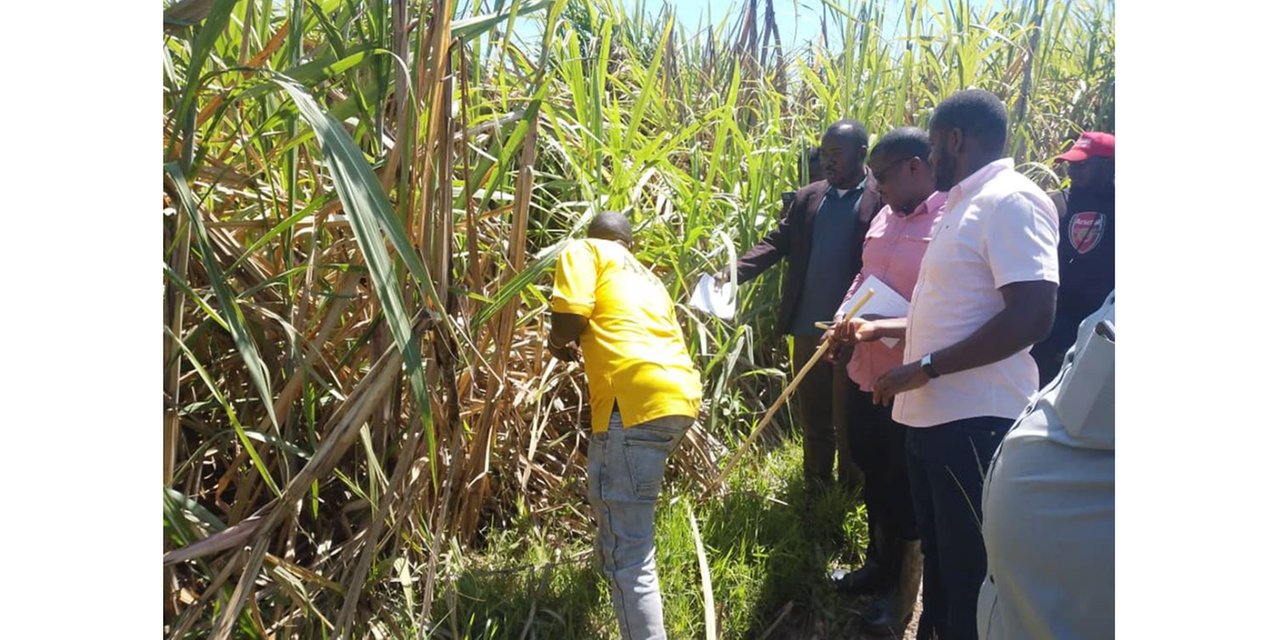

Sugarcane farmers and leaders across Kagadi, Kibaale, and Kakumiro districts in Greater Kibaale, Bunyoro sub-region, are increasingly frustrated as continued delays in licensing a proposed sugar factory threaten their livelihoods.
Many are reporting heavy losses due to limited market access and low prices offered by existing mills.
For years, sugarcane growers in Greater Kibaale have relied on selling their produce to Hoima Sugar in Hoima District and Kinyara Sugar factory in Masindi District.
However, farmers say the two factories dominate the market and dictate prices that barely cover production costs, leaving them trapped in a cycle of debt and uncertainty.
The situation has fueled growing support for a proposed sugar factory to be established in Greater Kibaale by local investor Amon Kakama, whose plans to set up a processing plant in the area remain stalled due to licensing challenges.
Across Greater Kibaale, farmers describe a troubling pattern: being instructed to harvest their sugarcane, only for buyers from processing factories to delay or fail to collect it, leading to losses as the cane dries or, in some cases, is destroyed by fire.
“Farmers have continued to incur losses because they are asked to cut their sugarcane, but it stays for long without being transported to processing factories. By the time buyers come, if they come at all, they exploit farmers with low prices caused by lack of market. Some cane even gets burnt,†Mr Ndibwami B. Yosia, the Kagadi District LCV Chairperson, said.
He added that many farmers take loans to invest in sugarcane growing, expecting reliable returns. Instead, they now face mounting debts as their produce goes unsold or is bought at significantly reduced prices.
Mr John Kahuma Ashaba, a farmer in the area, told this publication that he has over 40 acres of mature sugarcane with no buyer in sight.
“We have been neglected. I have ready sugarcane on over 40 acres, but there is no market. At one point, my 20 acres of ready sugarcane caught fire and were destroyed, and more than 50 tons dried up in the garden after buyers failed to show up,†he said.
He added that the cost of harvesting only adds to the burden. “We are encouraged to cut the cane and incur the costs, only for the buyers not to show up. More than 50 tons of sugarcane dried in the garden after factories that had initially requested us to harvest failed to buy. On average, I spend about Shs600,000 per truck. Each bundle of cane contains 10 stems and is cut at Shs100. By the time a truck is fully loaded, I have spent over Shs300,000 paying about 20 workers,†he explained.
Farmers also point to declining prices as evidence of an oversupplied but underserved market. A ton of sugarcane that previously fetched around Shs90,000 is now reportedly bought at about Shs70,000 or less.
Mr Lubanga Charles, another farmer, said the situation has disrupted the normal harvesting cycle and resulted in overgrown cane in the garden.
“Sugarcane should be harvested three times in three years, but now we are harvesting only once. This is a big loss. I have over 100 acres ready, but there is no market. The buyers set prices that favor them, not us and sometimes you don’t have an option. That is why we need our factory,†he said.
He said the absence of nearby processing facilities further complicates matters, as all farmers must transport their cane over long distances to factories in Hoima or Masindi, increasing costs and reducing profitability.
Investor’s vision faces delays In 2023, Amon Kakama, an investor, initiated plans to establish a sugar factory in Greater Kibaale, aiming to create a reliable market for farmers and reduce transportation costs.
However, he said his efforts stalled due to the absence of a regulatory body at the time.
Following the establishment of the Uganda Sugar Industry Stakeholders’ Council in October 2025 under the Sugar (Amendment) Act, Kakama said he reapplied for a license. Despite this, the process has remained uncertain.
“I applied again after the council was formed, and they sent teams to assess whether the area has enough sugarcane to support a factory. But up to now, the license has not been approved,†he said.
According to Kakama, the delays have persisted despite favorable findings from assessment teams.
“I have over 4,000 acres of sugarcane and have supported more than 1,000 farmers to grow cane. It’s unfortunate, about 2,000 acres were destroyed by fire under unclear circumstances.â€
He insists that the factory would not only benefit farmers but also stimulate economic growth in the sub-region.
“My intention is to bring the market closer to farmers, reduce transport costs, and ensure a ready market for sugarcane. But it seems some players fear competition and want to maintain control of the sector,†he said.
The Uganda Sugar Industry Stakeholders’ Council was inaugurated in October 2025 under the Sugar (Amendment) Act, 2025 and is headed by Mr. Rajbir Singh Rai, Director of Kinyara Sugar Works.
It is a statutory body tasked with regulating, promoting, and overseeing the sustainable growth of the sugar sector. Composed of farmers, millers, and government officials, it manages licensing, sets prices, and enhances sector competitiveness.
On January 31 this year, a delegation from the sugar council leadership visited Kagadi District and assessed three sugarcane farmers, reportedly concluding that the area has sufficient capacity to supply a factory.
However, the council later directed a second assessment on April 8, this time requiring evaluation of at least ten large-scale farmers before making a decision.
Mr. Issa Budugo, a member of the sugar council who led the delegation on April 8 to assess farmers in Kagadi District, said the area has sufficient sugarcane to sustain a factory.
“Following an application from Kagadi Sugar, we conducted an assessment to determine whether farmers have the capacity to supply the proposed industry. Our findings show that farmers have more than enough sugarcane. Based on the eight sample areas we assessed, Kagadi Sugar meets the requirements and should be granted permission to begin operations. The report I have is strong enough to support the establishment of Kagadi Sugar,†Budugo said.
During the assessment, some sugarcane already cut and ready for transportation was found drying in gardens after farmers had harvested with the hope that it would be bought for processing.
Ms. Joyce Laker Santa, a member of the Sugar Council committee and part of the assessment team that visited Kagadi Sugar farms, said Mr. Amon meets the requirements to start a sugar factory.
“Mr. Amon is currently the only Ugandan investor in the sugar industry. He has the farmers, the land, and the sugarcane, and he is ready to invest. He should be supported as a role model for other Ugandans. He qualifies, and unlike many others in the sector who are foreign-owned, he deserves to be given an opportunity,†she said.
The Chairperson of the Sugarcane Farmers’ Cooperative in Kagadi District, Mr. Lugese Milton, said denying a license to an investor is unfair and has left many sugarcane outgrowers counting losses.
“I see no reason why the Kagadi Sugar Factory should be denied a license. The nearest factories are concentrated in Hoima and Masindi. It is time for us to have a reliable market for our sugarcane. Consider the stretch between Hoima and Katara [Kyenjojo District] — there is no factory, yet farmers are there,†Milton explained.
He added that the establishment of a sugar factory in their area would create a ready market, generate employment for the youth, and boost the local revenue base for the districts.
Mr. Milton further noted that sugarcane farmers face numerous challenges, including financial, labor, and broader economic constraints.
The Kagadi Sugarcane Growers Cooperative Association has about 400 members.
“We previously relied heavily on prison labor to cultivate our sugarcane fields, but facilitating this labor became difficult. We then decided to form an association with the aim of pooling resources, including purchasing a tractor to support cultivation. The association was also intended to help share production costs and ensure we always have backup capital for our farms,†he stated.
As frustrations mount, district leaders and farmers are planning to petition the Office of the Prime Minister, seeking intervention to resolve the stalemate.


 The women who have been in King Oyo’s life
Ultimate Uganda
The women who have been in King Oyo’s life
Ultimate Uganda
 Ex Kagame Guard Commander Tom Byabagamba Dies in Rwandan Prison After 12 Years
Ultimate Uganda
Ex Kagame Guard Commander Tom Byabagamba Dies in Rwandan Prison After 12 Years
Ultimate Uganda
 Government begins salary payments for public sector workers – Reform Committee
Ultimate Uganda
Government begins salary payments for public sector workers – Reform Committee
Ultimate Uganda
 Temangalo land: NSSF, Nzenyi reach agreement
Ultimate Uganda
Temangalo land: NSSF, Nzenyi reach agreement
Ultimate Uganda
0 Comments