
Betrayal in the city?
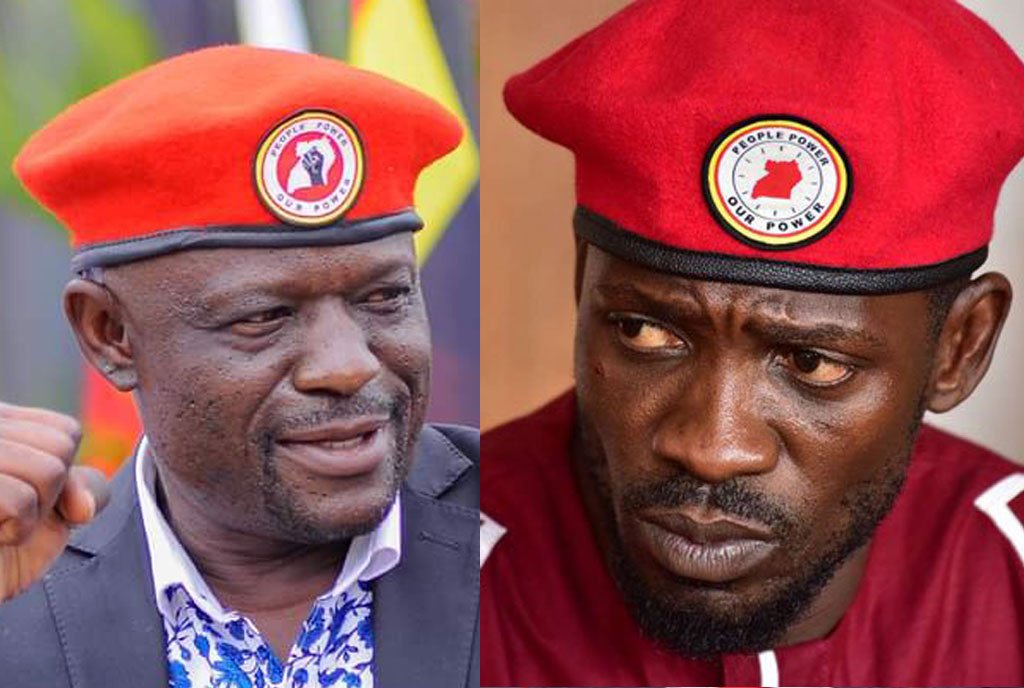

Whenever Robert Kyagulanyi’s eldest brother and National Unity Platform (NUP) party stalwart Fred Nyanzi Ssentamu is knotted in controversy, those who hold him in contempt quickly share a picture of him sporting a National Resistance Movement (NRM) shirt.
The picture, which is not doctored, resurfaced this week when it emerged from a court session that the State had moved to list Mr Nyanzi as one of its witnesses to pin NUP members. The members include Edward Ssebuufu, alias Eddie Mutwe; Alex Waiswa Mufumbiro; Olivia Lutaaya; and Achileo Kivumbi. Others are Sauda Madaada; Tasi Calvin, alias Bobi Giant; Edwin Serunkuuma, alias Eddie King Kabenja; Sharif Lukenge; Yasin Nyanzi; and Tonny Kaweesi.
All are accused of so-called unlawful military drills in contravention of Section 45(1)(b) of the Penal Code Act. Under the Penal Code, a colonial-era relic, an unauthorised meeting intended for military training or drilling is a felony. Though the case hasn’t taken the limelight, the stakes are high because Section 45(1)(b) says those found guilty of being present at the assembly can be imprisoned for up to seven years. Those convicted of organising the assembly also could possibly serve a seven-year term, while those who are convicted of attending to be trained, or being trained, risk serving five years.
Genesis
NUP’s members ran into trouble in February 2025 after videos surfaced online of the so-called “foot soldiersâ€, led by Nyanzi, alias Chairman Nyanzi, who was then the party’s mobilisation chief. The group was executing a military-style parade at the party’s headquarters as a way of celebrating Kyagulanyi’s birthday. Clad in red overalls and berets, the young men staged a parade which was inspected by Kyagulanyi, alias Bobi Wine, a former musician who is trying to end President Museveni’s over four-decade-long hold on power. With Nyanzi in the lead, the foot soldiers could be heard paraphrasing or remixing the Bush War songs of the National Resistance Army (NRA). The outfit now known as the Uganda People’s Defence Forces (UPDF) catapulted Mr Museveni to power after a guerrilla war in Luweero that occupied the first half of the 1980s.
Once the footage surfaced on the Internet, the UPDF’s response was swift. The participants were told that they would pay a heavy cost. “Our message is very clear. If you don’t want to be tried by the Court Martial, then don’t behave like a soldier. You behave like a soldier, you qualify yourself to be tried by the military court,†Maj Gen Felix Kulayigye, the army’s Director of Public Information, explained. Chief of Defence Forces Muhoozi Kainerugaba reacted to the parade by saying he would behead Bobi Wine. Though the Supreme Court stopped the army in its tracks from trying civilians like NUP’s foot soldiers, State agents started picking them off the streets, petrol stations, and village walkways.
Nyanzi was among those abducted in the aftermath of the NUP “military†parade. “He was abducted at gunpoint from Kubbiri Roundabout. The criminal regime is on a rampage, but we are not intimidated,†Bobi Wine said following his elder brother’s disappearance. After days of disappearing, Nyanzi reappeared. He recounted gory details of suffering at the hands of government functionaries such as the Chieftaincy of Military Intelligence (CMI), now Defence Intelligence and Security, and Joint Anti-Terrorism Taskforce (JATT). This, he added, was before he was dumped by the roadside.
Chairman cracks?
Nyanzi also disclosed that government functionaries tried to coerce him to reveal the names of those who had attended the parade. In fact, Nyanzi admitted that he actually revealed some of the names of those who had attended the parade. He rationalised this, saying NUP, as a party, had nothing to hide. “They showed me the footage, asking me the names of the individuals who were at the parade, and I revealed them. We did everything in the open, so I told them what I knew,†Nyanzi explained last year. After it recently emerged that the State had included him on the list of its witnesses, Nyanzi’s opponents within and without NUP moved to use those very words to accuse him of striking a deal with the State.
One of the narratives is that during the time he was abducted, Nyanzi struck a deal with security to be its witness in exchange for his freedom. Legal experts Weekend Monitor spoke to have warned that, even if Nyanzi wrote a statement in which he supports the State’s case, he can easily disown it on the grounds that it was extracted from him under duress. “He was abducted and tortured. Therefore, whatever he revealed after being subjected to torture is illegal,†Eron Kiiza, a human rights lawyer, explained. Nyanzi has come out quickly to deny that he has ever done a secretive deal to pin NUP prisoners.
“I would like to state from the onset, I have never recorded any statement before any authority regarding this matter. I was equally abducted, held incommunicado, tortured and eventually dumped on the street on the basis of similar charges,†Nyanzi said. The NUP stalwart has sought to frame the move by the State to include him as a witness as a way of sowing seeds of distrust within NUP and the wider Opposition. “The prosecutors, who clearly have been deployed as weapons to harass, intimidate and instil fear in the country, particularly targeting of members of the National Unity Platform,†he said, adding, “It is very clear that the objective of the State is not only to persecute leaders of NUP but also cause disharmony, mistrust and break cohesion within the organisation by maliciously seeking to compel and ensure my attendance as a witness in a matter against my comrades.â€
Under the spotlight
Nyanzi seems to be of the view that the State intends to invoke Section 94 of the Magistrates Courts Act. The provision stipulates that when it appears that material evidence can be given by or is in the possession of any person, a magistrate’s court may issue a summons requiring them to attend and testify, or produce documents. In this trial that has dragged on for months, with presiding magistrates refusing to grant the accused bail and the prosecution failing to present witnesses, media houses have undergone significant restrictions. These have included bans on live video, photography, and audio recording inside courtrooms. It remains to be seen how Nyanzi’s addition to what is shaping into a jigsaw puzzle will impact the outlook of a complicated case. Before Bobi Wine started his People Power movement that later morphed into NUP, Nyanzi was one of the NRM grassroots activists in the Kampala Central constituency.
His base was in the slum of Kamwokya, which is now a NUP stronghold. Nyanzi also stood in the 2010 NRM primaries to be the party’s flagbearer in the Kampala Central parliamentary race. He was controversially beaten by Muhmmad Nsereko, who has since represented the constituency for three terms. Nyanzi’s role within NUP has not been short of controversy. His detractors have claimed that once NUP was formed in 2020 and Nyanzi assigned the chief mobiliser role, he immediately became the Salim Saleh of NUP.
This implied that Nyanzi had the same powers as President Museveni’s brother, Caleb Akandwanaho, alias Saleh. It’s a common theme in Ugandan discourse that Saleh, a Luweero Bush War veteran, is the most powerful person in Uganda after his brother Museveni. Upon NUP being founded, sources say Nyanzi had a lot of influence on who was to get the party’s much-sought-after ticket. The said process, it is alleged, largely did not take into account issues like meritocracy but was rather rooted in family or kinship ties, acquaintances and money. This meant that Nyanzi’s word had more weight than NUP’s Elections Management Committee (EC).
Elective politics
In 2021, Nyanzi once again lost his bid to become the Kampala Central legislator to Nsereko. During the last term, Nyanzi decided that he wouldn’t stand again in Kampala Central. He toyed with the idea of challenging Erias Lukwago for Kampala Lord Mayorship. When Nyanzi realised that beating the incumbent would be a tall order, he decided to stand in Kawempe South. The constituency had been abandoned by Bashir Mbaziira Kazibwe, a former journalist. Although Nyanzi thought getting the card was a done deal, Roy Ssembogga, who was one of the early supporters of the People Power movement, threw his hat into the race.
Many of Ssembogga’s supporters within NUP insisted that he is more intellectually astute to represent Kawempe South in Parliament than Nyanzi, who they insist can’t express himself in coherent English.
The main thread among Ssembogga’s supporters was that since Kawempe South hosts Makerere University, Uganda’s premier institution, it would be irresponsible to be represented by Nyanzi. Yet with Bobi Wine backing his elder brother, it was simply impossible for Ssembogga to get the NUP ticket. As such, he decided to stand as an Independent. While Ssembogga’s campaign was driven by elites, Nyanzi showed that he is more grounded among the people. Still, he came second after the Electoral Commission declared NRM’s Madina Nsereko the winner. Nyanzi has filed an electoral petition insisting that the Declaration Forms show that he won. He further asserts that the move by the State to list him as a witness against his allies is a move to divert him from pursuing his case.
“We have a good case. We clearly won this election. We should be united and focused as the Opposition at this time,†Nyanzi, who is now NUP’s secretary for international relations, said. Those who don’t trust Nyanzi within NUP insist that the party should carry out an inquest in a bid to find out if, at all, he still has connections with the ruling regime. “We need to be honest with ourselves. We can’t just be talking about NRM only, but also one of our own,†a NUP activist, who spoke on the condition of anonymity, told Weekend Monitor.


 Government will not gazette Kijanangoma as King of Tooro for now - Attorney General insists
Ultimate Uganda
Government will not gazette Kijanangoma as King of Tooro for now - Attorney General insists
Ultimate Uganda
 King Oyo’s Body to Arrive Thursday
Ultimate Uganda
King Oyo’s Body to Arrive Thursday
Ultimate Uganda
 Besigye, Lukwago expected to meet Gen. Salim Saleh today at Kapeeke
Ultimate Uganda
Besigye, Lukwago expected to meet Gen. Salim Saleh today at Kapeeke
Ultimate Uganda
 Rwabwogo Advised to ‘Eat His Bishop’ As MK Prepares to Enter State H’se: PREZ MUSEVENI ON HIS WAY OUT
Ultimate Uganda
Rwabwogo Advised to ‘Eat His Bishop’ As MK Prepares to Enter State H’se: PREZ MUSEVENI ON HIS WAY OUT
Ultimate Uganda
0 Comments