
Uganda Ordered to Pay Shs522 Bn After Losing London Arbitration Over Rail Concession
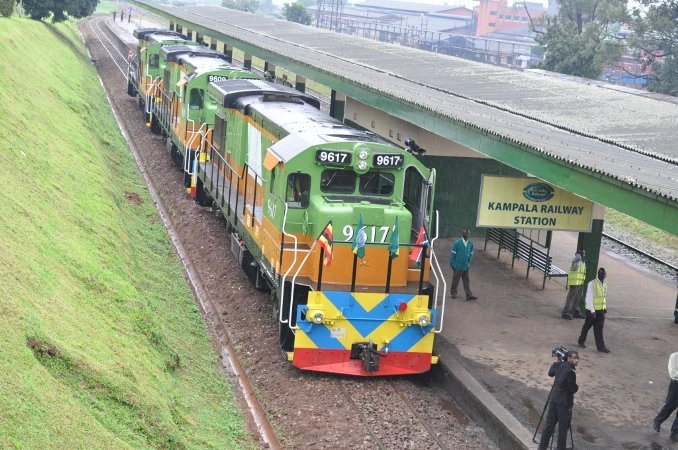

Uganda has been ordered to pay about Shs522 billion ($138.93 million) to Rift Valley Railways Uganda Limited (RVRU) after an international arbitration tribunal in London found that the government “wrongfully terminated†a railway concession agreement.
The dispute arises from a regional rail privatisation effort launched in 2005, when Rift Valley Railways (RVR), a private consortium, was awarded a 25-year concession to operate and rehabilitate the Kenya–Uganda railway network.
The concession covered more than 1,300 kilometres from the port of Mombasa to Kampala and was intended to modernise freight transport and revive the ageing metre-gauge line.
RVR’s ownership evolved over time, with Africa Railways Limited, a subsidiary of Egypt’s Qalaa Holdings, taking a controlling stake of up to 85% by 2014, while Uganda’s Bomi Holdings Limited retained a minority share.
Despite the strategic ambitions of the project, the concession was dogged by funding constraints, missed investment targets and operational inefficiencies.
Both Uganda and Kenya eventually terminated the concession by 2018, citing years of underperformance and failure to rehabilitate the network to expected standards.
While the arbitration tribunal acknowledged these shortcomings, it ruled that Uganda “did not follow the contractual procedures†required when it terminated the agreement in 2016.
The panel found that this misstep “constituted a breach of contractâ€, exposing the government to compensation claims.
In its ruling, the tribunal held Uganda liable for $138.93 million in damages, with interest accruing at 8% annually until payment is completed.
The claimants had initially sought $527.9 million, including projected future profits, but the tribunal rejected that portion of the claim.
Chair Klaus Reichert described the projections as speculative, citing the company’s inconsistent financial performance.
“I reject any award for lost profits,†he ruled, significantly reducing Uganda’s potential liability.
Uganda was also ordered to pay $1.27 million (about Shs4.7 billion) in legal and arbitration costs.
A counterclaim in Uganda’s favour, worth about $102,800, was upheld but remains marginal compared to the overall award.
The ruling highlights the legal and financial risks associated with large-scale public-private partnerships, particularly when contract termination processes are not strictly followed, even in cases where performance concerns are well established.


 Starlink goes live in Uganda; price comparisons against MTN, Airtel
Ultimate Uganda
Starlink goes live in Uganda; price comparisons against MTN, Airtel
Ultimate Uganda
 NSSF sets September 24 for Annual Members Meeting as savers await interest rate declaration
Ultimate Uganda
NSSF sets September 24 for Annual Members Meeting as savers await interest rate declaration
Ultimate Uganda
 Boda boda riders launch e-commerce, digital loans platform
Ultimate Uganda
Boda boda riders launch e-commerce, digital loans platform
Ultimate Uganda
 Rwanda: We Cannot Sit and Watch As Illicit Alcohol Kills People - Kagame
Ultimate Uganda
Rwanda: We Cannot Sit and Watch As Illicit Alcohol Kills People - Kagame
Ultimate Uganda
0 Comments