
No more excuses, minister orders overhaul of delayed digital plate system


Transport Minister Katumba Wamala (center), Ministry ofTransport Commissioner Winstone Katushabe, officials from Uganda Revenue Authority, Integrated Transport Management System, clearing agents and car dealers pose after a meeting at Mestil Hotel & Residences in Kampala on May 5, 2026. PHOTO/GEOFREY MUTUMBA.
Government has moved to quicken the troubled rollout of digital number plates, promising one-hour vehicle registration and issuing tough directives to eliminate delays that have frustrated motorists and cost car dealers millions in idle stock.
At a high-level meeting in Kampala on Tuesday, Works and Transport Minister Gen Katumba Wamala cracked down on what he described as “excuses†and delayed inefficiencies across agencies, ordering immediate reforms to speed up the process.
“We have had a lot of back and forth and finger pointing, with each party claiming it is not responsible. We now want to find solutions so that we can establish effective support systems and enable Ugandans to get number plates as quickly as possible,†Gen Katumba said.
As part of the renewed push, the ministry pledged to unveil an expedited digital system expected to cut registration time from eight hours to just one hour.
Mr Wistone Katushabe, Commissioner for Transport Regulation and Safety at the ministry, said the reform is part of broader efforts to streamline services and strengthen vehicle identification.
“Once we put this system in place, we want to commit that the ministry will reduce the time it takes to register a new vehicle from eight hours to one hour,†he said.
The digital plates, embedded with QR codes and radio frequency identification (RFID) chips, are being rolled out under the Intelligent Transport Monitoring System (ITMS), implemented with Russian firm Joint Stock Company Global Security (JSCGS), aimed at enhancing security through real-time vehicle tracking.
But despite the technology’s promise, the system has been bogged down by shortages, system failures, and administrative lapses, prompting industry-wide concern.
Gen Katumba dismissed earlier claims that supply disruptions linked to Middle East conflicts were to blame, directing implementers to urgently fix logistics.
“Let us not use excuses about missing components. Flights are operating. If you need a special aircraft, I can provide one. We want this system to be as efficient as acquiring a driving license; within 45 minutes, and you have your license,†he ordered.
Officials acknowledged that internal weaknesses have compounded the problem, with Mr Katushabe citing internet outages and frequent application errors often caused by untrained personnel as major contributors to delays.
“There are cases where trained staff delegate work to interns, leading to wrong entries that slow down the entire process,†he said.
Car dealers and clearing agents, however, accused authorities of dragging their feet.
Mr Kezekia Bwire, vice chairperson of the Uganda Clearing Industry and Forwarding Association (UCIFA), said limited scheduling for plate fitment has worsened the backlog.
“They are mandated to schedule vehicles for plate fitment, but they only do it once a day. They do not work with urgency,†he said.
In response, Ms Immaculate Natukunda, the ministry’s project coordinator, pledged to increase scheduling frequency to clear the backlog.
“From now on, I commit to scheduling more than once a day, about two or three times daily,†she said.
The minister also directed that all vehicles scheduled for installation must be handled the same day, warning against postponements.
The Intelligent Transport Monitoring System (ITMS) was further instructed to maintain a daily reserve of at least 200 pre-assembled plates.
Concerns over delays in payment verification reported to take up to four days also came under scrutiny.
However, ITMS officials attributed the delays to incorrect information provided by clients.
“When making payments, customers sometimes fail to correctly indicate vehicle details narrations, which results in delays,†said Mr David Tussevana, ITMS Deputy Head of Customer Support.
To plug the gaps, the ministry has ordered the establishment of a customer service desk to resolve errors in real time, while also planning to decentralize installation centers to reduce congestion in Kampala.
“Next financial year, you should not have to travel to Kampala to have your vehicles registered,†Mr Katushabe said.
As of May 5, 2026, a total of 100,791 private motor vehicles, 4,525 government vehicles, and 245,384 motorcycles had been fitted with digital number plates, underscoring both the progress made and the urgency to fix a system now under intense public scrutiny.


 Starlink goes live in Uganda; price comparisons against MTN, Airtel
Ultimate Uganda
Starlink goes live in Uganda; price comparisons against MTN, Airtel
Ultimate Uganda
 NSSF sets September 24 for Annual Members Meeting as savers await interest rate declaration
Ultimate Uganda
NSSF sets September 24 for Annual Members Meeting as savers await interest rate declaration
Ultimate Uganda
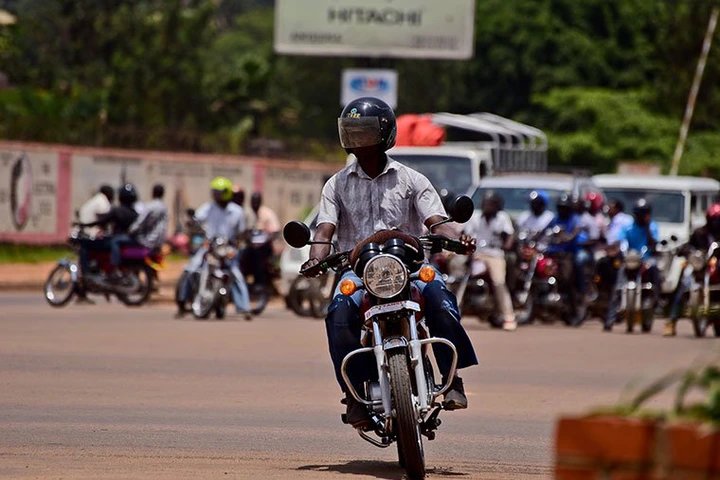 Boda boda riders launch e-commerce, digital loans platform
Ultimate Uganda
Boda boda riders launch e-commerce, digital loans platform
Ultimate Uganda
 Rwanda: We Cannot Sit and Watch As Illicit Alcohol Kills People - Kagame
Ultimate Uganda
Rwanda: We Cannot Sit and Watch As Illicit Alcohol Kills People - Kagame
Ultimate Uganda
0 Comments