
7,000 Nakasongola households yet to vacate Lake Kyoga buffer zone
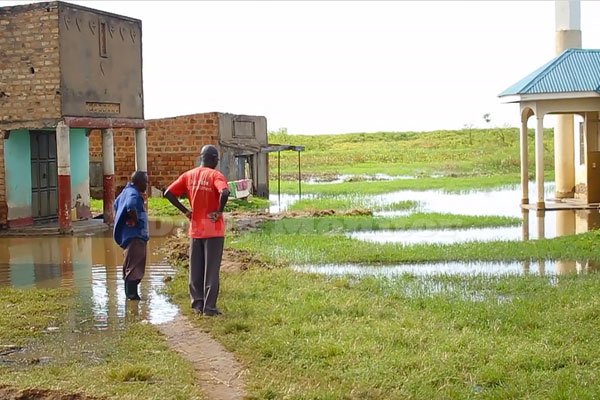

More than 7,000 households in Nakasongola District remain within the newly demarcated Lake Kyoga buffer zone, two years after the government issued a six-month eviction notice, raising concerns over displacement without compensation or relocation plans.
In June 2024, authorities directed all residents settled within the expanded buffer zone to vacate within six months. The deadline has since elapsed, but hundreds of families across multiple landing sites, including Zengebe in Lwampanga Town Council, continue to occupy homes and commercial structures.
Many residents argue that the demarcation process lacked transparency and failed to account for existing land ownership.
Mr Christopher Kambugu, a resident of Zengebe Village, said affected households had legally acquired land, some holding government-issued titles.
“It is not that we are disobedient citizens, but we invested money in land purchase,†Mr Kambugu said on April 29, 2026.
He added: “We believe that at the time the government issued the land titles, the areas we occupy were not part of the Lake Kyoga buffer zone. We expected compensation and possibly a relocation plan that never materialised.â€
Mr Kambugu said the new boundary now affects both his residential home and commercial building, leaving his family with only a small portion of their original five-acre property.
Other residents say they have no means to relocate.
Mr Edmond Ssegawa, also of Zengebe landing site, said the buffer zone expansion, prompted by rising lake water levels, has left families stranded.
“Government has the obligation to resettle its citizens in cases of disasters,†Mr Ssegawa said. “For the new buffer zone, we are yet to get a relocation plan. I have no money to purchase land for relocation of my family that has settled here for the last 20 years.â€
District leaders acknowledge the challenges, citing gaps in planning and funding.
Mr Sam Kigula, the Nakasongola District LC5 Chairperson, said the demarcation exercise did not include provisions for compensation or resettlement.
“As district authorities, we had planned that some displaced families could be accommodated on land at the former Kyalubanga Central Forest Reserve, which government is due to degazette under a presidential directive,†Mr Kigula said on April 24, 2026. “However, many households remain settled within the new buffer zone.â€
Mr Charles Andama, the District Natural Resources Officer, said the boundary was revised due to environmental changes.
“The Lake Kyoga buffer zone was measured from the new low water mark because the old buffer zone was submerged by floods,†Mr Andama said, adding: “This is for the safety of the population and to safeguard the lake’s catchment areas from further encroachment.â€
He added that although the full demarcation with marker stones is yet to be completed due to funding constraints, residents have been sensitised about the new boundaries, which extend 200 metres from the lake’s edge.
The exercise has also affected public infrastructure.
Mr George William Lubega, LC3 Chairperson of Lwampanga Town Council, said even administrative offices fall within the new buffer zone and will need relocation.
“It is true that many affected residents remain stranded after failing to relocate,†Mr Lubega said on April 27, 2026.
“We expected a relocation plan and possible compensation, but government informed us there were no such provisions. We are still appealing for reconsideration,†he added.
The standoff highlights the tension between environmental protection measures and land rights, as authorities seek to prevent further encroachment while thousands of residents remain uncertain about their future.
Background
Between 2021 and 2023, Nakasongola District experienced repeated flooding from Lake Kyoga, which overflowed its natural buffer zones and displaced hundreds of households across more than 35 villages. While the floods are typically seasonal, receding within two to three months, the 2021 floods persisted for over 18 months, displacing approximately 5,000 households. Many residents were evacuated to temporary shelters by the Uganda Red Cross and the Ministry of Disaster Preparedness under the Office of the Prime Minister.
In 2023, the government successfully relocated Lwampanga Health Centre III and Lwampanga Primary School after their original structures were submerged during the 2021–2022 floods. Although these facilities were permanently relocated, some residents of Lwampanga Subcounty and Lwampanga Town Council argue that the new locations remain far from their communities.
Persistent flooding has affected several subcounties, including Nabiswera, Kalungi, Nakitoma, Lwampanga, Wabinyonyi, and Lwampanga Town Council. Parts of these areas now fall within the revised Lake Kyoga buffer zone. Authorities note that the subcounties host 25 landing sites along the district’s more than 100 km shoreline of Lake Kyoga.


 The women who have been in King Oyo’s life
Ultimate Uganda
The women who have been in King Oyo’s life
Ultimate Uganda
 Ex Kagame Guard Commander Tom Byabagamba Dies in Rwandan Prison After 12 Years
Ultimate Uganda
Ex Kagame Guard Commander Tom Byabagamba Dies in Rwandan Prison After 12 Years
Ultimate Uganda
 Government begins salary payments for public sector workers – Reform Committee
Ultimate Uganda
Government begins salary payments for public sector workers – Reform Committee
Ultimate Uganda
 Temangalo land: NSSF, Nzenyi reach agreement
Ultimate Uganda
Temangalo land: NSSF, Nzenyi reach agreement
Ultimate Uganda
0 Comments