
Gov’t to license all EV charging stations under new energy law

Government is preparing regulations that will require all electric vehicle (EV) charging stations in Uganda to be licensed and permitted under the Energy Efficiency and Conservation Act, in what officials describe as a major step toward formalising the country’s fast-growing e-mobility sector.
The new framework, once finalised, will introduce mandatory approvals for all charging infrastructure operators, as authorities move to regulate safety standards, system quality and user protection in the emerging electric transport ecosystem.
Speaking at a stakeholder engagement on e-mobility, the Acting Assistant Commissioner for Energy Efficiency and Conservation at the Ministry of Energy and Mineral Development, David Birimumaso, said the law is already in force, but implementation guidelines are still under development.
“Every charging station will need to be licensed and permitted to ensure safety, conformity to standards, and protection of users,†Birimumaso said.
He said the regulatory move is intended to bring order to a sector that is expanding rapidly alongside government efforts to promote cleaner transport alternatives to fossil fuel-powered vehicles, which still dominate Uganda’s roads.
According to Birimumaso, electric mobility forms a key pillar of Uganda’s energy efficiency strategy, particularly because it reduces the amount of energy required per kilometre travelled and lowers transport-related emissions.
He linked the shift to broader public health concerns, citing health sector estimates that about 28,000 people in Uganda die annually from diseases associated with air pollution.
However, officials acknowledged that the transition is being slowed by structural challenges, including low public awareness, high upfront costs of electric vehicles, and limited availability in the local market.
Birimumaso said government policy is currently focused on strengthening domestic manufacturing capacity rather than incentivising imports, arguing that Uganda must build its own production ecosystem.
He pointed to firms such as Kira Motors Corporation, which has already introduced electric buses into urban transport systems, as examples of emerging local capacity.
Despite this push, he confirmed that imported electric vehicles are not currently targeted for tax incentives, a position he said is deliberate and intended to protect and grow local manufacturing.
The government’s regulatory direction, however, has triggered concern from private sector actors who argue that policy gaps and high costs could slow down adoption of electric mobility technologies.
Industry stakeholders are calling for targeted tax relief, affordable electricity tariffs, and faster rollout of charging infrastructure to make electric transport commercially viable.
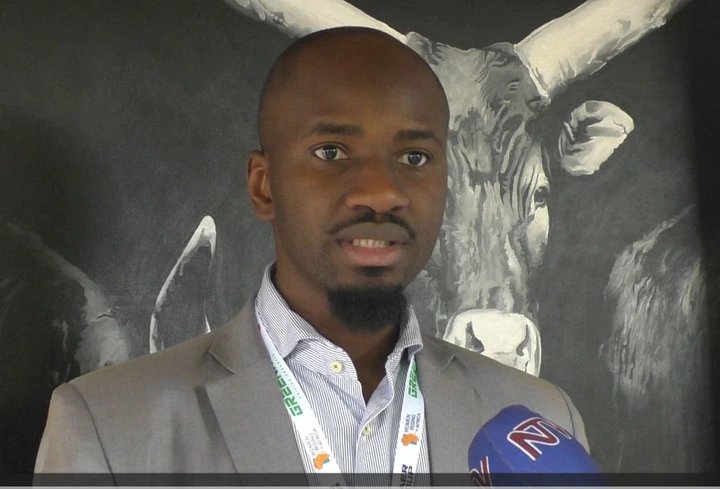
Speaking during the same engagement, Moa Rydell, co-founder and strategy officer at Green Hub Driving Progress, said the sector risks stagnation if regulatory and financial barriers are not addressed in parallel with government ambitions.
“There is a big gap when it comes to regulations and policies needed to accelerate the market,†Rydell said. “We need government, the private sector and civil society to work together to ensure adoption moves at the same pace as the country’s vision.â€
Rydell said companies in the sector continue to face standard import duties and Value Added Tax (VAT) similar to those applied to petrol and diesel vehicles, increasing operational costs and discouraging investment.
She also raised concern over the absence of a dedicated electricity tariff structure for e-mobility operators, arguing that charging and battery-swapping systems require predictable and affordable energy pricing to function efficiently.
“In Kampala there is a broad network of swapping and charging infrastructure, but outside the city the same network may not exist,†she said.
She warned that without significant infrastructure investment beyond urban centres, Uganda risks creating a two-tier e-mobility system that excludes rural users.
Industry players say demand for electric motorcycles is steadily increasing, particularly among boda boda riders seeking to reduce fuel and maintenance costs. However, they note that limited financing options and infrastructure gaps continue to slow adoption.
Some financing models, Rydell added, require riders to hold driving permits, a requirement she said remains too costly for many potential users.
“That requirement can become extremely expensive and may even reach up to 200 dollars,†she said.
She also called for stronger gender inclusion in the sector, noting that women remain underrepresented despite ongoing efforts to broaden participation.
Beyond private sector concerns, civil society organisations say the e-mobility transition must also be evaluated in terms of its impact on jobs and vulnerable communities.
Christopher Saco, Regional Director of LM International, said the organisation is working to ensure that the transition to clean transport also delivers employment opportunities, particularly in refugee settlements and urban areas where unemployment remains high.
“We do see a big gap when it comes to job opportunities, but we also see a lot of opportunities that are there,†Saco said.
He said LM International is implementing an e-mobility programme in partnership with government, private sector actors and boda boda riders under what he described as a “quadruple helix†model of cooperation.
Saco said the approach brings together government, business, civil society and users to ensure that policy and market development reflect real economic and social conditions.
He warned that policy decisions in the sector must be carefully assessed to avoid undermining livelihoods, particularly for boda boda riders, who form a significant part of Uganda’s transport economy.
“This is a matter of survival. Today we have more than one million Ugandans depending on e-mobility,†he said.


 Starlink goes live in Uganda; price comparisons against MTN, Airtel
Ultimate Uganda
Starlink goes live in Uganda; price comparisons against MTN, Airtel
Ultimate Uganda
 NSSF sets September 24 for Annual Members Meeting as savers await interest rate declaration
Ultimate Uganda
NSSF sets September 24 for Annual Members Meeting as savers await interest rate declaration
Ultimate Uganda
 Boda boda riders launch e-commerce, digital loans platform
Ultimate Uganda
Boda boda riders launch e-commerce, digital loans platform
Ultimate Uganda
 Rwanda: We Cannot Sit and Watch As Illicit Alcohol Kills People - Kagame
Ultimate Uganda
Rwanda: We Cannot Sit and Watch As Illicit Alcohol Kills People - Kagame
Ultimate Uganda
0 Comments