
Stakeholders set priorities for Busoga’s five newly appointed ministers
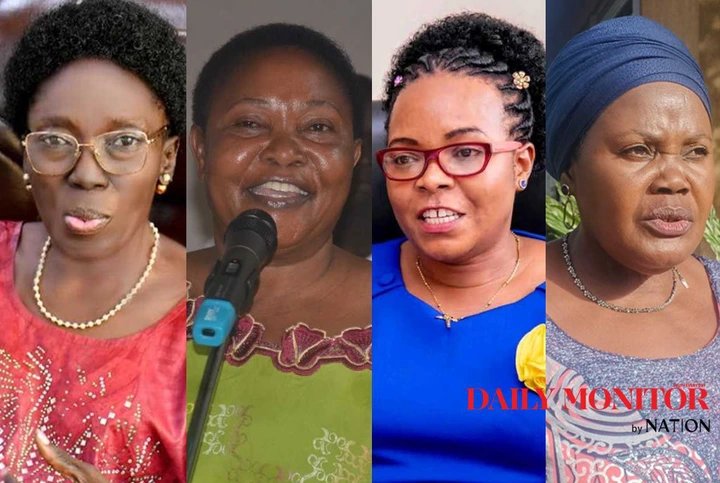

The appointment of five ministers from the Busoga sub-region to Uganda’s new Cabinet has sparked optimism and heightened expectations among residents and leaders, who are now demanding greater focus on youth employment, infrastructure development, education, agriculture and the recovery of Busoga Kingdom assets.
The ministers include First Deputy Prime Minister Rebecca Kadaga, Third Deputy Prime Minister Rukia Isanga Nakadama, Minister for the Presidency Milly Babalanda, ICT and National Guidance Minister Justine Kasule Lumumba, and State Minister for Lands, Housing and Urban Development Persis Namuganza.
As the ministers settle into office, stakeholders across Busoga say the region expects the appointments to translate into tangible development gains after years of unfulfilled promises.
Mr David Lukakamwa, the deputy prime minister of Butembe Chiefdom, called on the five ministers to work as a united bloc in advancing Busoga’s interests.
According to Mr Lukakamwa, one of the biggest unresolved issues remains the recovery of Busoga Kingdom assets that were taken over by government when cultural institutions were abolished during the regime of former President Milton Obote.
“As I speak now, the kingdom has not yet recovered even a quarter of its assets that the government promised to return because, in previous terms, ministers from the region were working in isolation,†Mr Lukakamwa said.
He noted that although President Yoweri Museveni agreed in principle to return the assets after the restoration of cultural institutions, implementation has remained slow due to a lack of coordinated lobbying by leaders from the region.
Mr Abubaker Walubi, the NRM chairperson for Iganga District, said he expects the ministers to prioritise the legal recognition and operationalisation of Busoga University.
According to Mr Walubi, the delayed establishment of the university has denied the region educational and economic opportunities that could transform livelihoods.
“When these five ministers from Busoga assume office, I expect them to fast-track the opening of Busoga University, which is expected to create many opportunities and drive the region forward,†he said.
Mr Walubi also urged the ministers to use their influence to create employment opportunities for qualified residents within their respective ministries and government agencies.
He further called on them to remind President Museveni about his pledge to establish industrial parks across the region, saying such investments are essential for tackling unemployment, particularly among young people.
The improvement of roads leading to tourism sites should also feature prominently on the ministers’ agenda, he added, arguing that tourism has become an increasingly important source of revenue for communities.
Former Kamuli District LC5 chairperson Salaam Musumba challenged the ministers to serve with integrity and protect the image of Busoga.
She noted that several prominent leaders from the region had served in previous governments without being associated with corruption scandals.
“Ministers from Busoga like the late Shaban Nkuutu, Henry Kyemba, John Kirunda Luwuliza and Basoga Nsadhu served in governments without leaving behind bad records of corruption, so these five ministers should pick a leaf from them to avoid associating our region with a bad image,†Ms Musumba said.
She also observed that Busoga's ministerial representation is entirely female, a development she described as both historic and demanding.
“The appointment of only women ministers from Busoga implies that our hopes are embedded in them; therefore, they should serve without fear,†she said.
Ms Musumba argued that the region's future development and political stability will largely depend on how effectively the ministers use their positions within Cabinet.
For boda boda riders, the key concern is access to affordable financing.
Mr Eria Simon Musobya, the Busoga region boda boda riders coordinator, appealed to the ministers to lobby for increased government funding to SACCOs serving motorcycle operators.
According to Mr Musobya, many riders continue to rely on private lending companies that charge high interest rates because they have limited alternatives.
“His Excellency the President promised to inject money into our SACCOs to reduce the exploitation we face when acquiring motorcycles from private companies. Therefore, I implore our ministers to push for the funds to be released,†he said.
On Saturday, Mr Musobya also appealed to the ministers to address what he described as unfair tax assessments on boda boda riders and reduce the cost of obtaining driving licences.
Sugarcane farmers, who form a significant part of Busoga's economy, also outlined their expectations.
Mr David Christopher Mombwe, chairperson of Busoga sugarcane outgrowers, called on the ministers to ensure enforcement of a government-backed minimum sugarcane price of Shs130,000 per tonne.
According to Mr Mombwe, although government and stakeholders agreed on the minimum price, millers continue to purchase cane at rates determined by market forces.
“Sugarcane growing in Busoga caters for more than half of the population’s survival, so our ministers should ensure the minimum price set becomes a reality since millers are buying cane at prices of their own choice despite government directives,†he said.
He argued that stable sugarcane prices would significantly reduce poverty levels in the region and improve household incomes.
Former Jinja City mayor Peter Okocha Kasolo, who belongs to the opposition National Unity Platform, welcomed the appointments and urged the ministers to focus on practical development priorities.
“All those appointed as ministers have already been tested and know the problems of Busoga, which I hope they will handle effectively,†Mr Kasolo said.
He said residents expect improvements in roads, schools and public services, adding that unity among the ministers will be critical if Busoga is to attract more government projects.
For many stakeholders, the appointments represent more than political recognition. They are viewed as an opportunity for Busoga to secure long-awaited investments, recover historical assets, strengthen key economic sectors and improve the livelihoods of residents.
Whether the region's expectations are met will likely shape public perceptions of both the ministers and the government over the next five years.


 Government will not gazette Kijanangoma as King of Tooro for now - Attorney General insists
Ultimate Uganda
Government will not gazette Kijanangoma as King of Tooro for now - Attorney General insists
Ultimate Uganda
 King Oyo’s Body to Arrive Thursday
Ultimate Uganda
King Oyo’s Body to Arrive Thursday
Ultimate Uganda
 Besigye, Lukwago expected to meet Gen. Salim Saleh today at Kapeeke
Ultimate Uganda
Besigye, Lukwago expected to meet Gen. Salim Saleh today at Kapeeke
Ultimate Uganda
 Rwabwogo Advised to ‘Eat His Bishop’ As MK Prepares to Enter State H’se: PREZ MUSEVENI ON HIS WAY OUT
Ultimate Uganda
Rwabwogo Advised to ‘Eat His Bishop’ As MK Prepares to Enter State H’se: PREZ MUSEVENI ON HIS WAY OUT
Ultimate Uganda
0 Comments