
New minister Balaam inherits Local govt system plagued by graft allegations
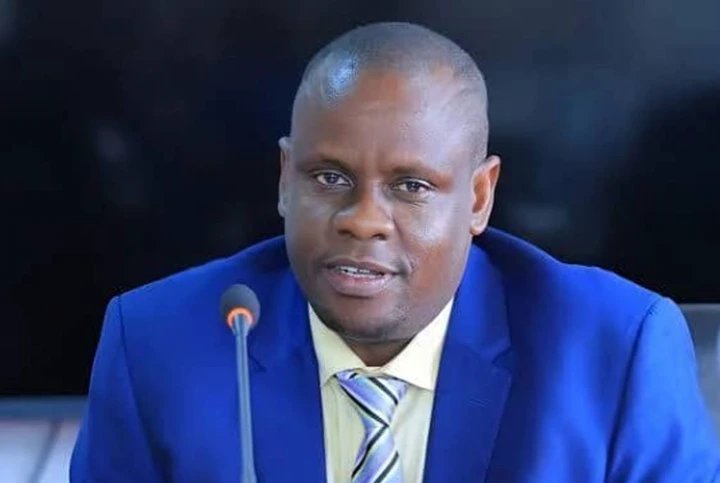

The appointment of Balaam Barugahara as Uganda's minister for Local Government has raised expectations that he will confront corruption widely viewed as entrenched within district administrations, where recruitment scandals, procurement irregularities and misuse of public funds continue to undermine service delivery.
Speaking in Masindi shortly after his appointment by President Museveni last week, Balaam pledged to strengthen accountability and ensure public resources reach intended beneficiaries.
"I am committed to fighting corruption in local governments and ensuring that public resources reach the people they are meant for. My ministry will work closely with accountability institutions and local leaders to ensure transparency and proper use of public funds," he said.
His pledge comes against a backdrop of persistent corruption complaints involving local governments, which continue to account for the largest share of cases reported to the Inspectorate of Government (IGG).
According to IGG annual reports, districts and municipalities generated nearly half of all corruption complaints received during the 2023/24 financial year, with allegations ranging from abuse of office and bribery to procurement fraud and mismanagement of public funds.
The anti-corruption watchdog says local government cases contributed significantly to national financial losses running into billions of shillings annually.
In March, the IGG reported concluding 308 corruption cases within six months and recovering more than Shs2.4 billion from public officials, many of them working in local government institutions.
Recent investigations have highlighted the scale of the challenge.
In April this year, the IGG ordered officials in Jinja City to refund more than Shs33 million after funds were reportedly withdrawn for activities that were never implemented.
In another case, former Nakazigo Primary School head teacher Ramadhan Ngobi was convicted after admitting to embezzling Shs176 million meant for classroom construction and sanitation facilities in Mayuge District.
Recruitment under scrutiny
One of the biggest tests facing the new minister will be reforming District Service Commissions (DSCs), which are responsible for recruiting, promoting and disciplining district civil servants.
The IGG's January-June 2025 performance report identified district recruitment as one of the country's most corruption-prone sectors.
The report found that 82% of applicants surveyed cited bribery as the most common form of corruption during recruitment processes, including shortlisting, interviews and issuance of appointment letters.
The watchdog estimates that approximately Shs29 billion was paid in recruitment-related bribes between 2018 and 2022.
Officials warn that the practice undermines merit-based recruitment, contributes to poor service delivery and allows unqualified personnel to enter public service.
"Bribery remains widespread and systemic in local government recruitment," the report noted.
Government has proposed reforms including electronic recruitment systems, stronger oversight and tougher penalties for offenders.
Procurement headaches
Procurement remains another major challenge. Reports by the Public Procurement and Disposal of Public Assets Authority (PPDA), the Auditor General and the IGG have repeatedly flagged inflated contracts, manipulated tender processes, ghost suppliers and abandoned projects across districts.
Former Masindi District chairperson Cosmas Byaruhanga said procurement systems often lack transparency.
"Communities sometimes only learn about contractors after projects have already started," he revelead.
Several district officials across the country have faced investigations over allegations of irregular contract awards, inflated project costs and non-existent projects.
Observers argue that Uganda's decentralised governance system, while designed to bring services closer to citizens, has also created multiple centres of decision-making that complicate accountability.
"The challenge is that local governments involve politicians, technical officers, procurement units and service commissions operating simultaneously," said Johnson Mugohya, a retired town clerk. "That makes oversight difficult."
High expectations
Balaam's appointment comes as Uganda continues to lose vast sums of public money to corruption.
The IGG has previously estimated that corruption costs the country more than Shs10 trillion annually across public institutions.
Analysts say success in his new role will depend less on public statements and more on whether he can strengthen oversight mechanisms, support anti-corruption agencies and push through reforms in recruitment and procurement.
For many Ugandans, particularly in districts where complaints of bribery, ghost projects and misuse of public funds are common, the new minister's tenure may ultimately be judged by whether local governments become more transparent and accountable than they are today.


 Government will not gazette Kijanangoma as King of Tooro for now - Attorney General insists
Ultimate Uganda
Government will not gazette Kijanangoma as King of Tooro for now - Attorney General insists
Ultimate Uganda
 King Oyo’s Body to Arrive Thursday
Ultimate Uganda
King Oyo’s Body to Arrive Thursday
Ultimate Uganda
 Besigye, Lukwago expected to meet Gen. Salim Saleh today at Kapeeke
Ultimate Uganda
Besigye, Lukwago expected to meet Gen. Salim Saleh today at Kapeeke
Ultimate Uganda
 Rwabwogo Advised to ‘Eat His Bishop’ As MK Prepares to Enter State H’se: PREZ MUSEVENI ON HIS WAY OUT
Ultimate Uganda
Rwabwogo Advised to ‘Eat His Bishop’ As MK Prepares to Enter State H’se: PREZ MUSEVENI ON HIS WAY OUT
Ultimate Uganda
0 Comments