
FY 2026/27 National Budget Reading Set for June 11
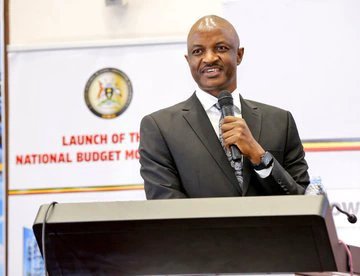

KAMPALA — The Government will on June 11, 2026, present the national budget for the 2026/27 financial year, with officials promising a private sector-driven spending plan focused on export growth, agricultural transformation, industrialisation and job creation.
The budget will be read in Parliament by the Minister of Finance, Planning and Economic Development, following weeks of public engagements under the National Budget Month programme launched on Monday by Permanent Secretary and Secretary to the Treasury Dr Ramathan Ggoobi.
The launch marks the beginning of a nationwide budget awareness campaign that will run through June and early July, bringing together government institutions, civil society organisations, the private sector, development partners and citizens to discuss budget priorities and implementation.
Speaking at the launch, Dr Ggoobi said preparations for the FY2026/27 budget began in July 2025 and involved extensive consultations with stakeholders across the country. “This is not a budget prepared in isolation. It is a highly consultative process,†Dr Ggoobi said.
He noted that consultations were conducted with President Yoweri Kaguta Museveni, Cabinet, Parliament, ministries, local governments, development partners, civil society organisations, academia, community leaders, youth groups, women groups, persons with disabilities and ordinary citizens.
The budget theme for FY2026/27 is “Full Monetisation of Uganda’s Economy through Commercial Agriculture, Industrialisation, Expanding and Broadening Services, Digital Transformation and Market Access.â€
According to Dr Ggoobi, the budget is anchored on the government’s ATMS strategy, which prioritises Agriculture, Tourism, Minerals, and Science, Technology and Innovation as key drivers of economic growth.
“Overall, more than 85 percent of government expenditure is directed towards the ATMS sectors and their supporting enablers. That is where the major focus of this budget lies,†he said.
Focus on Revenue Growth and Reduced Borrowing
Dr Ggoobi said the government intends to gradually reduce domestic borrowing by increasing domestic revenue mobilisation and expanding alternative financing mechanisms.
“Going forward, the Government intends to reduce domestic borrowing as we continue to strengthen domestic revenue mobilisation,†he said. “As domestic revenue increases relative to GDP, our dependence on domestic borrowing will gradually decline.â€
He added that the anticipated commencement of commercial oil production would provide additional revenues to support infrastructure and other development priorities.
The government is also expanding public-private partnerships to finance major infrastructure projects. “We are also strengthening public-private partnerships to enable the private sector to finance and implement some major infrastructure projects,†Dr Ggoobi said.
Implementation Now the Biggest Challenge
While Uganda has made progress in allocating resources to priority sectors, Dr Ggoobi argued that implementation remains the country’s biggest challenge.
“For many years, the discussion has centred on whether there is enough money. Today, I believe Uganda’s biggest challenge is no longer policy formulation or resource allocation. The major challenge is implementation,†he said.
“We now have resources available for many priority programmes. What matters is how effectively those resources are used.â€
He said the government is pursuing procurement reforms aimed at improving efficiency, reducing administrative costs and ensuring better value for money in public expenditure.
Agriculture and Export-Led Growth
The Treasury chief highlighted agriculture as a major beneficiary of the new budget, saying the government has increased investments in agricultural research, extension services, irrigation and standards certification.
“Agriculture cannot be transformed through radio and television programmes alone. Extension workers must reach farmers in the field and provide practical guidance,†he said.
Dr Ggoobi revealed that the government is strengthening coffee traceability systems and investing in modern farming technologies to improve productivity and export competitiveness.
“We are also increasing financing for agriculture at all levels—from micro-enterprises to large-scale commercial producers,†he said.
The government, he added, is pursuing export-oriented industrialisation to increase foreign exchange earnings and expand Uganda’s presence in international markets.
“Our objective is not merely to produce for domestic consumption but to increase exports, earn foreign exchange and strengthen Uganda’s position in international markets,†he said.
Private Sector at the Centre
Dr Ggoobi described the FY2026/27 budget as a private sector-led budget shaped by proposals collected during stakeholder consultations.
“The FY2026/27 budget is fundamentally a private sector-driven budget,†he said. “Many of the proposals reflected in the budget originated from consultations with the private sector and other stakeholders.â€
He added that the government’s role was to allocate resources in a manner that supports economic transformation, job creation and income growth.
National Budget Month Activities
The launch of National Budget Month kicks off a series of engagements leading up to and after the budget reading.
Activities include pre-budget media engagements from June 4 to July 7, the national budget reading on June 11, a post-budget investment dialogue organised by CSBAG, ACODE and UDN on June 19, a National Private Sector Dialogue hosted by PSFU on June 23, and regional post-budget awareness campaigns across the country.
The programme will conclude with post-budget tax dialogues led by the Uganda Revenue Authority and the launch of the Open Budget Survey results on July 9.
Government says the engagements are intended to improve transparency, increase public participation and ensure citizens understand how public resources are allocated and utilised.
“We shall engage extensively with citizens and stakeholders to explain the budget, discuss implementation priorities and ensure that every Ugandan understands how public resources are being utilised,†Dr Ggoobi said.


 Government will not gazette Kijanangoma as King of Tooro for now - Attorney General insists
Ultimate Uganda
Government will not gazette Kijanangoma as King of Tooro for now - Attorney General insists
Ultimate Uganda
 King Oyo’s Body to Arrive Thursday
Ultimate Uganda
King Oyo’s Body to Arrive Thursday
Ultimate Uganda
 Besigye, Lukwago expected to meet Gen. Salim Saleh today at Kapeeke
Ultimate Uganda
Besigye, Lukwago expected to meet Gen. Salim Saleh today at Kapeeke
Ultimate Uganda
 Rwabwogo Advised to ‘Eat His Bishop’ As MK Prepares to Enter State H’se: PREZ MUSEVENI ON HIS WAY OUT
Ultimate Uganda
Rwabwogo Advised to ‘Eat His Bishop’ As MK Prepares to Enter State H’se: PREZ MUSEVENI ON HIS WAY OUT
Ultimate Uganda
0 Comments