
Musasizi: Uganda’s Income Per Person Set to Cross Shs 5.1m
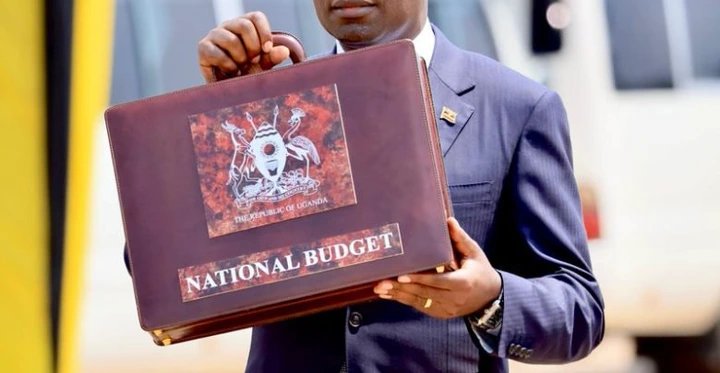

Uganda’s income per person is projected to rise to USD 1,420 (about Shs5.1 million) in the current financial year, Finance Minister Henry Musasizi announced Thursday, a milestone that underscores the country’s steady economic expansion ahead of the anticipated oil era.
Presenting the 2026/27 national budget, Musasizi said Uganda’s economy is expected to grow by 6.4 percent in the financial year ending June 2026, pushing the overall size of the economy to approximately USD 69.3 billion (Shs250.4 trillion).
The increase in GDP per capita means that, on average, the value of economic output attributable to each Ugandan has continued to rise, reflecting improvements in economic activity, investment and productivity.
“GDP per capita is projected to increase to USD 1,420, equivalent to approximately Shs5.1 million per person,†Musasizi told Parliament.
The announcement comes as the government seeks to showcase gains from investments in infrastructure, agriculture, industrialisation and services, while positioning the country for commercial oil production expected later this year.
Musasizi said Uganda’s economy remains resilient despite global geopolitical tensions, trade disruptions and economic uncertainty.
“The economy is stable. Growth is accelerating. Inflation is low. The exchange rate is stable. Exports are rising. Investment is increasing. And confidence in Uganda’s future remains strong,†he said.
The minister noted that average inflation remains contained at 3.8 percent, a level he said protects household incomes, supports business planning and boosts investor confidence.
Looking ahead, the government expects economic growth to accelerate sharply to 10.2 percent in the 2026/27 financial year once commercial oil production begins, marking what would be Uganda’s first return to double-digit growth since the economic reforms of the 1990s.
According to Musasizi, a larger economy will create more jobs, raise household incomes and generate additional resources for public investment in education, healthcare, infrastructure and security.
Incomes
The rise in per capita income is particularly significant because it is one of the indicators used to measure improvements in living standards and a country’s progress toward middle-income status.
However, economists often caution that increases in GDP per capita do not automatically translate into higher incomes for every household, especially where wealth creation is unevenly distributed.
Still, the latest projections suggest Uganda is edging closer to its long-standing ambition of transforming into a modern and prosperous economy, with oil revenues expected to provide a major boost to growth over the coming years.


 Government will not gazette Kijanangoma as King of Tooro for now - Attorney General insists
Ultimate Uganda
Government will not gazette Kijanangoma as King of Tooro for now - Attorney General insists
Ultimate Uganda
 King Oyo’s Body to Arrive Thursday
Ultimate Uganda
King Oyo’s Body to Arrive Thursday
Ultimate Uganda
 Besigye, Lukwago expected to meet Gen. Salim Saleh today at Kapeeke
Ultimate Uganda
Besigye, Lukwago expected to meet Gen. Salim Saleh today at Kapeeke
Ultimate Uganda
 Rwabwogo Advised to ‘Eat His Bishop’ As MK Prepares to Enter State H’se: PREZ MUSEVENI ON HIS WAY OUT
Ultimate Uganda
Rwabwogo Advised to ‘Eat His Bishop’ As MK Prepares to Enter State H’se: PREZ MUSEVENI ON HIS WAY OUT
Ultimate Uganda
0 Comments