
Stanbic Bank ordered to compensate worker it dismissed after suspicious cash withdrawal
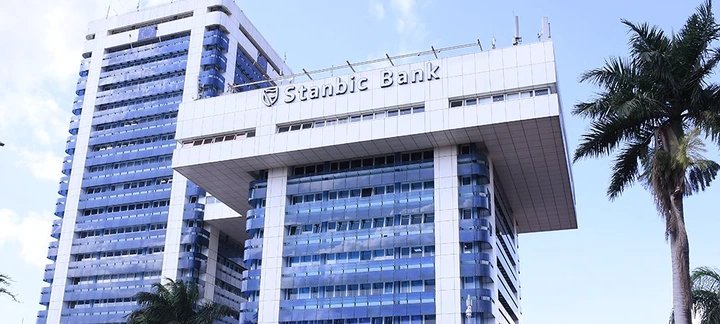

Elizabeth Nyasuna, who worked as Team Leader at Stanbic Bank’s Entebbe branch, has been awarded Shs 40 million by the court after the bank unlawfully dismissed her over a suspicious Shs 75 million cash withdrawal in 2012.
Justice Anthony Wabwire Musana of the Industrial Court said Stanbic Bank failed to follow a fair disciplinary process and failed to prove that she was guilty of gross negligence.
Nyasuna joined Stanbic in January 2008 as a teller before becoming a permanent employee. She told court that she had maintained a clean employment record and had been entrusted with several additional responsibilities during her time at the bank.
Trouble started on April 23, 2012, when a customer withdrew Shs75 million from the Entebbe branch. The transaction was later flagged as fraudulent.
Nyasuna testified that she was acting asbranch manager on the day of the transaction. She insisted that she had no knowledge of any fraud and had not been alerted to any suspicious activity before authorising the transaction.
Despite this, she was arrested, detained overnight at a police station, suspended and later subjected to disciplinary proceedings.
She told court that the process was unfair and that she was denied a proper opportunity to defend herself.
Nyasuna’s lawyer Richard Jimmy Dhobuazi argued that the bank violated both the Employment Act and its own disciplinary procedures.
He told court that Nyasuna had been suspended for more than two months, contrary to the law. He also argued that she never received a proper written notice of the disciplinary hearing, was not informed in advance of the allegations against her, and was denied adequate time to prepare her defence.
He maintained that Nyasuna’s alleged failure to interrogate the customer about the source of funds was outside her responsibilities.
Stanbic Bank, represented by James Samuel Zeere of Sebalu and Lule Advocates, argued that Nyasuna had authorised the withdrawal while acting as branch manager and had failed to conduct proper checks before allowing the customer to access the money.
Zeere said Stanbic had acted lawfully and that Nyasuna was aware of the allegations against her, had attended a disciplinary hearing, and had been allowed to explain herself.
He said that she negligently authorised a Shs 75 million withdrawal without checking system alerts and that this justified her dismissal.
The bank’s witness, Charles Bizimungu Omara, who was then the bank’s manager for Financial Crime Control, told court that the customer’s account had a visible “No Debit†instruction and that Nyasuna failed to verify the transaction on the banking system.
According to Omara, Nyasuna’s actions amounted to gross negligence and exposed the bank to financial loss.
He said internal investigations concluded that she should have questioned the customer about the source of the funds and checked the transaction more carefully before approving payment.
After reviewing the evidence from both sides, Justice Musana said Stanbic failed to produce a written notice inviting Nyasuna to the disciplinary hearing.
“The Ebiju standard requires that the notification be in writing. It was not, which means the disciplinary hearing did not meet the first of the Ebiju criteria,†he said.
He noted that Stanbic failed to prove that Nyasuna had been given enough time to prepare her defence and that the bank failed to provide the investigation report to her before the hearing.
“[Stanbic Bank’s] own policy required investigation of any case of fraud or dishonesty, and no hearing was to be conducted before an investigation,†Justice Musana said.
On the question of whether Nyasuna was actually guilty of gross negligence, the court found major weaknesses in Stanbic Bank’s case because it did not produce minutes of the disciplinary hearing and did not call any witness who had attended the hearing.
“[Stanbic Bank] did not satisfy us that it had proven the offence of gross negligence against [Nyasuna] to any degree,†Justice Musana said.
He said on the day of the alleged crime, Nyasuna had been left to run the bank’s entire Entebbe branch single-handedly and was placed in a vulnerable, overburdened position.
So accusing her of gross negligence for a fraud that originated from the bank’s own head office suspense account would be unfair, Justice Musana said.
He concluded that Nyasuna’s dismissal was “procedurally and substantively unfair and unlawful†because the bank failed to issue a written hearing notice, denied her adequate preparation time, failed to explain her procedural rights and did not properly prove the allegations against her.
Justice Musana therefore awarded Nyasuna Shs 1.55 million as a statutory penalty for failure to give her a fair hearing, Shs 2.32 million for unlawful suspension, Shs 6.86 million as severance pay, Shs 1.55 million instead of notice and Shs 27.85 million in general damages.
The total award comes to about Shs 40.12 million, excluding interest.


 Starlink goes live in Uganda; price comparisons against MTN, Airtel
Ultimate Uganda
Starlink goes live in Uganda; price comparisons against MTN, Airtel
Ultimate Uganda
 NSSF sets September 24 for Annual Members Meeting as savers await interest rate declaration
Ultimate Uganda
NSSF sets September 24 for Annual Members Meeting as savers await interest rate declaration
Ultimate Uganda
 Boda boda riders launch e-commerce, digital loans platform
Ultimate Uganda
Boda boda riders launch e-commerce, digital loans platform
Ultimate Uganda
 Rwanda: We Cannot Sit and Watch As Illicit Alcohol Kills People - Kagame
Ultimate Uganda
Rwanda: We Cannot Sit and Watch As Illicit Alcohol Kills People - Kagame
Ultimate Uganda
0 Comments