
Gov’t Releases FY2026/2027 First Quarter Funds, Targets Economic Growth and Better Service Delivery
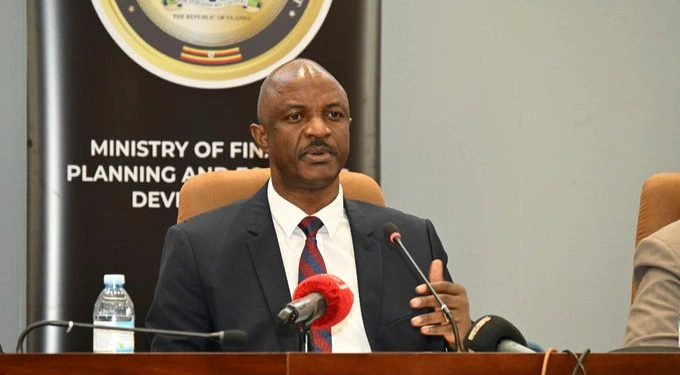

KAMPALA — The Government of Uganda has released expenditure limits for the first quarter of the Financial Year 2026/2027, prioritising programmes aimed at boosting economic growth, creating jobs and improving public service delivery.
The total release for Q1 FY2026/27 is Shs 23.03 trillion, representing 27% of the approved budget.
Speaking during a media briefing on the releases, the Permanent Secretary and Secretary to the Treasury (PSST), Ramathan Goobi, said Uganda enters the new financial year with a stable macroeconomic environment characterised by stronger economic growth, low inflation, a stable Uganda Shilling, increased exports and improved investor confidence.
Goobi said the Quarter One expenditure releases were carefully structured to sustain the country’s economic momentum while ensuring fiscal discipline and maintaining debt sustainability.
“The Quarter One expenditure releases have been carefully aligned to sustain this momentum while preserving fiscal and debt sustainability,†Goobi said.
He explained that the government’s fiscal strategy for the financial year is guided by two main objectives: financing key growth drivers under the Tenfold Growth Strategy while ensuring responsible management of public resources.
The priority growth areas include agro-industrialisation, tourism development, mineral beneficiation, science, technology and innovation, ICT, and the creative economy.
The PSST said government funds will be channelled towards high-impact programmes that generate economic activity, expand employment opportunities and improve access to essential services.
“Every shilling released must contribute to economic growth, job creation, and improved delivery of public services to citizens,†he said.
Goobi noted that the expenditure ceilings were developed in line with projected cash flows, available financing and the approved fiscal framework to ensure smooth and sustainable implementation of government programmes.
He added that government would continue strengthening efficiency in public spending by reducing unnecessary expenditures while protecting strategic investments and priority interventions.
Priority Areas for Funding
The released funds will support key sectors, including: security operations; infrastructure development; human capital development; ongoing projects requiring counterpart financing; essential operational requirements for Ministries, Departments and Agencies (MDAs); local governments; and Uganda’s diplomatic missions abroad.
Goobi also revealed that funding has been allocated to support preparatory activities for Uganda’s participation in hosting the Africa Cup of Nations (AFCON) 2027, alongside Kenya and Tanzania.
The tournament preparations are expected to require continued investment in infrastructure, logistics and related facilities to meet international hosting standards.
Call for Efficient Budget Implementation
The Treasury also issued guidance to Accounting Officers across government institutions, urging them to ensure timely execution of approved budgets and effective utilisation of released funds.
Goobi emphasised that budget allocations must translate into tangible improvements in citizens’ welfare through better service delivery.
He reaffirmed government’s commitment to budget transparency and public participation, saying access to budget information enables citizens to understand national priorities and demand accountability from public institutions.
The Quarter One expenditure releases officially mark the start of implementation of government programmes for the 2026/2027 financial year, with emphasis on sustainable economic transformation, job creation and improved livelihoods for Ugandans.
Summary of the released funds:
1. Statutory Obligations and Institutions
This sector accounts for the largest share of the allocations, heavily driven by debt management and public sector payrolls:
Debt and Treasury Operations: Shs 10.83 trillion
Wages and Salaries (Across Government): Shs 2.46 trillion
Pension and Gratuity: Shs 566.44 billion
Parliament: Shs 355.27 billion
The Judiciary: Shs 51.12 billion
Office of the Auditor General: Shs 15.20 billion
2. ATMS (Agro-Industrialisation, Tourism, Mineral Development, Science & Technology)
Allocations aimed at driving strategic economic growth initiatives:
Science, Technology, and Innovation (including ICT & Creative Industry): Shs 377.9 billion (For the STI initiative, expanding internet connectivity, and digitizing the economy)
Agro-Industrialisation (A): Shs 289.6 billion (For research, innovation, operations, and critical interventions)
Tourism Development (T): Shs 65.6 billion (For development and promotion, including the “Explore Uganda†drive)
Mineral-Based Industrial Development (including Oil & Gas) (M): Shs 50 billion (Allocated to UNOC and PAU to fast-track first oil interventions)
3. Security, Defense, and Executive Organs
Ministry of Defence and Veteran Affairs: Shs 360.7 billion
Uganda Police Force: Shs 144.9 billion
Uganda Prisons Service: Shs 105.6 billion
State House: Shs 103.3 billion
Office of the President: Shs 100.5 billion
Internal Security Organisation (ISO): Shs 58.4 billion
External Security Organisation (ESO): Shs 27.4 billion
4. Infrastructure
Ministry of Works and Transport: Shs 1.53 trillion (Includes Shs 519.0 billion GoU and Shs 1.01 trillion external financing, covering Uganda Airlines, Uganda Railways, Kalangala Infrastructure Services, and the Standard Gauge Railway)
Ministry of Energy and Mineral Development: Shs 609.4 billion (Includes Shs 277.2 billion GoU and Shs 332.2 billion external for rural electrification, transmission lines, and power generation)
Kampala Capital City Authority (KCCA): Shs 169.7 billion (Includes Shs 64.1 billion GoU and Shs 105.7 billion external for social services, roads, and drainage)
Ministry of Kampala Capital City and Metropolitan Affairs: Shs 67.4 billion (Includes Shs 2.1 billion GoU and Shs 65.3 billion external under the Greater Kampala Metropolitan Area Urban Development Project)
5. Human Capital Development (Health, Education & Sports)
Health Sector:
Ministry of Health: Shs 325.11 billion (Shs 68.1 billion GoU; Shs 257.04 billion external financing)
National Medical Stores (NMS): Shs 284.7 billion (For essential drugs and medicines)
Uganda Cancer Institute and Uganda Heart Institute: Shs 191.5 billion (For specialized oncology and cardiovascular health services)
Referral Hospitals (National and Regional): Shs 124.68 billion
Education & Sports Sector:
Public Universities: Shs 271.71 billion
Ministry of Education and Sports: Shs 234.83 billion (Shs 126.95 billion GoU, with Shs 7 billion earmarked for instructional materials; Shs 107.88 billion external financing)
National Council of Sports (NCS): Shs 103.83 billion
6. Local Governments
Total Allocation: Shs 428.7 billion
Conditional and Non-Conditional Grants: Shs 340.4 billion
Capital Development: Shs 88.3 billion (Aimed at timely implementation of local projects, especially those tied to AFCON27)
7. Revenue Generating and Regulatory Votes
Uganda Revenue Authority (URA): Shs 130.6 billion (To facilitate revenue collection)
National Citizenship and Immigration Control (NCIC): Shs 50.7 billion
Uganda National Bureau of Standards (UNBS): Shs 19.6 billion
Uganda Registration Services Bureau (URSB): Shs 9.6 billion
National Lotteries and Gaming Regulatory Board (NLGRB): Shs 2.4 billion


 Government will not gazette Kijanangoma as King of Tooro for now - Attorney General insists
Ultimate Uganda
Government will not gazette Kijanangoma as King of Tooro for now - Attorney General insists
Ultimate Uganda
 King Oyo’s Body to Arrive Thursday
Ultimate Uganda
King Oyo’s Body to Arrive Thursday
Ultimate Uganda
 Besigye, Lukwago expected to meet Gen. Salim Saleh today at Kapeeke
Ultimate Uganda
Besigye, Lukwago expected to meet Gen. Salim Saleh today at Kapeeke
Ultimate Uganda
 Rwabwogo Advised to ‘Eat His Bishop’ As MK Prepares to Enter State H’se: PREZ MUSEVENI ON HIS WAY OUT
Ultimate Uganda
Rwabwogo Advised to ‘Eat His Bishop’ As MK Prepares to Enter State H’se: PREZ MUSEVENI ON HIS WAY OUT
Ultimate Uganda
0 Comments