
UBL Injects Shs1.127 Trillion into Uganda’s Economy


new report by Oxford Economics Africa has revealed that Uganda Breweries Limited (UBL) contributed Shs1.127 trillion to Uganda's economy during 2024 through its operations, supply chain, employee spending and downstream business activities.
The report, released on Tuesday at Kampala Sheraton Hotel, estimates that UBL's total gross value added (GVA) contribution to Uganda's GDP stood at Shs1.127 trillion in 2024. The contribution comprised Shs552 billion from downstream activities, Shs267 billion from indirect impacts, Shs203 billion from the company's direct operations, and Shs105 billion from induced economic activity.
According to the report, UBL directly contributed Shs203 billion to Uganda's nominal GDP through its core operations, including employee compensation and company profits.
The brewer's spending on domestic suppliers generated an additional Shs267 billion in economic value through its supply chain.
Meanwhile, wages paid to UBL employees and workers employed by its suppliers stimulated a further Shs105 billion in economic activity as those earnings were spent across the wider economy.
The report also notes that sales of UBL products through wholesalers, retailers, bars, restaurants, hotels and entertainment venues generated an additional Shs552 billion in downstream economic activity.
Beyond its economic contribution, the report highlights UBL's role in job creation.
The company directly employed 280 people in 2024, while its procurement of goods and services from local businesses supported approximately 23,000 formal jobs across its supply chain.
UBL also paid more than Shs60 billion in employee wages during the year. Together with salaries paid by its suppliers, these earnings supported an estimated 12,000 additional jobs in Uganda's consumer economy.
The report further estimates that businesses involved in distributing and selling UBL products—including wholesalers, bars and retailers—supported more than 64,000 formal jobs.
In addition to formal employment, UBL works with around 35,000 smallholder farmers, providing access to certified seeds, training, financial support, farming tools and guaranteed markets.
The brewer sources crops including barley, sorghum and cornstarch from local farmers, while also purchasing neutral spirits from Ugandan producers for use in its manufacturing process.
During 2024, UBL paid more than Shs36 billion to local smallholder farmers for agricultural produce.
Tax Contribution
The report also highlights UBL's contribution to government revenue.
During 2024, the company directly paid approximately Shs68 billion in taxes, excluding excise duty and VAT.
Its procurement from local suppliers supported an estimated Shs30 billion in additional tax revenues, while employee spending generated a further Shs11 billion through induced economic activity.
Businesses involved in distributing and retailing UBL products contributed another Shs79 billion in taxes through downstream operations.
In addition, Oxford Economics estimates that UBL paid and supported approximately Shs623 billion in product and sales-related taxes, mainly through excise duty and VAT.
UBL Commends Local Value Chain
Speaking at the report's launch, UBL Managing Director Felicite Nson said the findings reflect the company's wider impact beyond financial performance.
"They represent thousands of farmers, transporters, distributors, retailers, hospitality businesses and many other Ugandans whose livelihoods are connected to our business. That is something we are incredibly proud of," Nson said.
She said UBL's long-standing local sourcing programme continues to strengthen Uganda's agricultural and manufacturing sectors.
"For many years, we have worked with Ugandan farmers to source crops such as barley and sorghum wherever they meet our quality and supply requirements. Alongside local sourcing, we also import certain specialised inputs that are not available locally. This approach allows us to produce world-class brands while continuing to invest in Ugandan agriculture and manufacturing."
"When local businesses grow, communities grow. When farmers succeed, manufacturers succeed too," she added.
However, Nson raised concern over the growing illicit alcohol trade, saying it continues to undermine legitimate businesses, reduce government revenues and compromise consumer safety.
She called for stronger collaboration between government, regulators and industry players.
"Continued collaboration between government, regulators and industry will be important if we are to create an even stronger, more competitive manufacturing sector."
"Our hope is that this report becomes a useful reference for future discussions, not because it contains all the answers, but because it provides independent evidence that can help inform decisions about manufacturing, investment and sustainable economic growth," Nson said.


 Starlink goes live in Uganda; price comparisons against MTN, Airtel
Ultimate Uganda
Starlink goes live in Uganda; price comparisons against MTN, Airtel
Ultimate Uganda
 NSSF sets September 24 for Annual Members Meeting as savers await interest rate declaration
Ultimate Uganda
NSSF sets September 24 for Annual Members Meeting as savers await interest rate declaration
Ultimate Uganda
 Boda boda riders launch e-commerce, digital loans platform
Ultimate Uganda
Boda boda riders launch e-commerce, digital loans platform
Ultimate Uganda
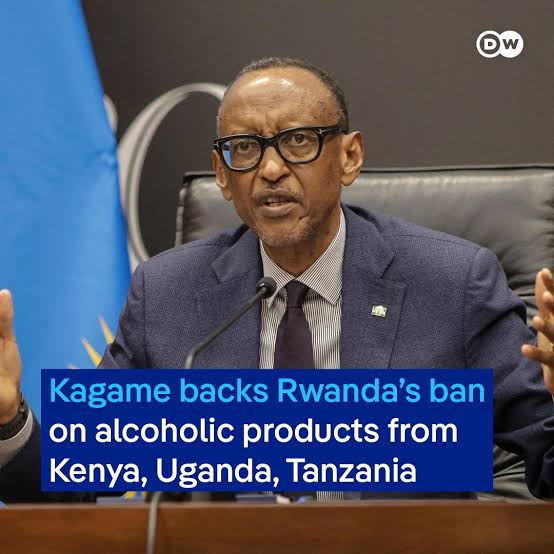 Rwanda: We Cannot Sit and Watch As Illicit Alcohol Kills People - Kagame
Ultimate Uganda
Rwanda: We Cannot Sit and Watch As Illicit Alcohol Kills People - Kagame
Ultimate Uganda
0 Comments