
Mamdani’s Bombshell Book Explodes Museveni, Idi Amin Myths
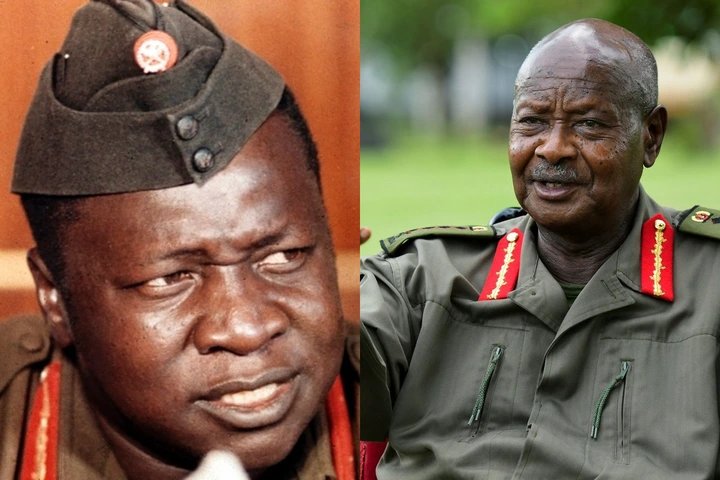

It’s been decades since I read a book as compelling as Prof Mahmood Mamdani’s extraordinary tour de force on Uganda. For most open-minded readers, this book will shake some deeply-entrenched mainstream myths and fallacies that have been inculcated and nurtured by powerful national and global forces.
Among the most startling assertions that Mamdani makes (but backs with lots of credible evidence) is that the wanton and ethnically-charged mass murder accusations against President Idi Amin are vastly exaggerated. But Mamdani does not minimize the many atrocities that Amin committed, the bulk of which were against real and sometimes perceived enemies within the military.
Mamdani also asserts that Amin was a much more popular and nationalistic leader than Museveni is, a result of his championing the cause of Black Ugandans against the economic dominance of Ugandan “Asians,†whom he expelled from the country in 1972 – but in an organized manner and without violence or large-scale looting that has typically accompanied the expulsion of minorities being targeted or expelled.
As a leading scholar and intellect, Mamdani, for many years, was close to Museveni in Tanzanian exile and his early years as Uganda’s President. But he writes that once in power, Museveni lost his way and committed far greater violence than either Amin or Obote. He also further divided Ugandans by categorizing them within increasingly narrower ethnic identities that the British colonists had used to impose their rule. Museveni’s goal was very similar: to prevent the emergence of a serious opposition national group or leader, or resorting to crude force or changing his own Constitution.
An originally charismatic leader who promised revolutionary change and policies independent of Western aid policies, he quickly buckled under the need for resources and turned to the World Bank and IMF, accepting their punishing Structural Adjustment Programmes, which further impoverished the poor but enriched his cronies. And then there were the rampant and bloody military interventions in neighbouring regions for economic gain and regime change.
Mamdani also focuses strongly on the role most Western media cynically played in promoting their countries’ national security interests in Uganda, Somalia, Sudan and the wider Central African region. Our own Kenyan media ended up becoming complicit in that exercise, being unable to afford foreign correspondents and having to rely on the richly-resourced Western media.
As a journalist with a strong internationalist orientation, I have always been acutely conscious of such media distortions, and reasonably well-informed about neighbouring Uganda. For decades, I had very close political contacts there, which facilitated my interviews and interactions with Presidents Amin and Obote, and stayed aware of the atrocities committed during their rule.
I also travelled widely in Uganda 20 years ago to report, in these very pages, Museveni’s even greater mass killings (and over a million Acholis in concentration camps) that the major powers completely ignored because Museveni had become the principal African instrument for their “war on terror†policies. As I wrote then, this crisis was almost unknown for years until the courageous United Nations humanitarian chief, Jan Egeland, forcefully raised the alarm about the camps and what he called the world’s “most neglected emergency.â€
Despite this awareness, I had begun from the mid-1970s to believe some of the falsehoods, publishing a special edition of our Viva magazine upon his fall in 1979 detailing large atrocities, some of which might not have taken place. There were also articles by some of our leading intellectuals.
So I was still suffering from lots of holes in my Amin perspectives until this book shook them out of me. In chapter and verse, Mamdani contends with great conviction that the innumerable accounts of Idi Amin as a blundering, blood thirsty, mass murdering killer with cannibalistic tastes were vast exaggerations.
Mamdani writes that extreme portrayals of Amin only started when he turned against the British and Israeli governments who had encouraged and enabled his overthrow of President Milton Obote in 1971. The two countries had turned against Obote over his “turn to the left†spelled out the Common Man’s Charter, an effort spearheaded by the Kenyan scholar Ahmed Mohidin. There being no limit to great power hypocrisy, Britian I979 provided, via Tanzania, arms to Obote’s militias which along with Tanzanian and some Museveni fighters overthrew Amin!
Attesting to the intellectual vibrancy and readability of the book is the interest from a number of the English language literary pillars of the western establishment – The New York Review of Books, Foreign Affairs, The Wall Street Journal, The Nation (US), The New Yorker, The Observer and The Guardian among many others – which have carried lengthy reviews, as have African publications.
Two of these reviews, written by western African scholars in the NY Review of Books (Helen Epsteien) and The Nation of NY (Howard French) are particularly notable. Epstein highlights the vitality of Mamdani’s scholarship, his analysis of the leaders’ use of race (Amin) and a more virulent and divisive ethnicity by Museveni to hold on to power. She takes Mamdani to task for having virtually ignored Museveni’s violent suppression of democracy in this century.
In support of Mamdani’s thesis, Howard French, the former New York Times Africa bureau chief, in his lengthy book review of Slow Poison in the venerable Nation (NY) magazine , spells out how France supported Jean Bedel Bokassa’s elevation to Emperor of The Empire of Central Africa. That was thanks to Bokassa’s having granted France and others control of the country’s vast diamond trade.
But when relations turned sour, and Bokassa turned to Libyan leader Muammar Gaddafi for support, France supported a coup against him. Soon after, writes French, Paris Match ran an explosive report on Bokassa’s cannibalistic taste. “That made me realize the readiness, or zeal, of the western press to traffic in the worst stereotypes of African savagery†to promote imperial interests, says French.
Similarly, the renowned Ali Mazrui, who opposed Amin, reversed his stance, as indeed did my good friend and enormously influential photographer Mohammed Amin, in the face of the growing evidence of concocted demonizations. Mamdani reports Mazrui looked into accusations by the Observer’s David Martin of mass rape and massacre of women students at Makerere University. and concluded that “I am completely satisfied that there was no massacre or rape.†There were many other similar falsehoods. Foreign Secretary David Owen compared Amin to Pol Pot, who supposedly killed a million of his people and even contemplated having Amin him assassinated!
Despite the depth of Mamdani’s scholarship, this is a very readable book, a work of art, intellect and intense labour. It contains an astonishing amount of factual detail, which is fascinating in its own right, but which also propels the open-minded reader towards a better understanding of Ugandan history and the forces that created it.
Both Amin and Museveni, and the outside powers they relied on and were manipulated by, often willingly, are assessed candidly. The outsiders include the United Kingdom, Israel and the United States in particular, as well as the World Bank and the IMF, and Tanzania and its president Mwalimu Julius Nyerere. Mamdani is extremely critical of him for pauperizing his country by spending vast sums of money he did not have to preparations for toppling Amin.
Prof Mamdani’s credibility in his rewriting of the history that we non-scholars had imbibed comes from his outstanding renown as one of Africa’s most learned and courageous public intellectuals. He lived through pivotal periods of Ugandan history and participated in many of key developments involving the struggle against Amin and the lengthy initial period Museveni’s rise and seizure of power
The only other book out of East Africa in the last half century that radically shook up widely prevailing views was “Class Struggles in Tanzania†by University of Dar-es-Salaam Prof Issa Shivji, which asserted that the hallowed President Julius Nyerere’s anti-capitalist campaigns were actually helping the emergence of a “bureaucratic†bourgeoise. (But I am still a passionate supporter of Mwalimu Nyerere, as is Shivji, possibly not as passionately).
On Amin, I want to recount a meeting he had with President Mzee Jomo Kenyatta at State House Mombasa that that I attended along with the Editors of the Nation (George Githii) and the Standard (Frank Young) were summoned to in November 1973. State House Mombasa. What astounded us was that Amin, whom most media portrayed as a murderous braggart, was masterful, diplomatic and acutely sharp in sharing the podium with Mzee. Indeed, within his positive overall portrayal of Mzee, he slyly managed some pointed barbs at him.
Amin said that the dangerous misunderstandings between the two countries that necessitated the meeting resulted from the biased reporting of “certain†Kenyan newspapers. He cited the excellent reception he had recently received from his supposed nemesis President Nyerere in Tanzania, but the media focused instead on the on the past problems between them. He said, “we should forget about the past and media should work for unity so we can rise together.â€
He gave the example of Mzee’s own history to emphasize his point, saying he was the one who brought freedom not just to all three East African countries but to all of Africa, by launching his struggle against the British colonizers on 20 October 1952. “But Mzee has forgotten about that past and the British imperialists are now his friends who have no trouble in Kenya.†A champion of Africanization in his own country, Amin also took a sly, indirect dig at the fact that two of Kenya’s three newspapers were not Black.
In what I believe was the only interview Amin gave to a Kenyan journalist in his early years, he had earlier invited me to his Makindye Barracks headquarters in March 1973 and revealed an equally savvy personality. He urged me to spend a few days in Uganda to travel freely across the country to see for myself the peace that existed. I am afraid I was not sure I would be safe. I have always regretted having thought that.
In the meantime, Museveni degenerated to a point where the country he leads has been described as an outpost of imperialism in Sub-Saharan Africa, wrote Yoga Adhola, President Obote’s very close aide and ideologue in UPC, in a recent essay, “The ideological degeneration of Yoweri Museveni: from anti-imperialism to agent of imperialism.†The group’s “revolutionary†ideology was deeply flawed and not implementable from the beginning; a national democratic liberation orientation was the only option at this stage of Uganda’s political evolution.
In that article, Adhola also spells out the magnetism of the University of Dae-es-Salaam’s leftist, anti-imperialist ethos, which saw serious intellectuals like Abdul Rahman Babu, Issa Shivji and Mamdani lend support to Museveni. But once Museveni’s group triumphed in the bush war and assumed power in 1986, he says Museveni was no match for the powerful World Bank and IMF, and to hold onto power, he accepted the neo-liberal structural adjustment policies, which leading Uganda to ruin and Museveni to dictatorship and wealth and power.
Mamdani’s book has a few minor flaws that are not really important to spell out now. But I do wish he had put his superb Uganda treatise and intellect to examining the wider global context. We live in a world with no plan whatsoever to address the suffering of billions of people – including tens of millions in the rich countries. Our deeply troubled and divided world sees the superpowers and the super-rich keep amassing ever greater wealth for its billionaires, and control within and across nations, ass if this entirely normal.
This has been the intensifying reality in this century, where international law and the role of United Nations has steadily been eroded in favour of a “rules-based order†under the “Washington Consensus†of the powerful. These rules allow forever wars and the destruction and impoverishment of nations as seen in Afghanistan, Iraq, Libya, Syria, Somalia, Yemen, and Gaza/Palestine.
Then there are harsh, crippling sanctions on weak opponents that hurt not the regime but ordinary people, costing large scale loss of lives. In Iraq half a million children died under sanctions in the 1990s – and CBS’s 60 Minutes did a whole segment on them, grilling Secretary of State-to-be Madeleine Albright of their morality. But harsh sanctions have continued to be regularly applied – without any discussion whatsoever.
I will conclude with a fascinating exchange that Mamdani had with Museveni in 1984. He asked him what his main project would be as President.
Museveni said land reform. Without that “we will not be able to tackle the question of development…We have to learn from South Korea…The [Baganda] landlords are too powerful for us to confiscate their land.â€
Mamdani writes that “after 36 years in office, Museveni has been unable to realize his ambition.â€


 Government will not gazette Kijanangoma as King of Tooro for now - Attorney General insists
Ultimate Uganda
Government will not gazette Kijanangoma as King of Tooro for now - Attorney General insists
Ultimate Uganda
 King Oyo’s Body to Arrive Thursday
Ultimate Uganda
King Oyo’s Body to Arrive Thursday
Ultimate Uganda
 Besigye, Lukwago expected to meet Gen. Salim Saleh today at Kapeeke
Ultimate Uganda
Besigye, Lukwago expected to meet Gen. Salim Saleh today at Kapeeke
Ultimate Uganda
 Rwabwogo Advised to ‘Eat His Bishop’ As MK Prepares to Enter State H’se: PREZ MUSEVENI ON HIS WAY OUT
Ultimate Uganda
Rwabwogo Advised to ‘Eat His Bishop’ As MK Prepares to Enter State H’se: PREZ MUSEVENI ON HIS WAY OUT
Ultimate Uganda
0 Comments