
Gov’t Targets 30 km/h Zones as Express Traffic Fines Return
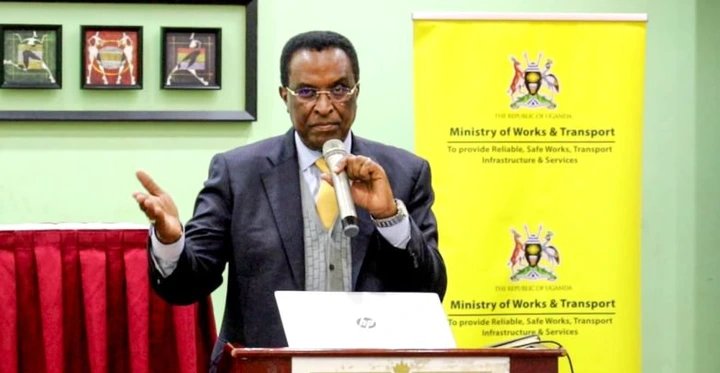

Winstone Katushabe, commissioner for road safety at the Ministry of Works and Transport addressing stakeholders on Wednesday in Kampala
KAMPALA: Uganda is preparing to reinstate its automated traffic fines system, with officials now focusing on enforcing a 30 kilometres per hour speed limit in sensitive areas to reduce road crashes and protect pedestrians.
The Express Penalty Scheme (EPS), introduced in 2022, was designed to automatically penalise speeding and red-light violations using cameras. But it was suspended after motorists raised concerns about system errors, unfair multiple fines and unclear legal provisions.
Government officials say lessons from that experience are shaping a revised system, with speed control in high-risk areas now at the centre of the strategy.
“Government has been trying to put in place interventions to reduce road crashes and one of the biggest challenges of these road crashes is speed,†said Winstone Katushabe, commissioner for road safety at the Ministry of Works and Transport.
Under the revised approach, authorities will enforce a 30 km/h speed limit only in designated zones such as schools, hospitals, markets and churches — areas where pedestrians, especially children, are most exposed.
“Speed was considered a very major contributor to road crashes,†said Robert Kisakye, a senior licensing officer at the ministry.
“Stakeholders agreed with us on the application of 30 kilometres per hour in special zones where you have vulnerable road users.â€
Kisakye said earlier proposals had mistakenly extended the limit across entire roads, but this has now been corrected.
Header advertisement
For many Ugandans, especially in busy urban areas like Kampala, the move could mean stricter enforcement near trading centres, taxi stages and community spaces where accidents are common.
The government is also addressing public concerns that led to the suspension of EPS.
These include revising the timeline for paying fines and clarifying responsibility in cases where vehicles are borrowed or hired.
“You are issued a ticket, and you are supposed to pay within 28 days. In 2020, this law was amended to reflect 72 hours, and that is one of the areas that had contention among the public,†Katushabe said.
Technical improvements are being made to prevent errors such as duplicate fines and to ensure better coordination between the Ministry of Works, the police and the camera systems.
Officials say the system is currently being tested using government vehicles, with a phased rollout expected to begin in the Greater Kampala Metropolitan Area before expanding to other towns.
To avoid catching motorists unaware, the government plans to install clear road signs warning drivers about speed cameras.
“If your camera is half a kilometre ahead, we should also put that signpost and say camera ahead,†Katushabe said.
Boda boda riders and other transport operators have also raised concerns about the cost of fines, prompting discussions about possible adjustments to make penalties more affordable.
Road carnage
Uganda continues to face a growing road safety crisis, with more than 25,000 road crashes recorded in 2024, resulting in over 25,800 casualties and an estimated 5,000–6,000 deaths annually, equivalent to about 14 people dying every day.
Police data shows that speeding and reckless driving are the leading causes, accounting for a significant share of accidents, while pedestrians, boda boda riders and passengers remain the most vulnerable groups.
Despite slight improvements in some urban areas like Kampala, overall fatalities have been rising steadily in recent years, underscoring the urgency of interventions such as enforcing 30 km/h limits in high-risk zones and deploying automated traffic systems to improve compliance and save lives.
The ministry said it would continue consultations across the country, including in major towns such as Jinja, Gulu and Mbarara, before submitting a final report to Cabinet.


 Government will not gazette Kijanangoma as King of Tooro for now - Attorney General insists
Ultimate Uganda
Government will not gazette Kijanangoma as King of Tooro for now - Attorney General insists
Ultimate Uganda
 King Oyo’s Body to Arrive Thursday
Ultimate Uganda
King Oyo’s Body to Arrive Thursday
Ultimate Uganda
 Besigye, Lukwago expected to meet Gen. Salim Saleh today at Kapeeke
Ultimate Uganda
Besigye, Lukwago expected to meet Gen. Salim Saleh today at Kapeeke
Ultimate Uganda
 Rwabwogo Advised to ‘Eat His Bishop’ As MK Prepares to Enter State H’se: PREZ MUSEVENI ON HIS WAY OUT
Ultimate Uganda
Rwabwogo Advised to ‘Eat His Bishop’ As MK Prepares to Enter State H’se: PREZ MUSEVENI ON HIS WAY OUT
Ultimate Uganda
0 Comments