
DR. OPUL JOSEPH, PhD: Trillions Shillings Planted Before Skills leading to Kwashiorkor Harvests: Why PDM Must Stop Watering Rocks instead of Seeds
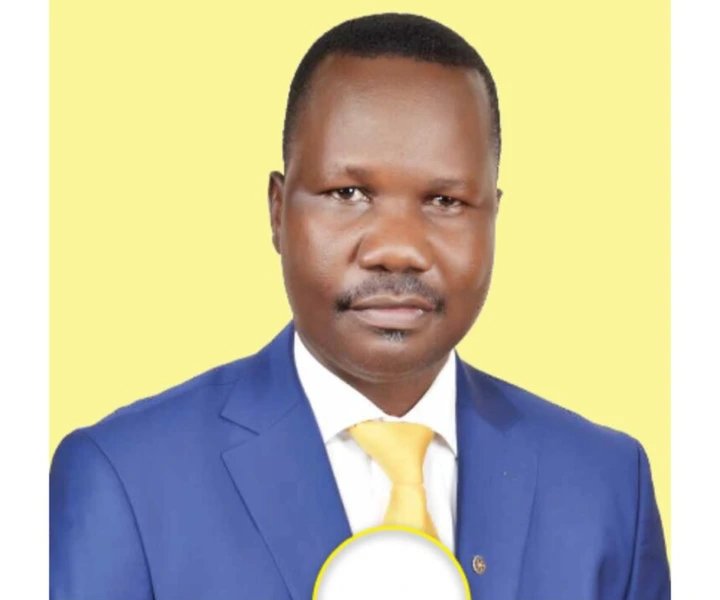

Dear all political and technical line leaders directly /indirectly concerned with PDM ranging from H.E the President of Uganda, Ministers, Members of Parliament, Security agencies (Military & Defense, Law Enforcement & Internal Affairs, Intelligence Services),PDM Secretariat, district leaders, religious leaders, fellow Ugandans, Salaams from Gulu University, Quality Education Consultancy Ltd (QECL), OPUL Skilling Foundation Africa (OSFA), Rotary Clubs of Uganda and Uganda Red Cross Society(URCS).
I write this open letter with patriotic concern and deep hope for our nation. The Parish Development Model (PDM), launched on 26 February 2022 in Kibuku Secondary School in Kibuku District, was introduced as a revolutionary strategy to awaken Uganda’s villages from chronic poverty. It promised to push wealth creation to the parish level and transform subsistence households into productive participants in the money economy, designed to transform millions of subsistence households into the money economy, its major achievements are driven by local-level interventions. Uganda’s history since 1986 of poverty alleviation programmes resembles a farmer repeatedly planting cassava stems in dry stones and expecting miracles. From PEAP, Entandikwa, Rural Farmers Scheme, Bona Bagaggawale, Youth Livelihood Programme, NAADS, OWC, NUSAF, Emyooga, and now PDM. Since 1986 many govt good livelihood initiatives have struggled due to deficiency in universal community envisioning, deficiency in skilling, donation of development rather than facilitating, corruption, deficiency in evaluative monitoring, politicization, cosmetic rather organic design among others. The painful truth is that many govt livelihood programmes have become “old wine poured into new bottles.†As elders wisely say, “A cooking stick that burnt yesterday still fears the fire today.†Ugandans are therefore justified to ask whether PDM will become another expensive experiment or a genuine engine of transformation. Indeed Parish Development Model (PDM) has scored has achieved widespread financial inclusion, grassroots economic empowerment, and improved digital service delivery. However, recent findings from the Auditor General reveal painful realities that demand urgent reflection and corrective action. Truly, “a nation that ignores warning drums eventually dances to disaster.â€
The findings presented by the Auditor General, Edward Akol, before Parliament should trouble every patriotic citizen. Out of UGX 3.258 trillion released to 10,589 SACCOs nationwide, only UGX 9.34 billion has been voluntarily recovered, Ghost projects, duplicate beneficiaries, delayed disbursements, diversion of funds, ineligible enterprises, and dormant accounts continue haunting the programme like stubborn mosquitoes in a swamp. Some beneficiaries received funds multiple times while deserving poor households remained spectators of poverty. Indeed, “when the fence starts eating the crops, the farm is in danger.â€
One village story tells of a man called Okello who received money to rear goats under a government programme. Instead of buying goats, he first bought a huge radio, expensive sunglasses, and three umbrellas. When officials visited him months later asking about the goats, he confidently replied, “The goats are still mentally preparing themselves.†The entire village burst into laughter. Unfortunately, this joke reflects the painful reality of some PDM beneficiaries who received money before receiving entrepreneurial discipline, financial literacy, and enterprise mentorship. Giving capital without skills is like “giving a motorcycle to someone who cannot ride and expecting safe arrival.â€
The major weakness of PDM is not lack of money but lack of preparedness. Uganda planted trillions before planting skills. We watered rocks instead of seeds and are now surprised by small harvests. A farmer who plants maize on a rock should not blame the rain. Similarly, a government that distributes money without proper training, supervision, mindset transformation, and market preparation should not expect miracles. Poverty is not defeated by distributing cash alone; poverty is defeated by building productive citizens with knowledge, discipline, and opportunity. As the Bible teaches, “My people are destroyed for lack of knowledge.†Hosea 4:6.
Uganda must urgently learn from China, which successfully lifted over 800 million people from absolute poverty through discipline, accountability, universal skills development, industrialization, infrastructure investment, and strategic supervision. China did not simply throw money at villagers like confetti during weddings. Instead, it trained people first, monitored projects consistently, and held local leaders accountable for results. Every village became a production center, not merely a distribution point for loans. China understood that “development is harvested from discipline, not from slogans.â€
The Chinese model teaches Uganda five critical lessons. First, skills and community envisioning must come before capital. Second, monitoring must be stronger than speeches. Third, local leaders must be personally accountable for outcomes. Fourth, technology must be accompanied by training. Fifth, poverty eradication must focus on production rather than political excitement. Uganda cannot fight poverty through microphones alone. As Africans say, “A drum makes noise, but it does not cultivate the garden.†The 4,204 untrained tablet users under PDM symbolize a deeper national problem: technology without capacity is like “giving spectacles to a blind goat.â€
The Parish Development Model must therefore adopt structured enterprise development stages. The first stage should be organically accelerate what the community is already doing on their own, for those without businesses support them to envision and Generate Business Ideas, Beneficiaries must assess their entrepreneurial traits, identify market opportunities, evaluate risks, and select viable enterprises. A person who fears chickens should not be financed to operate a poultry farm merely because poultry is fashionable. Successful businesses grow from passion, market understanding, and careful planning. As the Quran reminds believers, “Man will have nothing except what he strives for.†Quran Surah An-Najm 53:39.
The second stage should focus on enabling beneficiaries to start and manage businesses using their own initiative and available resources before relying on government support. Citizens must first learn the fundamentals of enterprise development, including marketing, costing, staffing, record keeping, customer care, legal compliance, and proper management of startup capital. A business without planning is like beginning a journey without knowing the destination. Many small enterprises collapse not because they fail to generate profits, but because business owners consume operating capital for personal expenses instead of reinvesting it for growth.
Government does not fund many of the activities citizens willingly spend money on every day. Across the country, people consistently find resources for drinking, entertainment, football viewing, betting, social celebrations, religious contributions, and other leisure activities. For example, supporters celebrate football victories, families organize parties, and individuals spend regularly on lifestyle consumption without state financing. If these expenditures were aggregated, many individuals would realize that they spend well over one million shillings annually on non-productive consumption. This demonstrates that communities possess financial potential that can be redirected toward savings, investment, and enterprise development if properly mobilized, trained, and inspired.
The third stage, “Improve Your Business,†is equally important. Entrepreneurs must master stock control, bookkeeping, productivity management, quality assurance, and business planning. A trader who does not keep records is like “a hunter chasing animals in darkness.†Many parish enterprises fail because owners cannot separate personal expenses from business operations. Some treat business cash boxes as family wallets. Without discipline and proper management skills, even profitable enterprises collapse under poor decisions and careless spending.
The fourth stage, “Expand Your Business,†should support growth-oriented entrepreneurs through advanced financial management, export readiness, value addition, strategic partnerships, and market expansion. Uganda must stop producing entrepreneurs who merely survive and begin nurturing entrepreneurs who scale, employ others, and transform communities. We cannot industrialize Uganda while our enterprises remain trapped at roadside kiosk level forever. The dream of PDM should not end at survival; it should culminate in prosperity, productivity, and transformation.
Another folk story tells of a man who received money to establish a piggery project. Instead, he used most of the funds to marry a second wife because, according to him, “A successful businessman needs motivation.†Three months later, officials found only one skinny pig looking lonely near the kitchen. When questioned, the man proudly explained, “The pig is still networking.†The village nearly collapsed with laughter. Yet beneath the humor lies a painful lesson: money without accountability behaves like a goat in a banana plantation destructive and uncontrollable.
Strategic Recommendations for the Government of Uganda on PDM and Other Livelihood Programmes
Build on Existing Community Livelihood Systems before Introducing New Enterprises
Government livelihood programmes such as the Parish Development Model (PDM) should begin by strengthening what communities are already doing successfully rather than imposing unfamiliar enterprises. Rural households possess indigenous knowledge, existing value chains, and social support systems that can be leveraged for faster and more sustainable economic transformation.
Uganda should adopt an “organic development†approach where interventions are informed by local economic realities, culture, and market opportunities. Countries such as China and Vietnam succeeded in rural transformation by first improving productivity in existing agricultural and household enterprises before diversifying into new sectors. This approach increases ownership, reduces project failure, and enhances long-term sustainability.
Prioritize Soft Skills and Enterprise-Based Skilling before Disbursing Funds
Government should institutionalize mandatory entrepreneurship, financial literacy, cooperative management, mindset change, and vocational skilling before beneficiaries access livelihood funds. Many livelihood programmes fail because financing is provided before communities develop the capacity to manage enterprises sustainably. Uganda can draw lessons from China, where rural industrialization and poverty reduction were accompanied by extensive technical training, discipline, production skills, and community mobilization. Enterprise-based skilling should include practical mentorship, apprenticeship, agribusiness incubation, and market-oriented production systems.
Empowering citizens with knowledge first will improve productivity, accountability, and repayment culture while reducing dependency on government support. This aligns with the mission of Quality Education Consultancy Ltd (QECL) and OPUL Skilling Foundation Africa (OSFA), whose motto is “Innovative Skilling as Medicine to Extreme Poverty.†QECL&OSFA long-term commitment is to facilitate 20 million business start-ups, accelerations, and innovations, and to contribute to the creation of 40 million decent and sustainable jobs in Africa by 2035.
Shift Government’s Role from Donor to Facilitator of Development
Livelihood programmes should move away from a “handout†model toward a facilitation and empowerment approach.
Government must position itself as an enabler that supports access to markets, infrastructure, extension services, affordable credit, and technology rather than simply distributing money. Uganda should be emphasizing citizen responsibility, performance systems, and coordinated support services instead of dependency-driven welfare models. Facilitating development encourages innovation, self-reliance, and local investment while ensuring communities take ownership of projects and resources.
Depoliticize Government Livelihood Programmes
Livelihood initiatives such as PDM, Emyooga, and youth programmes should be implemented as national economic transformation strategies rather than political mobilization tools. Political interference often distorts beneficiary selection, weakens accountability, and undermines public trust. Uganda should establish transparent, merit-based systems for beneficiary identification, monitoring, and fund management insulated from partisan influence. Countries such as Singapore achieved effective public service delivery through strong institutions, professionalism, and strict accountability mechanisms that prioritized national development goals over political patronage. Depoliticizing livelihood programmes will improve efficiency, equity, and public confidence while ensuring resources reach genuinely productive households and enterprises.
In conclusion, Uganda still has an opportunity to rescue and redesign the Parish Development Model (PDM) and other livelihood programmes into true engines of economic transformation. This requires shifting from politically driven cash distribution to community-centered and productivity-driven development by strengthening existing community livelihood systems, investing in soft skills and enterprise-based skilling before disbursing funds, repositioning government from a donor to a facilitator of development, and depoliticizing livelihood programmes through transparent and merit-based implementation. The experiences of China, Vietnam, and Singapore demonstrate that sustainable transformation is built on skills, discipline, productivity, accountability, and strong institutions rather than handouts and patronage.
A nation does not prosper because trillions were released; it prospers because wisdom guided the investment. Let Uganda stop watering rocks and begin planting seeds. Let every parish become a center of production, innovation, enterprise, and dignity. Let future generations say that this was the moment Uganda chose empowerment over dependency, productivity over politics, and sustainable transformation over short-term populism.
Dr. OPUL JOSEPH, PhD
Lecturer, Gulu University
Founder, Quality Education Consultancy Ltd (QECL)
CEO, OPUL Skilling Foundation Africa (OSFA)
President Elect, Rotary Club of Soroti Central
Life Member, Uganda Red Cross Society


 The women who have been in King Oyo’s life
Ultimate Uganda
The women who have been in King Oyo’s life
Ultimate Uganda
 Ex Kagame Guard Commander Tom Byabagamba Dies in Rwandan Prison After 12 Years
Ultimate Uganda
Ex Kagame Guard Commander Tom Byabagamba Dies in Rwandan Prison After 12 Years
Ultimate Uganda
 Government begins salary payments for public sector workers – Reform Committee
Ultimate Uganda
Government begins salary payments for public sector workers – Reform Committee
Ultimate Uganda
 Temangalo land: NSSF, Nzenyi reach agreement
Ultimate Uganda
Temangalo land: NSSF, Nzenyi reach agreement
Ultimate Uganda
0 Comments