
Double Jeorpady: Karamoja Lacks Tractors, yet Ploughing Oxen were Stolen by Warriors
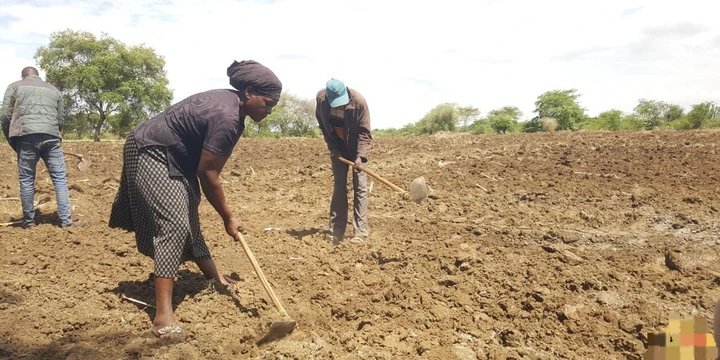

Farmers in the Karamoja sub-region are facing significant challenges in tilling their lands due to limited access to tractor services, to they rely on manual labor.
Farmers in the Karamoja sub-region are facing significant challenges in tilling their lands due to limited access to tractor services, to they rely on manual labor.
Lack of tractors remains a persistent problem, especially during the rainy season when timely cultivation is crucial. John Robert Adupa, the LC3 Chairperson of Lotisan Sub-County in Moroto district, explained that the government’s tractor hire scheme has not been effective in addressing their needs.
“We usually get tractors when the rains are coming to an end,†he said, adding that farmers are forced to hire private tractors for 120,000 shillings per acre, compared to the government’s rate of 80,000 shillings.
Adupa noted that the government’s tractors are concentrated in Nakapiripirit and Nabilatuk districts, leaving other areas struggling. He says the few available tractors are not enoughs fams are forced to use hand hoes, which are ineffectve and time-consuming.‎
He says the government tractors should have been allocated to every district so they would manage them on their own, rather than keeping them in one district.
He said that the community is greatly affected because the oxen that would have been used for opening the gardens were stolen by armed warriors, and now they have to use hand hoes that only open small gardens.
He added that the few cattle remaining are sickly and cannot be used for ploughing because they are in poor health.
Leah Akol, a farmer in Lotome sub-county, said that she has already cleared her gardens but is now stuck on how to start ploughing.
Akol said that she does not have access to a tractor and is now using a hand hoe, which may not enable her to open a sizeable piece of land.
She stressed that she will have to dig only the part that is enough for family consumption because she cannot afford commercial farming due to inadequate resources.
Emmanuel Loru, another farmer from Kangole Town Council, said that farming has always been challenging because of limited access to tractors.
Loru noted that the land in Karamoja is compact, and is hard to plough using hand hoes and ox ploughs. He said that tractors would be the best alternative because they can easily open it and soften it before planting.
Loru, however, stressed that access to a tractor has been their major problem, and this affects their production.â€We really have vast land that is very fertile and virgin, but we cannot cultivate it,†he said.
“We really call upon the government to support us with tractors that should be kept at the sub-county so that we can easily access them.â€Loru said that sometimes they are forced to hire tractors from Kenyan firms, but the demand is overwhelming, and securing one is not easy.
‎ Robert Kennedy Okuda, the Kotido District Agriculture Officer, acknowledged that farmers have an overwhelming demand for tractors.
Okuda said that they have always wanted farmers to prepare their gardens early, but their efforts are frustrated by the lack of tractors. As a result, farmers fail to catch up with the rains and cultivating late when the wet season is ending.
Okuda observed that although they have two tractors issued by partners such as the World Food Program (WFP), the demand is way beyond the available tractors, and they need at least eight tractors to cover the entire district in time.
‎The Ministry of Agriculture, Animal Industry and Fisheries (MAAIF) introduced the tractor hire scheme in 2023 to boost food security and commercialize farming in the Karamoja sub-region.
However, farmers face difficulties in accessing the tractors due to long queues and breakdowns during the rainy season.‎
The tractors are kept at Nabuin Zonal Agricultural Research and Development Institute in Nabilatuk district, where farmers can access them at 80,000 shillings an acre.
Despite the progress made, farmers still face challenges accessing tractors, slowing agricultural development in the region.


 The women who have been in King Oyo’s life
Ultimate Uganda
The women who have been in King Oyo’s life
Ultimate Uganda
 Ex Kagame Guard Commander Tom Byabagamba Dies in Rwandan Prison After 12 Years
Ultimate Uganda
Ex Kagame Guard Commander Tom Byabagamba Dies in Rwandan Prison After 12 Years
Ultimate Uganda
 Government begins salary payments for public sector workers – Reform Committee
Ultimate Uganda
Government begins salary payments for public sector workers – Reform Committee
Ultimate Uganda
 Temangalo land: NSSF, Nzenyi reach agreement
Ultimate Uganda
Temangalo land: NSSF, Nzenyi reach agreement
Ultimate Uganda
0 Comments