
UNEB warns schools over fake candidate registrations

Thousands of Ugandan learners preparing for national exams have been given more time to register.
But alongside that extension has come a sharp warning from the Uganda National Examinations Board: schools found abusing the system could face serious penalties.
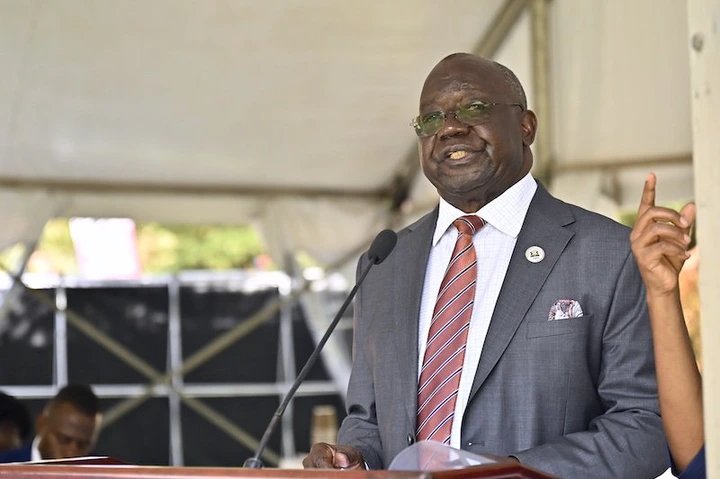
Speaking at a press briefing at the Uganda Media Centre, UNEB Executive Director Daniel Odongo warned heads of government- aidedschools against registering privately sponsored candidates as government-funded learners, describing the practice as fraudulent and costly to taxpayers.
“Heads of government aided schools are put on notice not to register privately sponsored candidates as government sponsored candidates. This is a fraudulent practice which causes financial loss to government,†Odongo said.
The warning comes as UNEB extends the normal registration period for candidates sitting the 2026 Primary Leaving Examination, Uganda Certificate of Education and Uganda Advanced Certificate of Education exams.
The deadline, initially set for May 31, has now been pushed to June 30, 2026. For students and parents, the extension offers welcome breathing room. For UNEB, it is also part of a broader effort to keep the registration process fair and accurate as preparations intensify.
Odongo said the extension is intended to accommodate newly accredited examination centres and schools whose learner capacity has recently increased. But he cautioned schools not to treat the extension as an excuse to delay.
“We would like to urge schools not to relax because of the extension. Centres should complete the registration process early to avoid congestion towards the deadline,†he said.
By Thursday morning, UNEB had already registered 673,992 Primary Leaving Examination candidates out of an expected 880,000. That is about 77 percent.
At Uganda Certificate of Education level, 299,483 candidates had registered out of an expected 500,000, while 109,718 students had been registered for Uganda Advanced Certificate of Education out of a projected 180,000.
Beyond deadlines, however, UNEB’s bigger concern is misuse of government sponsorship. Odongo said the problem is especially common in primary schools, where some administrators allegedly register learners from private schools under the Universal Primary Education programme so government pays their examination fees.
In some cases, he said, schools still collect money from parents while falsely declaring the same learners as government-sponsored.
“This is a fraudulent act and the relevant laws on fraud will also be applicable to them,†he said.
UNEB says any head teacher, school director or examinations administrator found doing this could be ordered to refund twice the money involved and may face prosecution.
A school’s examination centre number can also be withdrawn, effectively barring it from operating as an examination centre. Government will continue paying registration fees for candidates under Universal Primary Education, Universal Secondary Education and Universal Post O-Level Education and Training.
Private candidates will continue paying the existing fees: Shs34,000 for Primary Leaving Examination, Shs164,000 for Uganda Certificate of Education and Shs186,000 for Uganda Advanced Certificate of Education. Late registration will run from July 1 to July 31.
That comes at a price. Primary Leaving Examination candidates registering late will pay a 100 percent surcharge. Uganda Certificate of Education and Uganda Advanced Certificate of Education candidates will pay a 50 percent surcharge. UNEB also warned schools against adding unauthorised charges and calling them “UNEB fees.â€
“According to the UNEB Act, it is an offence to charge fees not prescribed by UNEB and refer to such fees as UNEB fees,†Odongo said.
The board further urged parents to remain alert. Odongo said UNEB has previously handled cases where students paid registration fees, only for school administrators to disappear without remitting the money.
“Quite often we find out towards examinations that students from a particular school were not registered although they had paid fees and the director or head teacher who collected the money disappeared,†he said.


 Government will not gazette Kijanangoma as King of Tooro for now - Attorney General insists
Ultimate Uganda
Government will not gazette Kijanangoma as King of Tooro for now - Attorney General insists
Ultimate Uganda
 King Oyo’s Body to Arrive Thursday
Ultimate Uganda
King Oyo’s Body to Arrive Thursday
Ultimate Uganda
 Besigye, Lukwago expected to meet Gen. Salim Saleh today at Kapeeke
Ultimate Uganda
Besigye, Lukwago expected to meet Gen. Salim Saleh today at Kapeeke
Ultimate Uganda
 Rwabwogo Advised to ‘Eat His Bishop’ As MK Prepares to Enter State H’se: PREZ MUSEVENI ON HIS WAY OUT
Ultimate Uganda
Rwabwogo Advised to ‘Eat His Bishop’ As MK Prepares to Enter State H’se: PREZ MUSEVENI ON HIS WAY OUT
Ultimate Uganda
0 Comments