
NRM’s Barata Says Sovereignty Bill Promotes Transparency Without Limiting Investment
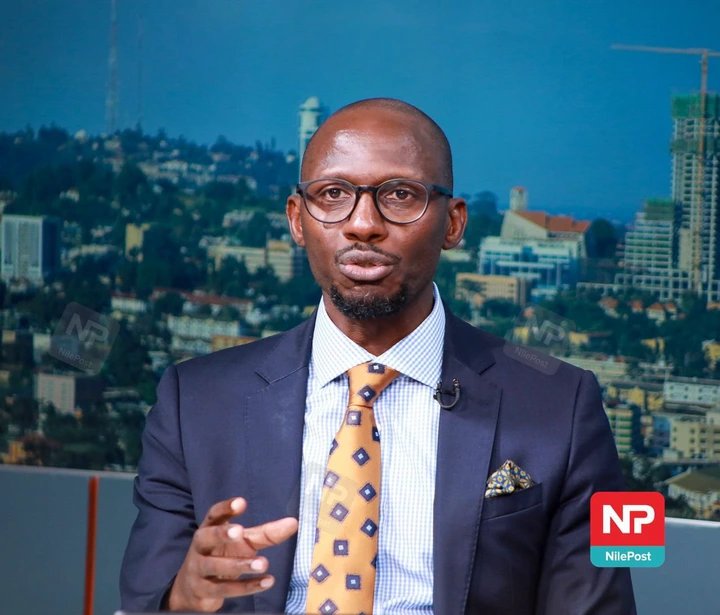

The point of a Sovereignty Bill being before Parliament is for it to be debated and adjusted as long as the ultimate objective and purpose are achieved
The National Resistance Movement (NRM) Director of Legal Affairs, Enoch Barata, has argued that the proposed Protection of Sovereignty Bill, 2026, is designed to enhance transparency rather than restrict foreign investment or funding.
Speaking during NBS Morning Breeze on Tuesday, Barata said the presence of the Bill before Parliament should be viewed as part of a legislative process open to refinement.
“The point of a Sovereignty Bill being before Parliament is for it to be debated and adjusted as long as the ultimate objective and purpose are achieved,†he said.
Barata noted that the Bill draws parallels with international frameworks, particularly the United States’ Foreign Agents Registration Act (FARA), suggesting that Uganda’s approach is not unprecedented.
“I've looked at the Foreign Agents Registration Act in the USA and I've found that the definitions of foreign principals and foreign agents are in tandem with that of our bill,†he said.
Barata dismissed claims that the proposed law seeks to deter foreign investment or prohibit external funding, insisting that its intention is administrative rather than restrictive.
“Does the Sovereignty Bill propose to restrict or deter foreign investment? No it doesn't. Does it seek to prohibit foreign funding? No it doesn't,†he said.
According to Barata, the central objective of the Bill is to ensure government oversight and awareness of activities linked to foreign actors operating within Uganda.
“The Sovereignty Bill is a question of transparency, so that the government can have full visibility of activities by foreigners and their agents so that they don't take advantage of the country and negatively impact it,†he said.
Barata added that the framework does not seek to halt ongoing activities but to ensure disclosure and alignment with national interests.
“The Sovereignty Bill is simply saying, do what you are doing but let us be on the same page with full disclosure of what you are doing,†he said.
The Protection of Sovereignty Bill, 2026, tabled by State Minister for Internal Affairs General David Muhoozi, proposes a sweeping legal framework aimed at regulating foreign influence in Uganda’s civic, economic, and digital space.
At the centre of the Bill is the creation of a broad legal category known as “agents of foreigners,†which includes individuals, organisations, and even Ugandan citizens abroad whose activities are financed, directed, or influenced by external actors.
The Bill extends its reach into digital platforms, placing online activism, civic engagement, and advocacy under regulatory oversight. It introduces mandatory registration with a designated department under the Ministry of Internal Affairs, alongside extensive vetting procedures covering identity, financial records, professional associations, and other personal disclosures.
Financial restrictions are also central to the proposed law. It introduces a cap of approximately Shs 400 million in annual foreign funding without prior ministerial approval, alongside mandatory reporting obligations for financial institutions handling transactions linked to affected entities.
Under the framework, banks and money transfer services would be required to submit monthly reports on relevant transactions, while foreign-funded organisations would face additional scrutiny when operating in key sectors such as education, health, water, and infrastructures.
The Bill also introduces strict approval requirements, including Cabinet authorisation for foreign-funded actors seeking to operate in designated sectors.
A major point of contention is the introduction of new criminal offences, including “economic sabotage,†defined as publishing or disseminating information deemed to undermine Uganda’s economic stability or mobilising opposition to government policy without approval.
Penalties under the proposed law are severe, with individuals facing up to 20 years in prison, while organisations risk multi-billion-shilling fines and possible confiscation of funds deemed contrary to national interests.
Government officials have defended the Bill as a necessary instrument to protect Uganda from foreign interference and covert influence operations, framing it as part of a broader national sovereignty and security strategy.
Despite that justification, the Bill has triggered widespread concern among civil society organisations, legal analysts, and development practitioners, who warn that its broad definitions and expansive reach could restrict freedom of expression, association, and access to information.
Critics have particularly pointed to the ambiguity surrounding offences such as “economic sabotage,†warning that the lack of clear thresholds could expose journalists, researchers, and citizens engaged in public commentary to criminal liability.
There are also concerns that the funding restrictions and compliance requirements could disrupt donor-supported programmes, particularly in sectors heavily reliant on international partnerships.
Economists and development stakeholders have cautioned that the regulatory burden may deter investment and complicate implementation of externally funded projects in critical service delivery areas.
Despite the criticism, the political environment in Parliament appears strongly aligned in favour of the Bill. The ruling National Resistance Movement (NRM) holds a commanding majority of more than 350 Members of Parliament, supported by independents who often vote with government positions.
That numerical advantage significantly reduces the likelihood of legislative defeat, particularly after party members reportedly consolidated their position during a retreat in Kyankwanzi, where MPs pledged support for the Bill.
Parliamentary leadership is also seen as reinforcing the government’s legislative agenda.
Speaker Anita Among and Deputy Speaker Thomas Tayebwa preside over a House widely regarded as structured and disciplined in advancing executive-backed legislation.
Their leadership has been publicly endorsed by President Museveni, reinforcing continuity in parliamentary management ahead of key legislative decisions.
Within broader political dynamics, Chief of Defence Forces General Muhoozi Kainerugaba has also publicly backed Speaker Anita Among, a shift that has been interpreted as further consolidation of support within influential state and political networks.
Analysts also note that the timing of the Bill introduced toward the end of the parliamentary term may influence legislative behaviour, as some MPs focus on political alignment and electoral considerations ahead of the next cycle
Taken together, these factors suggest a strong likelihood that the Protection of Sovereignty Bill will proceed through Parliament, despite sustained public debate over its implications for civil liberties, governance, and Uganda’s democratic space.


 Government will not gazette Kijanangoma as King of Tooro for now - Attorney General insists
Ultimate Uganda
Government will not gazette Kijanangoma as King of Tooro for now - Attorney General insists
Ultimate Uganda
 King Oyo’s Body to Arrive Thursday
Ultimate Uganda
King Oyo’s Body to Arrive Thursday
Ultimate Uganda
 Besigye, Lukwago expected to meet Gen. Salim Saleh today at Kapeeke
Ultimate Uganda
Besigye, Lukwago expected to meet Gen. Salim Saleh today at Kapeeke
Ultimate Uganda
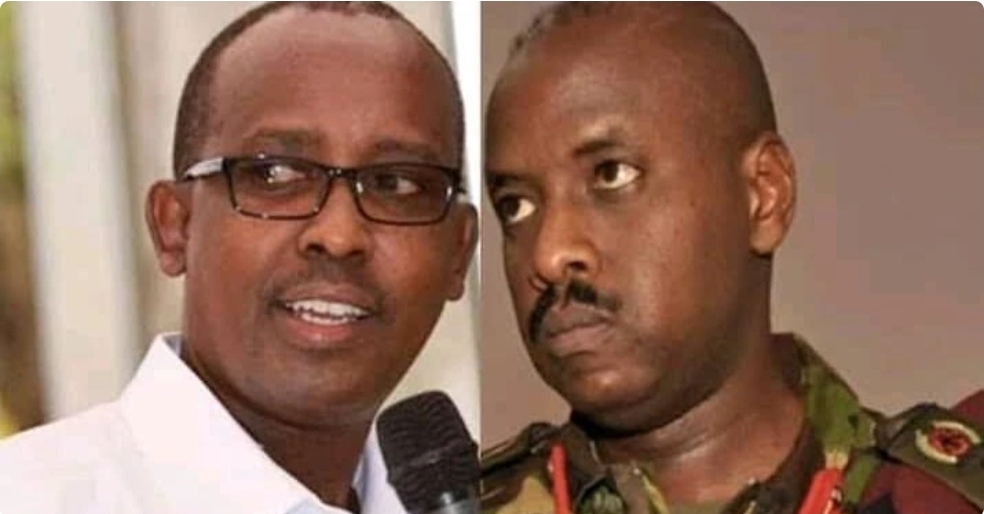 Rwabwogo Advised to ‘Eat His Bishop’ As MK Prepares to Enter State H’se: PREZ MUSEVENI ON HIS WAY OUT
Ultimate Uganda
Rwabwogo Advised to ‘Eat His Bishop’ As MK Prepares to Enter State H’se: PREZ MUSEVENI ON HIS WAY OUT
Ultimate Uganda
0 Comments