
Why Ainomugisha cut her tubes at age of 24
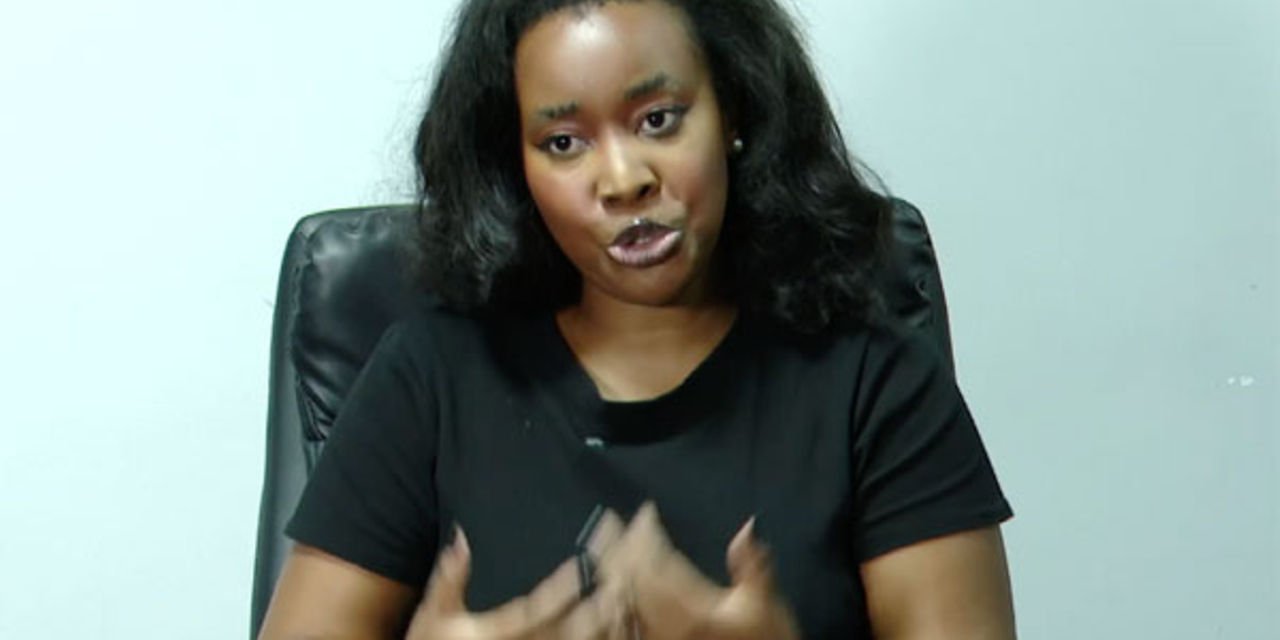

At 25, Mary Ashley Ainomugisha is sure of herself, her body, and the life she wants to lead.
A self-proclaimed feminist, she describes herself as an online activist for women’s rights and health. While society expects a young woman her age to be looking forward to the lifelong goals of marriage and motherhood, Ms Ainomugisha took a different path, having long decided that she did not want to have children. At 24, she underwent a tubal ligation, specifically, having her tubes cut.
“I think most women, from their childhood, are socialised to be mothers. For a long time, I wanted to have twins. But then, as I became a feminist, I began to deconstruct the socialisations,†she says. “I started to ask myself if I wanted to be a mother because everyone said I should be a mother, or if I wanted to be a mother out of my own conviction. After all, motherhood is a lifelong responsibility,†she explains.
Ms Ainomugisha, who is into marketing and public relations, has six brothers and one sister. She attended a couple of schools for her secondary education. “I attended different schools, not because I was stubborn, but because my mom would listen to me whenever I complained about a certain school. I attended Gayaza High School, which I found very traditional,†she says.
“I could not take it, so I moved to St Peters Secondary School Naalya, then Taibah International Secondary School, and then Vienna College Namugongo,†she adds.
Biting the bullet
While at Strathmore University in Nairobi, Kenya, as she pursued a Bachelor of Commerce specialising in Marketing, the feminist came to the realisation that she did not want to have children. “I have had a front-row seat to motherhood, not just through my own mother, but through the women around her. I have seen the weight of it. I have listened to the stories,†Ms Ainomugisha shares.
“For many women, motherhood is unsupported, lonely, and overwhelming. Whether married or not, the burden often falls almost entirely on them. Society celebrates women for having children, but offers very little in terms of real support or protection,†she notes. Ms Ainomugisha adds that deadbeat fathers are rarely held accountable, while single mothers are judged for simply staying and doing the work.
“What struck me the most was the quiet reality of resentment. Many mothers carry it, understandably so, and sometimes, it spills over onto their children. I realised I could empathise with that feeling, but I could not imagine putting a child in a position where they might carry the weight of my unmet needs or frustrations,†she explains. There were mixed reactions when Ms Ainomugisha discussed her convictions with friends and family. Her mother was not comfortable with her choice.
“I can understand where she is coming from, but I do not think she necessarily has to understand it for it to be the right choice for me. Women are not being supported through motherhood, and the statistics of single mothers in this country are insane. So many women regret having children,†she adds.
Ironically, the marketeer says she does not hate children. Instead, she loves them and believes that children should have mothers who want them. Currently, she does not have a boyfriend, although she has dated in the past and expressed her sentiments to her partners at the time.
Turning point
In December 2024, Ms Ainomugisha was diagnosed with uterine fibroids. She was advised to have them removed surgically. That is when she opted to cut her tubes as well. “I had five huge fibroids; one of them was 12 centimeters long and was seated on my bladder. It disturbed my system, so I had to have them taken out. As I read about the procedure, I found out that a woman can do other things while having a pelvic surgery, so I talked to my doctor,†she explains.
The doctor gave her other options for permanent birth control. However, Ms Ainomugisha had already made up her mind to have her fallopian tubes cut. “She tried to convince me to install a copper IUD, and then if I still wanted tubal ligation when I was 28, she would do it for free. I rejected the offer,†she shares. “The doctor then asked what would happen in the future if I met a man who wanted to have children with me. I told her that I would move on to somebody else, because there is a plethora of men who do not want to have children. I am not going to be shamed for choosing to procreate responsibly,†she adds.
So after extensive discussions, Ms Ainomugisha signed the consent form and proceeded to hit two birds with one stone.
The aftermath
When she woke up from the surgery, her first feeling was one of liberation. “The first thing I asked the doctor was if she had cut my tubes. I did not even ask about the fibroids. And when she said, ‘Yes,’ all was well with the world. The fear of being trapped with some man and child evaporated. I felt lighter, excited, like I had a new lease on life. I felt I was in control of my life,†she enthuses.
Like any other woman, she still gets her periods and experiences ovulation. The only difference is that she cannot get pregnant the old-fashioned way. During ovulation, when her ovaries release an egg, it is reabsorbed into her body.
“I have no regrets. My body is not a playground. When I went public about my decision, many people in the comment section said I would regret it in a few years. That is a possibility; I am not going to say that might not happen, but do you know how many women regret having children?†Ms Ainomugisha says. Permanent sterilisation for women is irreversible. However, women who have had tubal ligation and want to have children again have the options of undergoing fertility treatments or IVF, adopting children, or having babies through surrogacy.
Ms Ainomugisha says her six brothers are in support of her decision. The surgery to remove the fibroids cost Shs5 million, however, she had to top up Shs300,000 for the tubal ligation.
Since she came out publicly, the feminist has faced backlash, specifically from men and conservative sections of society. “I think the backlash from men was not surprising, but the intensity of it was absolutely shocking, especially the men who kept asking why I was sharing my experience with the public,†she says.
Advice to women
To the women who shamed her, Ms Ainomugisha has a message for them. “Those women are victims of the misogynistic system which punishes women who deviate from the norm. For any system to succeed, the victims become gatekeepers. I can understand the outrage of those women. I can understand that they were told that their worth is tied to being a mother. I reject that, and to them it is uncomfortable and confrontational,†she stresses.
The feminist advises young women to think through everything they have been taught about being women before they can make a tradeoff with their own desires. “That is exactly why I started a YouTube channel when I was in A-Level. I always wanted us to have conversations that I never saw anyone having,†she says.
“For instance, everything about women’s hygiene is tied to changing your panties every five days, shaving, and pulling (labia elongation). But guys! We are not talking about the real things that matter. Young women should think through what they have been taught and what they desire to continue with,†she advises.
Tubal ligation among women who already have children has been lauded as a procedure that allows women to be productive, improve their socioeconomic status, and participate actively in income-generating activities, because they can manage their families.
However, misconceptions about the procedure still exist due to social pressures, myths, and a lack of support.
What doctors say
Dr Kenneth Buyinza, the director general of the Inclusive Health Bureau, says it is inappropriate to perform a tubal ligation on someone in their 20s who does not have children. “Not wanting children or suffering from fibroids is a very lame reason to have a tubal ligation. Even if the client has one or two children, we are not Americans or Europeans. We are Africans. I once performed such a procedure on a woman who had seven children. After some time, she returned to the clinic, saying she felt like having another child,†he notes.
Fortunately, the clinic had given the woman comprehensive counselling about the implications of a tubal ligation not being reversible in the local context in Uganda, and she had signed consent forms. Dr Buyinza adds that there needs to be a protracted period of engagement between the doctor and the client to certify that indeed, permanent sterilisation is the latter’s desire. “You have to ascertain that the client is not under the influence of something that might change tomorrow. One of the commonest causes of people changing their fertility preferences is relationship failure,» he says.
But, when they move into another relationship, they might want to produce a child. As a doctor, you might rush into performing that procedure, and tomorrow it will backfire on you,†he cautions. Dr Buyinza recommends permanent methods of birth control, such as tubal ligation and vasectomy, for individuals who have already achieved their desired family sizes.


 The women who have been in King Oyo’s life
Ultimate Uganda
The women who have been in King Oyo’s life
Ultimate Uganda
 Ex Kagame Guard Commander Tom Byabagamba Dies in Rwandan Prison After 12 Years
Ultimate Uganda
Ex Kagame Guard Commander Tom Byabagamba Dies in Rwandan Prison After 12 Years
Ultimate Uganda
 Government begins salary payments for public sector workers – Reform Committee
Ultimate Uganda
Government begins salary payments for public sector workers – Reform Committee
Ultimate Uganda
 Temangalo land: NSSF, Nzenyi reach agreement
Ultimate Uganda
Temangalo land: NSSF, Nzenyi reach agreement
Ultimate Uganda
0 Comments