
Museveni Commissions New UGX1.1 Trillion Cement Plant In Moroto, Warns URA off Taxes

Uganda’s heavy reliance on imported clinker—costing the country hundreds of millions of dollars annually—has long strained the economy and limited the growth of local industry.
Leaders say the country has been losing up to 85 percent of the value of cement production to external markets, while regions like Karamoja remained underutilized despite vast mineral resources.
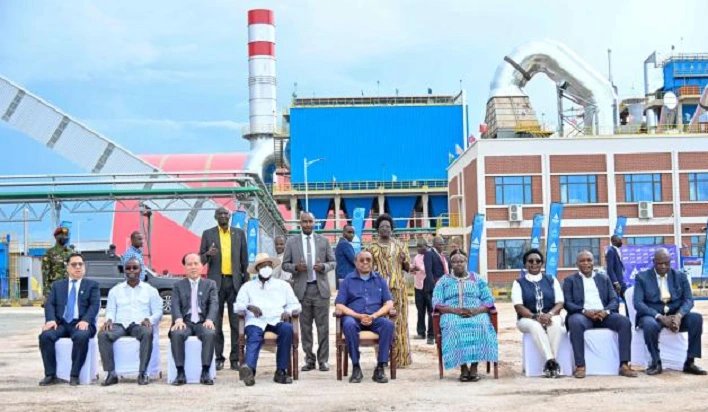
It is this gap that the commissioning of a new cement plant in Moroto seeks to address. President Yoweri Museveni on Friday commissioned the USD 300 million (about UGX1.1 Trillion) Yaobai International Holding Cement Uganda Limited in Nadunget Town Council, saying it will significantly cut clinker imports and unlock Karamoja’s economic potential.
The plant, a subsidiary of West China Cement Limited, began construction in September 2023. Officials said it was ignited in January 2026 and started producing clinker in February.
In its first phase, the factory will produce over 6,000 tonnes of clinker daily, with plans to double output in the second phase. It currently employs more than 3,000 workers on permanent and contract terms.
Museveni said Uganda has been spending about USD 260 million annually on clinker imports. The Moroto plant is expected to reduce reliance on imported clinker by 2.5 million tonnes each year.
“The industries were losing. Now this factory has saved them from the burden of importation,†Museveni said.
The President added that Karamoja’s development is now gaining momentum due to its vast raw materials, including over 67 million tonnes of limestone and an estimated 180 million tonnes in Rupa Sub-county.
Museveni also warned the Uganda Revenue Authority against taxing the plant, citing a government policy granting investors a 10-year tax holiday.
“Yaobai International Holding Cement factory is not supposed to pay taxes on finished products produced within the region. I will take action against tax collectors demanding money. They are sabotaging government programs,†he said.
Zang Jiewen, chairperson of the company, thanked the President, the Chinese Embassy, and stakeholders for supporting the project.
He said the $300 million investment is expected to produce up to 2 million tonnes of clinker annually and 3 million tonnes of cement, generating about $300 million in annual output value and creating more than 3,500 jobs at full capacity.
Zang added that the plant will also serve regional markets including South Sudan, western Kenya, and the Democratic Republic of Congo, strengthening regional trade.
Ruth Nankabirwa, the Energy and Mineral Developments Minister credited government policy—particularly the ban on exporting raw minerals—for driving industrialization.
She noted that cement production has grown from just two factories in 1986 to five today, with per capita consumption rising from 41kg to 163kg.
John Baptist Lokii, the Matheniko County Member of Parliament said the factory site was once a conflict zone plagued by cattle rustling but is now benefiting from improved security.
“Underdevelopment was caused by cattle rustling that promoted insecurity. Now peace is paving the way for factories that boost the economy,†Lokii said, urging locals to seize job opportunities.
Peter Lokeris, the Karamoja Affairs Minister said stopping the export of raw materials forced investors to establish factories within the region, boosting infrastructure and employment.
He added that the investment could help address youth unemployment, which has often fueled insecurity.
However, some residents expressed concern over the branding of the product, calling for it to reflect the region.
Andrew Lokol said locals expected the product to be named after Karamoja or Moroto. “We were proud during construction, but shocked the brand was not linked to Karamoja. Tororo Cement maintained the brand name based on location… we want the same for Karamoja,†he said.
Robert Okello also questioned the use of a foreign name for a locally produced product and urged the company to make cement more affordable for residents.


 Government will not gazette Kijanangoma as King of Tooro for now - Attorney General insists
Ultimate Uganda
Government will not gazette Kijanangoma as King of Tooro for now - Attorney General insists
Ultimate Uganda
 King Oyo’s Body to Arrive Thursday
Ultimate Uganda
King Oyo’s Body to Arrive Thursday
Ultimate Uganda
 Besigye, Lukwago expected to meet Gen. Salim Saleh today at Kapeeke
Ultimate Uganda
Besigye, Lukwago expected to meet Gen. Salim Saleh today at Kapeeke
Ultimate Uganda
 Rwabwogo Advised to ‘Eat His Bishop’ As MK Prepares to Enter State H’se: PREZ MUSEVENI ON HIS WAY OUT
Ultimate Uganda
Rwabwogo Advised to ‘Eat His Bishop’ As MK Prepares to Enter State H’se: PREZ MUSEVENI ON HIS WAY OUT
Ultimate Uganda
0 Comments