
Amuriat Pushes Opposition Unity After 2026 Polls
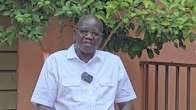

Opposition leaders and analysts have reacted with caution to Patrick Amuriat’s renewed call for unity, citing mistrust, competition, and structural weaknesses within Uganda’s fragmented opposition landscape.
Forum for Democratic Change (FDC) president Patrick Oboi Amuriat has intensified calls for opposition unity following the disputed 2026 general elections, warning that Uganda’s opposition risks political irrelevance if it fails to act collectively.
In a strongly worded address, Amuriat said the struggle for political change could not be pursued in isolation, arguing that “liberation of Uganda… cannot be done single-handed,†and warning that “we either work together or we shall be buried in a mass grave.â€
His remarks follow the FDC’s rejection of the 2026 election results, which the party claims were flawed. Amuriat maintained that the party “did not accept, does not accept, and will not legitimize the declared outcomes,†while signalling a strategic shift toward building broader opposition alliances.
He also responded to earlier political remarks suggesting the opposition could be weakened or absorbed, insisting it remained resilient.
“The opposition is too big to be swallowed,†he said, arguing that defections do not erase what he called the “soul of the opposition.â€
However, reactions from opposition leaders and analysts suggest deep uncertainty about whether such unity is achievable.
Leader of Opposition in Parliament Joel Ssenyonyi said efforts to unify the opposition are not new and have been ongoing for years, particularly under the National Unity Platform (NUP).
“As the National Unity Platform, we have severally been reaching out to colleagues in the opposition to engage,†Ssenyonyi said, noting attempts before both the 2021 and 2026 elections to front a joint presidential candidate.
He said opposition parties have long recognised that “there is power in unity,†but admitted that internal competition has repeatedly undermined cooperation.
“We thought we would even have a joint presidential candidate, it did not happen… people can run separately, but at least we get to have a meeting of minds,†he said.
Ssenyonyi also raised concerns about mistrust and infiltration within opposition ranks, alleging that some individuals had been compromised or planted to destabilise cooperation. “There are some people therein who are planted to just wreak havoc,†he said.
Despite these challenges, he insisted that unity remains a necessary pursuit, arguing that the strongest foundation lies not only with leaders but with citizens themselves. He said ordinary Ugandans are already united by shared struggles such as unemployment, poor healthcare, and economic hardship.
Political and legal analyst Isaac Atukunda described opposition unity as theoretically sound but practically uncertain. He questioned whether full consolidation aligns with multiparty democracy principles, where parties are expected to maintain distinct political identities.
Atukunda also pointed to internal divisions within the FDC as a limitation, questioning whether the party could rebuild influence or lead a broader coalition in a political landscape increasingly dominated by larger actors.
He further warned that even a united opposition might not guarantee electoral success, suggesting that arithmetic realities could still favour the ruling party.
Political commentator Elias Tumwebaze offered a similar assessment, describing Amuriat’s proposal as positive but historically difficult to achieve in Uganda’s political context.
“Unification has been very difficult and almost impossible,†he said, adding that strategic cooperation may be more realistic than full merger among opposition parties.
Tumwebaze also noted that shifting power dynamics within the opposition could make it difficult for FDC to rally other parties behind its leadership, suggesting that larger opposition formations may increasingly set the terms of cooperation.
Taken together, the responses highlight a central contradiction in Uganda’s opposition politics: while unity is widely endorsed in principle, it remains constrained by mistrust, leadership rivalry, ideological differences, and structural imbalances.
Amuriat’s warning that the opposition must unite or risk political extinction has clearly resonated, but observers say translating that call into a workable political strategy remains an unresolved challenge.


 Government will not gazette Kijanangoma as King of Tooro for now - Attorney General insists
Ultimate Uganda
Government will not gazette Kijanangoma as King of Tooro for now - Attorney General insists
Ultimate Uganda
 King Oyo’s Body to Arrive Thursday
Ultimate Uganda
King Oyo’s Body to Arrive Thursday
Ultimate Uganda
 Besigye, Lukwago expected to meet Gen. Salim Saleh today at Kapeeke
Ultimate Uganda
Besigye, Lukwago expected to meet Gen. Salim Saleh today at Kapeeke
Ultimate Uganda
 Rwabwogo Advised to ‘Eat His Bishop’ As MK Prepares to Enter State H’se: PREZ MUSEVENI ON HIS WAY OUT
Ultimate Uganda
Rwabwogo Advised to ‘Eat His Bishop’ As MK Prepares to Enter State H’se: PREZ MUSEVENI ON HIS WAY OUT
Ultimate Uganda
0 Comments