
The untold battle: Power struggles and fight over deals at UEDCL
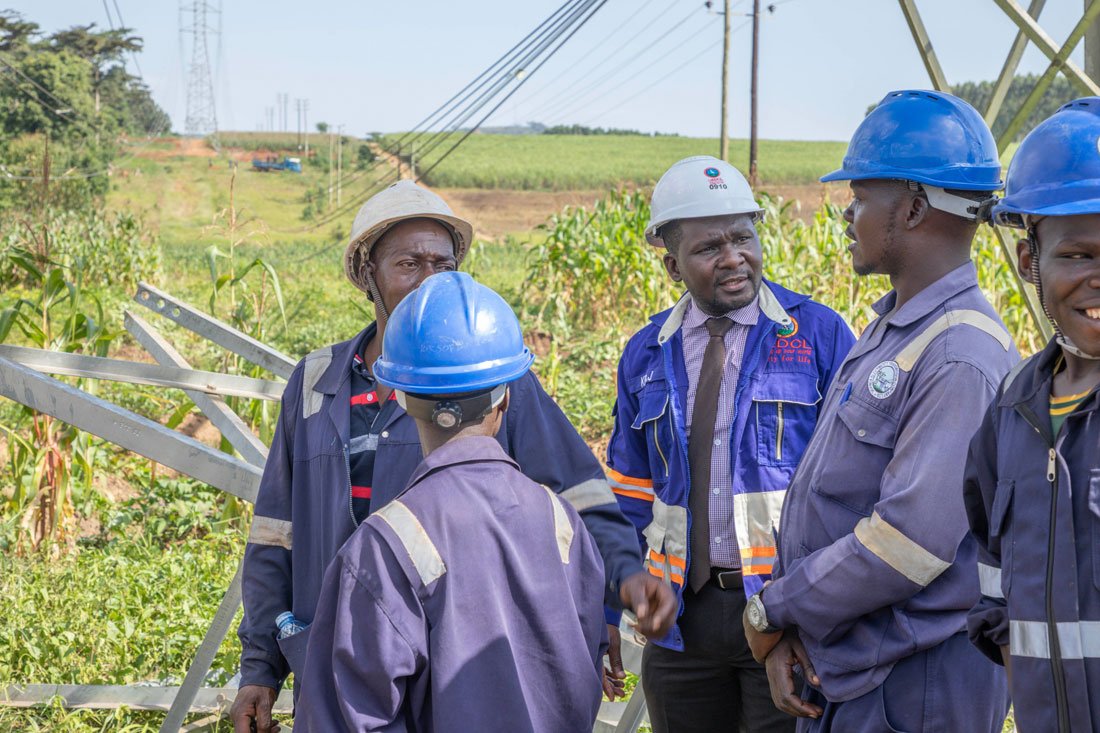

man often meets his destiny on the road he took to avoid it,†the French poet Jean de La Fontaine famously said. The idea is that, despite one’s best efforts to avoid a certain path in life, they end up facing it anyway.
That pretty much sums up Paul Mwesigwa’s one-year tenure as Managing Director of the Uganda Electricity Distribution Company Ltd (UEDCL), the statutory company co-owned by the Ministries of Energy and Finance, and charged with electricity distribution across the country.
The actual cause of his ouster depends on whom one talks to. A dyed-in-the-wool accountant/economist, Mr Mwesigwa started his career at the defunct Uganda Electricity Board (UEB), which in 1999, as part of the first power sector reforms, was split into UEDCL, Uganda Electricity Generation Ltd (UEGCL), and Uganda Electricity Transmission Company (UETCL).
From UEB, he went to UEDCL, then moved to Umeme Ltd at its inception, before returning as UEDCL Managing Director in 2019.
Even before UEDCL reassumed management of the country’s electricity network from the private concessionaire Umeme Ltd on the night of April, 2025, Mr Mwesigwa had struck first, by placing the mess in the power sector where he believed it belonged: at the doorstep of the regulator, the Electricity Regulatory Authority (ERA), and the defective network being handed over by Umeme. All this while their supervisors at Amber House, the Ministry of Energy, looked on.
The company even issued a network status report detailing defects within the system and related issues amounting to $85m (Shs30b), and estimating the cost of spare parts and urgent repairs at $60m (Shs220b).
Owing to clauses in the concession agreement, non-compliance and delayed identification of deficiencies meant remediation efforts would come later.
According to documents, UEDCL inherited 113 faulty transformers around Kampala and over 63 across the country.
Matters were worsened by inflexibility at key substations such as Kawanda, Namungoona, Lugogo, Clock Tower, and others serving Greater Kampala, leading to frequent outages.
Distribution network performance was also heavily affected by interruptions on the transmission grid, which experienced over 2,000 hours of outages.
As early as 2024, ERA allowed UEDCL to collect $37m (Shs138b) from the tariff for operations, though with a caveat. The green light was only given on March 27, 2025. The company was later allowed an additional $20m (Shs74b). The Ministry of Finance also procured a $50m loan (Shs182b) from Absa Bank as start-up capital.
By early this year, Ministry of Energy sources claimed UEDCL had more than $100m (Shs374b) in its operating account, but only about 2 percent had been spent.
Still, explanations vary depending on who one talks to. Energy industry sources say multiple government agencies, including PPDA and the Solicitor General, had granted waivers to fast-track procurement of transformers and other equipment, but “things were moving slower than expected.â€
Officials acknowledge that the average procurement downtime is six months to one year, leaving parts of the country with intermittent power supply.
On the other hand, some insiders at UEDCL cite internal struggles and clashes with supervisors at Amber House and other actors over lucrative tenders for transformers, substations, and related contracts.
In some cases, according to documents, orders came as “presidential directives†to support local companies. Still, sources say Mr Mwesigwa often insisted on strict adherence to procurement laws.
According to UEDCL, between April and December 2025, only $49m (Shs183b) had been approved against a required $190m (Shs711b) capital request.
Marked for exit
During a press conference last October at the Uganda Media Centre in Kampala, Energy Minister Ruth Nankabirwa called for calm and urged the country to “give UEDCL time†to stabilise the network after taking over from Umeme seven months earlier. She attributed intermittent supply mainly to a defective network, especially old and overloaded transformers left behind by Umeme.
Even then, according to sources, plans to remove Mr Mwesigwa and later the UEDCL senior management were already underway. It was a matter of when, not if. The initial plan, sources say, resembled a “Uganda National Roads Authority-type restructuring,†similar to 2016 when contracts of existing staff were terminated to allow restructuring ahead of new entrants. However, it was later shelved amid fears of disruption and capture of UEDCL by external interests.
The idea reportedly included dissolving the board and senior management, overhauling the workforce of over 2,000 staff, and introducing a private player to support UEDCL. Prime Minister Robinah Nabbanja, acting on guidance from State House, reportedly halted the planned restructuring on December 3, including the introduction of a new private partner shortly after Umeme’s exit.
Still, it remained a matter of when, not if.
Last week, Energy Minister Ruth Nankabirwa sent Mr Mwesigwa on forced leave “with immediate effect,†while Ms Ochieng, who sources say had consistently defended him, was terminated.
“I am in receipt of a directive from His Excellency dated 29 April 2026 directing me to send you on forced leave. He raises several concerns regarding the company’s operations, including an increase in electricity losses from 15% to about 19% following UEDCL’s assumption of the National Distribution Network on 1 April 2025,†Ms Nankabirwa wrote in a letter copied to Finance Minister Matia Kasaija, Junior Energy Minister Sidronius Opolot Okaasai, Energy Permanent Secretary Irene Bateebe, and ERA Chief Executive Officer Ziria Tibalwa Waako.
She added: “During the period of forced leave, you are required to refrain from performing any work-related duties or accessing company systems, premises, or resources unless explicitly authorised, and to return all company property.â€
The removal of the two officials was immediately followed by deployment of Counter Terrorism police officers at UEDCL offices along Nakasero Road, while the company’s website was updated to reflect acting Managing Director Ms Joselynne Rwaboogo Rwakakooko and Interim Board Chairperson Ms Stella-Marie Biwaga Cingtho.
Ministry of Energy officials referred Monitor to a statement issued over the weekend, describing the changes as “part of routine governance and oversight procedures aimed at strengthening institutional performance, accountability, and service delivery within the energy sector.â€
Chaotic transition
Some insiders argue, however, that the process has been uneven. They point to past institutional failures, including Uganda Electricity Generation Company Ltd’s handling of the Shs2.1 trillion Isimba dam, where government is now considering spending Shs374b to fix defects. They note that no officials were sanctioned beyond public criticism.
Similarly, former officials at UETCL were previously implicated in procurement scandals costing billions, but no prosecutions followed until after they left office. ERA officials have also been accused of lax oversight during Umeme’s 20-year concession, yet the company handed over a defective network without sanctions.
Government and Umeme are currently in arbitration over a buyout claim of $234.7m (Shs856b). Umeme also reportedly retained Shs650b of UETCL funds, according to officials, who say they issued repeated warnings but could not enforce recovery beyond that.
Documents show Umeme ended with energy losses averaging 16 percent, down from 38 percent in 2005. UEDCL was tasked with reducing losses further to 13.7 percent, but instead, they reportedly increased by about six percentage points. Kenya and Tanzania currently stand at 22 percent and 17.9 percent respectively.
When asked about UEDCL’s performance, the Ministry of Energy referred Monitor to its weekend statement. Asked about earlier assurances to give the company time, the response was the same.
Sources insist, however, that the Minister had been more patient than critics suggest, citing earlier confidential ERA reports questioning UEDCL’s performance.
ERA’s report highlighted issues including frequent outages, delayed restoration, shortages of transformers and maintenance materials, and poor reliability. It also cited resistance to accountability systems, and safety risks at substations including non-functional protection systems and unsafe working environments.
UEDCL insiders, however, question ERA’s role in operational matters and whether it has overstepped its regulatory mandate. ERA denies any wrongdoing, with Communications Director Julius Wandera stating: “There is no cost incurred by any regulated entity that is not approved by the regulator.â€
Before April 1 last year, UEDCL had about 500 employees but inherited 2,600 from Umeme. The transition, according to sources, has been a pressure cooker, marked by differing work cultures, systems, and expectations.
By press time Tuesday morning, reports had emerged of plans to exit another seven managers, though this was yet to be independently verified by Monitor. UEDCL’s Head of Communications, Mr Jonan Kizza, was unreachable.


 Government will not gazette Kijanangoma as King of Tooro for now - Attorney General insists
Ultimate Uganda
Government will not gazette Kijanangoma as King of Tooro for now - Attorney General insists
Ultimate Uganda
 King Oyo’s Body to Arrive Thursday
Ultimate Uganda
King Oyo’s Body to Arrive Thursday
Ultimate Uganda
 Besigye, Lukwago expected to meet Gen. Salim Saleh today at Kapeeke
Ultimate Uganda
Besigye, Lukwago expected to meet Gen. Salim Saleh today at Kapeeke
Ultimate Uganda
 Rwabwogo Advised to ‘Eat His Bishop’ As MK Prepares to Enter State H’se: PREZ MUSEVENI ON HIS WAY OUT
Ultimate Uganda
Rwabwogo Advised to ‘Eat His Bishop’ As MK Prepares to Enter State H’se: PREZ MUSEVENI ON HIS WAY OUT
Ultimate Uganda
0 Comments