
Evidence Points to Katanga Suicide, Senior Pathologist Onzivua Tells Court
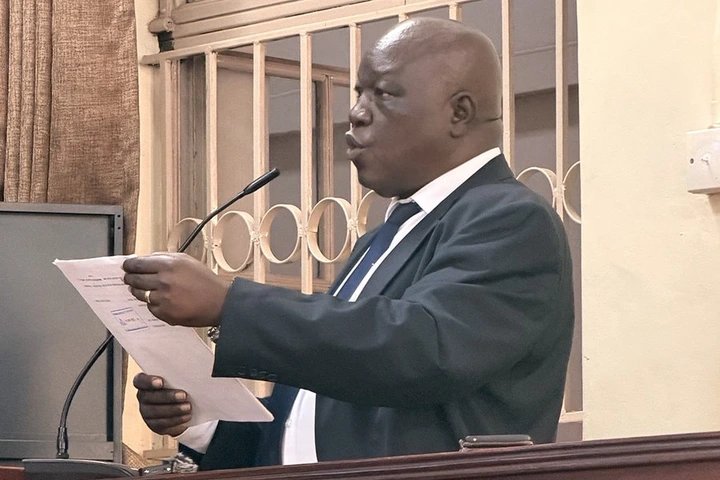

The murder trial of Molly Katanga took a dramatic turn at the High Court Criminal Division after veteran forensic pathologist Dr Sylvester Onzivua dismissed the prosecution’s postmortem findings as scientifically flawed and testified that businessman Henry Katanga most likely died by suicide after violently assaulting his wife.
The high-profile murder trial involving Molly Katanga entered a dramatic new phase this week after the defense opened its case with blistering attacks on the prosecution’s forensic evidence, culminating in explosive testimony from a senior forensic pathologist who told court that the death of businessman Henry Katanga was “extremely slim and highly unlikely†to have been homicide.
Instead, the expert witness testified before Justice Rosette Comfort Kania that the available forensic evidence points to what he described as a “homicide-suicide†scenario in which Henry Katanga allegedly battered his wife before shooting himself.
Molly Katanga is jointly charged with her two daughters, a domestic worker and a family nurse over the November 2, 2024 death of her husband at the couple’s residence in Mbuya, a Kampala suburb.
The case has gripped public attention for months because of the prominence of the Katanga family, the violent circumstances surrounding Henry Katanga’s death and the unusual condition in which Molly Katanga herself was found after the shooting.
When police and emergency responders arrived at the family home, Henry Katanga’s body was found lying in a pool of blood inside the bedroom. Molly Katanga was reportedly discovered unconscious nearby with severe injuries that later required emergency brain surgery.
Medical evidence presented earlier in the trial showed that she suffered life-threatening head injuries, fractured arms and fingers, with one finger later amputated.
The prosecution has maintained that Molly masterminded or participated in the murder of her husband, arguing that the businessman was unlawfully shot in circumstances inconsistent with suicide.
But the defense has consistently described the case as fabricated and politically manipulated, accusing investigators of manufacturing forensic evidence to fit a predetermined narrative.
The tension intensified earlier this week after Molly completed her own testimony following days of cross-examination by Chief State Attorney Jonathan Muwaganya.
During that testimony, prosecutors attempted to establish financial motive, accusing her of killing her husband to gain control of company accounts and family property.
But Molly pushed back forcefully.
“They said I killed him so I could transact on company accounts,†she told court. “But I have been transacting on those accounts alone since 2004.â€
She also dismissed claims that she wanted to seize her husband’s property portfolio.
“Which property?†she reportedly asked prosecutors before telling court that many family properties were acquired using her own money before jointly registering them with her husband.
She further accused investigators of fabricating forensic evidence, particularly gunshot residue and DNA findings.
She questioned how prosecution experts allegedly relied on biological samples that had already been exhausted during earlier DNA analysis.
“How possible is it that all four samples were used up in DNA testing and then suddenly there are GSR results from the same samples?†she asked.
The emotional peak of her testimony came when defense lawyer Elison Karuhanga asked her to respond to allegations that she fabricated or exaggerated her injuries to create sympathy and support her defense narrative.
Dr Onzivua tears through prosecution
In one of the trial’s most dramatic courtroom moments, Molly removed a veil from her head and displayed visible scars to court while pointing at photographs previously introduced as prosecution exhibits.
“This is me,†she said while holding up the images.
She then asked the court: “How can you kill someone in this state?â€
The defense’s first witness, senior forensic pathologist Dr Sylvester Onzivua, then launched what became a detailed scientific examination on the state’s case.
Dr Onzivua is a highly experienced forensic expert who holds a Bachelor of Medicine and Surgery from Makerere University, a Master of Medicine in Pathology and a postgraduate diploma in forensic medicine from South Africa.
He previously headed the City Mortuary in Kampala and has testified in numerous criminal cases, including military prosecutions.
Using a 50-slide PowerPoint presentation, the veteran pathologist gave the court an extended explanation of firearm injuries, bullet trajectories and forensic pathology principles before turning to Henry Katanga’s postmortem findings.
He sharply criticised the prosecution’s postmortem report prepared by Dr Richard Ambayo, a prosecution witness and one of his former students.
“This is a very dangerous postmortem report that could not have passed peer review,†Dr Onzivua told court.
The prosecution theory had relied heavily on claims that Henry Katanga was shot on the left side of his head and that the bullet exited through the right ear.
According to prosecutors, this weakened the possibility of suicide because Henry Katanga was right-handed.
But Dr Onzivua dismissed that conclusion as scientifically unsustainable.
“There’s no tattooing, no blackening, no muzzle imprint on a close-contact bullet entry wound,†he testified.
“So how, how, hoooow would they have called this an entry wound in the absence of blackening, tattooing or muzzle imprint? There’s no scientific basis of calling the wound on the left an entry wound.â€
The pathologist instead argued that all forensic indicators pointed to the right ear as the bullet entry point.
“A comparison of the right and left ear shows blackening on the right and none on the left,†he testified.
“On the contrary, the external features of the wound on the right side are those of an entry gunshot wound.â€
He described visible tearing around the right ear caused by explosive gases discharged during close-contact gunfire.
“There’s blackening,†he explained while referring to postmortem images. “And there’s a small true entry wound inside there that my colleagues did not document.â€
Defense lawyer Elison Karuhanga then asked: “So that small hole is the entry wound?â€
“That is the entry wound, my Lord,†Dr Onzivua replied.
The witness further testified that ballistic evidence from the crime scene contradicted the state’s reconstruction of events.
“The bullet mark through the mosquito net and on the ceiling indicates that the bullet travelled upwards after being fired,†he said.
“The wound on the left side of the head is higher than that on the right side and this confirms that the bullet travelled from right to left.â€
He concluded with the statement that shook the courtroom.
“To me, the possibility that this case is a homicide is extremely slim and highly unlikely,†he testified.
“The postmortem forensic evidence in this case points to suicide unless proven otherwise. The blood splatter pattern is consistent with the facts that the deceased battered the victim then sat on the bed and shot himself.â€
The testimony directly challenges the reasoning Justice Kania previously relied upon when placing Molly Katanga on her defense.
At the time, the judge cited prosecution evidence claiming the bullet entered from the left side of Henry Katanga’s head, making suicide appear improbable.
The defense now hopes the expert testimony will dismantle that foundation and cast doubt on the prosecution’s central theory.
Cross-examination of Dr Onzivua by the prosecution is expected to continue as the closely watched trial resumes.


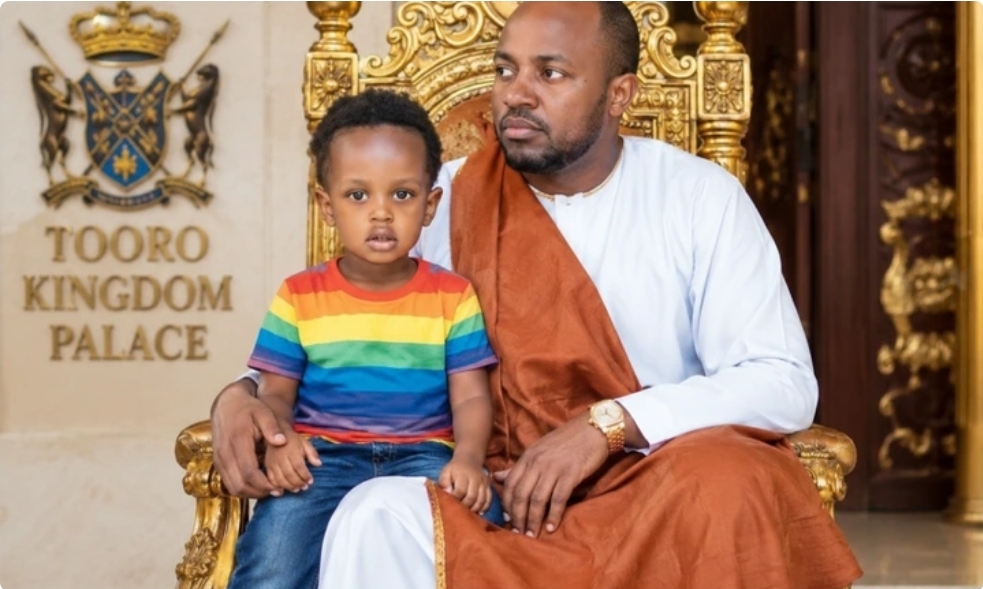 The women who have been in King Oyo’s life
Ultimate Uganda
The women who have been in King Oyo’s life
Ultimate Uganda
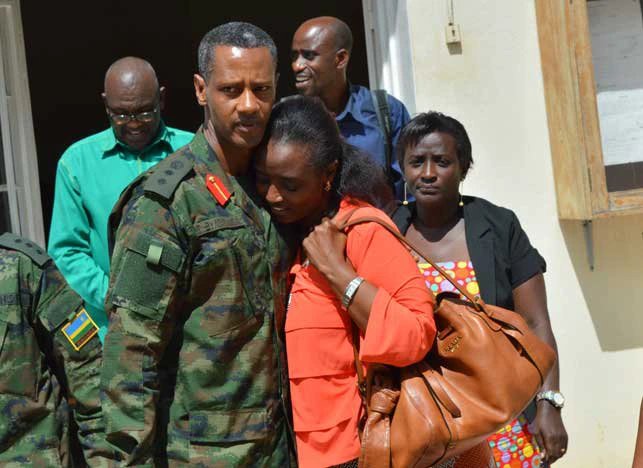 Ex Kagame Guard Commander Tom Byabagamba Dies in Rwandan Prison After 12 Years
Ultimate Uganda
Ex Kagame Guard Commander Tom Byabagamba Dies in Rwandan Prison After 12 Years
Ultimate Uganda
 Government begins salary payments for public sector workers – Reform Committee
Ultimate Uganda
Government begins salary payments for public sector workers – Reform Committee
Ultimate Uganda
 Temangalo land: NSSF, Nzenyi reach agreement
Ultimate Uganda
Temangalo land: NSSF, Nzenyi reach agreement
Ultimate Uganda
0 Comments