
How Museveni defeated rebels in W. Nile, Buganda
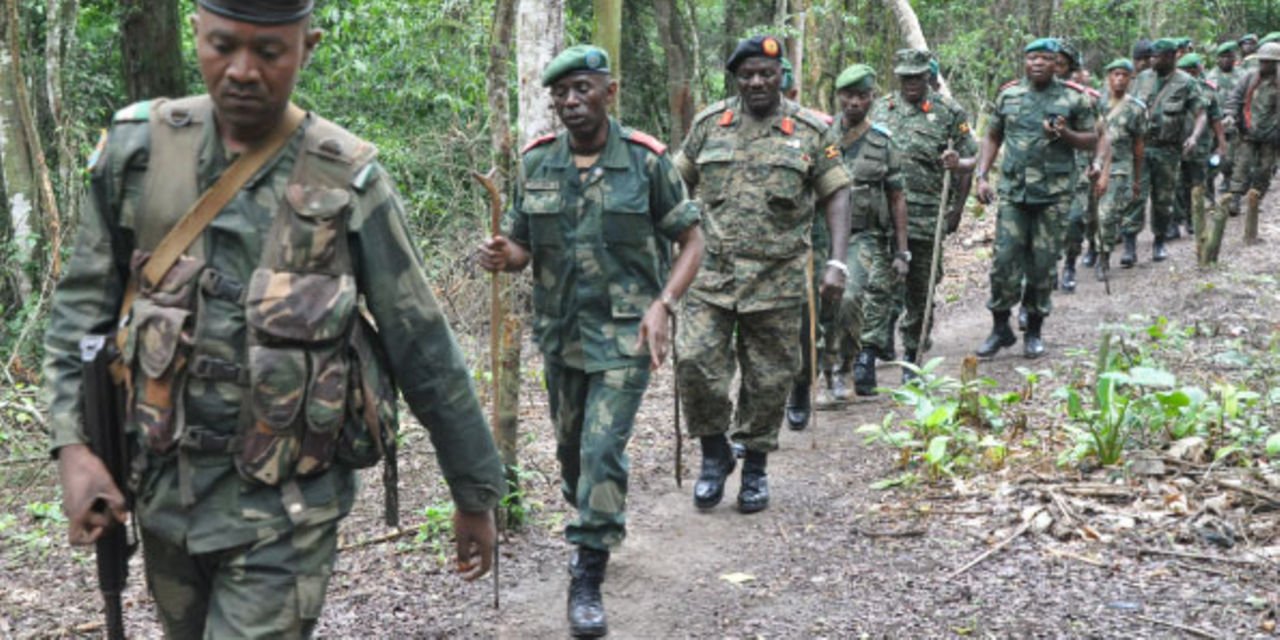

The rebellions that confronted President Museveni after 1986 were not confined to Acholi, Teso or the eastern border areas.
Along Uganda’s western and north-western frontiers, the NRM government faced insurgencies shaped by exile politics, cross-border sanctuaries, regional wars, and grievances carried over from the previous regimes.
In West Nile, the government battled the West Nile Bank Front (WNBF). In the Rwenzori region, it fought Amon Bazira’s National Army for the Liberation of Uganda (NALU) and later the Allied Democratic Forces (ADF).
In Buganda, the NRM government confronted a brief rebellion led by Maj Herbert Itongwa’s Uganda National Democratic Alliance (UNDA).
These conflicts were different in origin and scale, but together they showed how Uganda’s internal wars were often tied to developments beyond its borders.
UPDF vs West Nile Bank Front
The West Nile Bank Front (WNBF) operated along the West Nile-Sudan-Zaire/DRC frontier, where exile networks, former soldiers and regional conflicts overlapped.
The exact date of the WNBF’s formation is unclear, though it is believed to have emerged in the late 1980s. Its leader, Lt Col Juma Abdalla Oris, had served as Idi Amin’s Minister of Foreign Affairs.
Initially, the WNBF recruited civilians by promising lucrative salaries and allowances that it could not afford.
When those promises failed, it resorted to abductions and kidnappings to reinforce its ranks, a tactic that turned the population against it.
The NRA’s 1996 decision to adopt a cordial civil-military approach further weakened the WNBF as a fighting force.
Many of its members deserted and were reintegrated into their communities. The group’s decisive military setbacks came in the wider regional wars of the 1990s.
On March 11, 1997, just under two years after the National Resistance Army (NRA) had been renamed the Uganda People’s Defence Forces (UPDF), the Sudan People’s Liberation Army (SPLA) encircled and besieged the town of Yei in South Sudan, then part of a united Sudan.
On the same day, SPLA forces ambushed a combined force comprising WNBF rebels, soldiers of the Sudan Armed Forces, elements of the Armed Forces of Zaire and former soldiers of the Rwandan army.
The Rwandan ex-soldiers were fleeing from Zaire, now DR Congo, where they were under pressure from Rwandan forces and Laurent Kabila’s rebels following the outbreak of the First Congo War in 1996, which resulted in the ouster of President Mobutu.
The combined force was heavily defeated by the SPLA, which went on to capture several towns in southern Sudan and, in the process, destroyed WNBF bases.
What remained of the WNBF was later defeated at the battle of Kaya, where its last base was destroyed by the SPLA with the help of the UPDF.
Juma Oris was injured in this battle and later died in March 2001 from high blood pressure related complications. By then, however, the WNBF had already splintered into factions.
On December 24, 2002, the largest WNBF faction, led by Gen Ali Bamuze, surrendered its guns after signing a peace agreement.
Under the agreement, its members were promised resettlement packages and retention of their ranks upon integration into the UPDF.
NRA versus NALU
In western Uganda, the NRM government faced an insurgency from NALU, led by Bazira, a former minister in the Obote II government.
The group, which fought the NRA in the Rwenzori region, Bazira’s home area, targeted mostly supporters and cadres of the ruling NRM.
One of its most brutal attacks was carried out on October 9, 1989, when rebels dressed in uniforms similar to those of the NRA, killed at least nine people.
NALU is believed to have operated with the backing of Presidents Mobutu of Zaire and Daniel arap Moi of Kenya, both of whom were uncomfortable with the new leadership in Kampala.
Bazira was killed in 1993 under mysterious circumstances, and his body was found lying on a roadside in the Kenyan town of Nakuru.
The NRA eventually drove what remained of his fighters out of Kasese and into DR Congo. That ended NALU as an effective fighting force inside Uganda, although remnants of the group would later be linked to the emergence of the ADF.
NRA/UPDF versus ADF
The ADF became one of the most enduring of the rebellions that Museveni’s government has fought. They emerged from a merger involving the Uganda Muslim Freedom Fighters and remnants of Bazira’s NALU.
For more than 30 years, the government has fought the group, first inside Uganda and later across the border in eastern DR Congo.
Over the years, the ADF has killed more than 1,000 people. Its most infamous attack inside Uganda came in June 1998, when rebels attacked Kichwamba Technical College in Kabarole District and burnt to death an estimated 80 students.
The group has also been blamed for the abduction of 30 students from Mitandi Seventh Day Adventist College, more than 60 from Kichwamba Technical College, and about 100 children from a school in Hoima.
Ugandan security agencies have at different times linked or investigated the ADF in connection with the killings of Muslim clerics and other high-profile assassinations.
That includes those of Sheikhs Abdul Kadhir Muwaya, Muhammad Kiggundu, Assistant Inspector General of Police Andrew Felix Kaweesi, and Assistant Director of Public Prosecutions Joan Kagezi.
However, several of these cases remain contested, unresolved or only partly adjudicated. The ADF survived major military offensives, including an NRA attack on February 25, 1995, against a camp in Buseruka.
The attack, in which 93 rebels were killed and many more injured, forced the rebels to flee into DR Congo. The group also survived air and artillery attacks on locations in North Kivu.
In 1998, the ADF made an incursion into Kasese, but the army under the command of Gen James Kazini fought it out of the Rwenzori mountain ranges. Weakened, the rebels fled back to DR Congo.
The arrest of its commanders, Sheikh Jamil Mukulu, in Tanzania and his transfer to Uganda in 2015 was expected to plunge the organisation into a leadership vacuum, but that did not happen.
Instead, Musa Seka Baluku, Mukulu’s former second-in-command, took charge in 2015 and later became central to linking the group to the militant Islamic State.
In November 2021, the UPDF launched Operation Shujaa, deploying to eastern DR Congo to root out the ADF remnants. On February 4, 2025, the UPDF deployed 1,000 troops to eastern DR Congo, bringing its troop presence there to about 5,000.
Although the ADF threat in western Uganda has diminished over the years, the group still poses a threat, as shown by the June 16, 2023 attack on a secondary school in Mpondwe, in Kasese District along the DR Congo border. 42 people were killed, including 38 students; eight were injured.
ADF's last attack was on December 25, 2023, when they raided Nyabitusi Village I in Kamwenge District, and left three people dead.
Museveni’s record against insurgency
President Museveni’s four-decade record against insurgency reveals a leader who has consistently blended military force with political pragmatism.
Where the gun alone could not finish the job, the olive branch was extended. Where negotiations faltered, the army pressed harder.
Some groups were crushed, while others were absorbed through peace agreements, amnesty, reintegration or negotiated surrender.
As Uganda looks back on four decades of Museveni’s rule, the deeper question is not simply whether the President and the UPDF can outlast their remaining military adversaries.
It is whether the political, economic and security conditions that made some Ugandans willing take up arms against their own government have been conclusively addressed.


 Government will not gazette Kijanangoma as King of Tooro for now - Attorney General insists
Ultimate Uganda
Government will not gazette Kijanangoma as King of Tooro for now - Attorney General insists
Ultimate Uganda
 King Oyo’s Body to Arrive Thursday
Ultimate Uganda
King Oyo’s Body to Arrive Thursday
Ultimate Uganda
 Besigye, Lukwago expected to meet Gen. Salim Saleh today at Kapeeke
Ultimate Uganda
Besigye, Lukwago expected to meet Gen. Salim Saleh today at Kapeeke
Ultimate Uganda
 Rwabwogo Advised to ‘Eat His Bishop’ As MK Prepares to Enter State H’se: PREZ MUSEVENI ON HIS WAY OUT
Ultimate Uganda
Rwabwogo Advised to ‘Eat His Bishop’ As MK Prepares to Enter State H’se: PREZ MUSEVENI ON HIS WAY OUT
Ultimate Uganda
0 Comments