
Businessman Tumwesigye to Be Exhumed as 26 ‘Children’ Fight for Estate
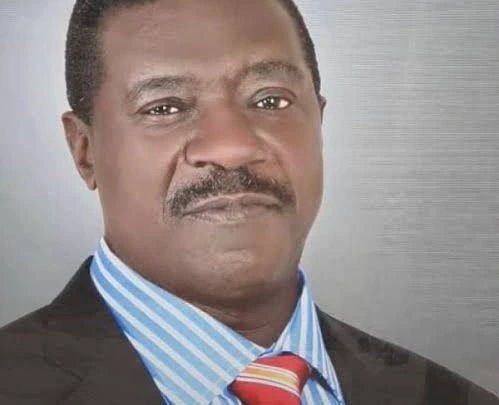

The High Court Family Division in Kampala has ordered the exhumation of the late businessman Benon Kigambo Tumwesigye for DNA testing in a dramatic inheritance dispute involving 26 people claiming to be his biological children.
In a ruling delivered on May 22, 2026, Justice Celia Nagawa directed that DNA samples be collected from all the alleged children, several of their mothers, and the deceased’s remains to conclusively determine who is entitled to inherit the estate.
The case was filed by Tumwesigye Maria Doreen Domina, who describes herself as the widow of the late Tumwesigye, who died intestate on June 14, 2022.
Maria Doreen challenged the paternity of several beneficiaries listed in the succession proceedings, arguing that the deceased had expressed doubts during his lifetime about whether some of the children were biologically his.
“The Court ought to ensure that the persons standing to benefit are indeed the legitimate biological children of the deceased,†the applicant argued.
According to court records, Maria Doreen claimed many of the alleged children only emerged during the burial arrangements and were previously unknown to her during the marriage.
However, the respondents fiercely opposed the application, accusing her of attempting to reduce the number of beneficiaries in order to increase her own share of the estate.
They also challenged her standing as a widow, producing documents from the Superior Court of California allegedly showing that her marriage to the deceased had been dissolved in 2014 before she reportedly remarried another man identified as Lamont D. Jackson.
The respondents argued that the divorce documents proved she was no longer legally married to the deceased at the time of his death.
But Justice Nagawa said the authenticity and legal effect of the foreign divorce proceedings could only be conclusively determined during a full hearing.
“The central issue in this application concerns the proper identification of the lawful beneficiaries of the estate,†the judge ruled.
“That issue remains material to the administration of the estate irrespective of the eventual determination of the Applicant’s marital status to the deceased.â€
The judge noted that while DNA testing in inheritance disputes can create emotional divisions, the court had a duty to ensure the estate is distributed only to lawful beneficiaries.
“Twenty-six people, born to multiple mothers, are fighting over the estate of one man. That division did not originate with this application,†Justice Nagawa stated.
“The question before this Court is not whether the sibling kinship test will create conflict, it is whether the conflict that already exists will be resolved justly and finally.â€
The court further observed that scientific evidence was the most reliable method available to settle the dispute because the deceased died intestate and numerous individuals had surfaced claiming to be his children.
“The results of a DNA test will bring scientific certainty to a dispute that is presently grounded in assertion, denial, and competing claims of identity,†the ruling stated.
Justice Nagawa also emphasized the constitutional rights of the minors involved in the case.
“For these children, a conclusive determination of their biological relationship to the deceased is not an intrusion, it is a constitutional right,†she ruled.
“Whatever the outcome, they are better served by knowing the truth than by proceeding on assumption.â€
The court ordered the Directorate of Government Analytical Laboratory in Wandegeya to conduct the DNA examinations and submit results within one month.
It also directed the Government Pathologist and Government Analytical Laboratory to immediately proceed with the exhumation of the deceased’s remains.
Under the ruling, all adult respondents and the biological mothers are required to provide DNA samples within four days.
Any adult respondent who refuses testing risks having their claim to the estate suspended pending compliance.
The court further barred the Administrator General from distributing any part of the estate until the DNA results are received and considered.
Justice Nagawa, however, reserved judgment on whether the alleged California divorce decree should be recognized as legally valid in Uganda.


 The women who have been in King Oyo’s life
Ultimate Uganda
The women who have been in King Oyo’s life
Ultimate Uganda
 Ex Kagame Guard Commander Tom Byabagamba Dies in Rwandan Prison After 12 Years
Ultimate Uganda
Ex Kagame Guard Commander Tom Byabagamba Dies in Rwandan Prison After 12 Years
Ultimate Uganda
 Government begins salary payments for public sector workers – Reform Committee
Ultimate Uganda
Government begins salary payments for public sector workers – Reform Committee
Ultimate Uganda
 Temangalo land: NSSF, Nzenyi reach agreement
Ultimate Uganda
Temangalo land: NSSF, Nzenyi reach agreement
Ultimate Uganda
0 Comments