
Congo President announces visa-free entry for all Africans on Africa Day
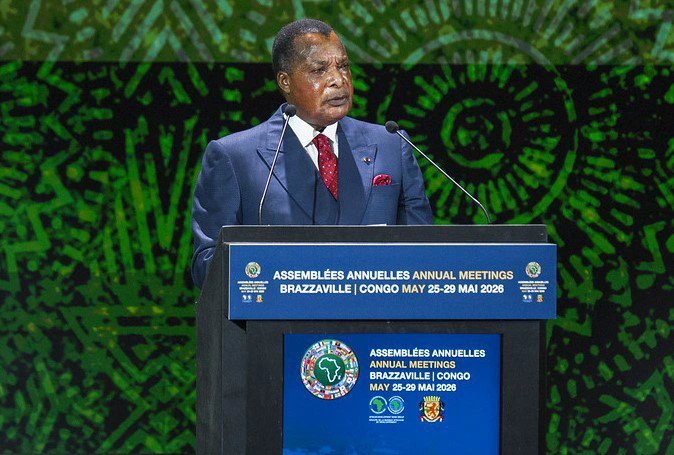

Starting from January 1, 2027, all Africans entering the Republic of Congo, will not require a visa, the President Denis Sassou N’Guesso announced at the celebration of Africa Day on the sidelines of the Annual Meetings of the African Development Bank (AfDB), in Brazzaville.
“From January 1, 2027, entry into the Republic of Congo will no longer require a visa for all African nationals. That is the end. In accelerating its march toward development, Africa will continue building a continent firmly committed and determined on the path of unity and prosperity,†he said.
The decision adds Congo to countries like Rwanda, Kenya, Ghana and Burundi that have started and implemented major visa regime reforms in Africa.
President N’Guesso noted that May 25, commemorates the triumph of the struggles led by the fathers of African independence, who elevated self-sacrifice for Africa—sometimes at the cost of their lives—into something forever engraved in history.
“In the memory of the continent, we can proudly and gratefully say that today is their day—the celebration of Africa Day magnifies the immortality of their visions, often stained with blood and the sacrifice of their lives. Great men never truly die,†he said.
He gave tribute to some of the continent’s heroes like Eduardo Mondlane, first president of FRELIMO, whom he described as Father of independent Mozambique, who was assassinated in 1969. AmÃlcar Cabral, Pan-African political leader from Guinea-Bissau, assassinated on January 20, 1973, in Conakry. Samora Moisés Machel, first president of the People’s Republic of Mozambique, who died on October 19, 1986, in Mbuzini, South Africa, in a plane crash whose causes remain unclear. Patrice Emery Lumumba, Prime Minister from June to September 1960, a major figure in the independence of the Democratic Republic of Congo, assassinated on January 17, 1961. Agostinho Neto, hero and key figure of the Popular Movement for the Liberation of Angola, martyr of the bloodshed. Steve Biko, activist from South Africa, one of the principal architects of the struggle against apartheid, murdered in police detention.
He also honoured the memories of Marien Ngouabi, who from 1969 to 1977 was the President of the People’s Republic of Congo, his country, who was assassinated on March 18, 1977.
“Through his strong support for liberation struggles in Africa, he left an indelible mark on the peoples’ quest for freedom, justice, and prosperity,†he said.
He went on to eulogise those he called brave fighters for African freedom and emancipation, notably Kenneth Kaunda of Zambia, father of independence and former first president of that country; Kwame Nkrumah, the first president of Ghana and champion of Pan-Africanism, who advocated for the total independence of the continent and the creation of the United States of Africa; Ahmed Sékou Touré, one of the leaders of the African nationalist RDA party, who rejected through a massive “No†vote the Franco-African Community proposed by General Charles de Gaulle during the 1958 referendum.
He then mentioned Léopold Sédar Senghor, first president of Senegal in 1960 and a major actor in decolonization in French-speaking Africa; Félix Houphouët-Boigny, former president of Côte d’Ivoire and pioneer of the struggle for Africa’s liberation, autonomy, and independence; Modibo Keïta, first African vice-president of the French National Assembly who proclaimed the independence of the former French Sudan, later becoming the Republic of Mali. Julius Nyerere, former president of Tanzania, promoter of African socialism and founder of the Tanganyika African National Union independence party.
Jomo Kenyatta, former independence activist and former president of Kenya.
He remembered Barthélemy Boganda,whom he described as a great defender of Pan-African ideals, driven by the ambition to create the United States of Central Africa, founder and first president of the Central African Republic from 1958 to 1959, who died on March 29, 1959, in a mysterious plane crash.
He cited Gamal Abdel Nasser, Egyptian nationalist advocating the unity of Arab peoples and engaged in the struggle against British oppression, a major figure of the Egyptian Revolution and the rise of the Third World as a political force, a leading figure of the Non-Aligned Movement. King Mohammed V of Morocco, who he said was opposed to colonial domination and a principal supporter of the Moroccan independence movement, father of the modern Moroccan nation and supporter of liberation struggles in Africa.
He described Ahmed Ben Bella, as fighter for Algerian independence, leader of the National Liberation Front and former president of the Democratic and Popular Republic of Algeria. Agostinho Neto, Angolan leader opposed to Portuguese occupation, former president of Angola and president of the Popular Movement for the Liberation of Angola. Nelson Mandela, former ANC leader and former president of South Africa, after 27 years of imprisonment for his role in the struggle against apartheid, a system imposed by the white minority in his country. Kamuzu Banda, first president of Malawi, initiator of a referendum on multiparty democracy and defender of women’s rights.
“Clearly, our remarks cannot be exhaustive. Therefore, allow me to also honor those valiant sons of Africa who fell with courage and dignity on the path to the liberation of the continent and whose names have not been mentioned,†he said.
President N’Guesso noted that the struggle for Africa’s liberation was also carried by eminent and courageous women, shining beacons of freedom, justice, fraternity, and prosperity throughout the world, such as Kimpa Vita, African prophetess from the Kingdom of Kongo who fought against colonization. Winnie Mandela, great activist of the ANC and icon of the struggle against apartheid. Miriam Makeba, South African artist whose music called for the liberation of African peoples beyond forests and oceans, he said.
“There are no great achievements without a great cause, nor extraordinary exploits without an exceptional heart. A great heart can only produce giants. It gives birth to visions worthy of its measure. These are our heroes who sacrificed themselves for the continent,†he said.


 DRC opposition urges Tshisekedi to abandon constitutional changes
Ultimate Uganda
DRC opposition urges Tshisekedi to abandon constitutional changes
Ultimate Uganda
 US military transport plane lands in Moscow
Ultimate Uganda
US military transport plane lands in Moscow
Ultimate Uganda
 Putin puppet slaps UK with terrifying 2-word warning over drone factories
Ultimate Uganda
Putin puppet slaps UK with terrifying 2-word warning over drone factories
Ultimate Uganda
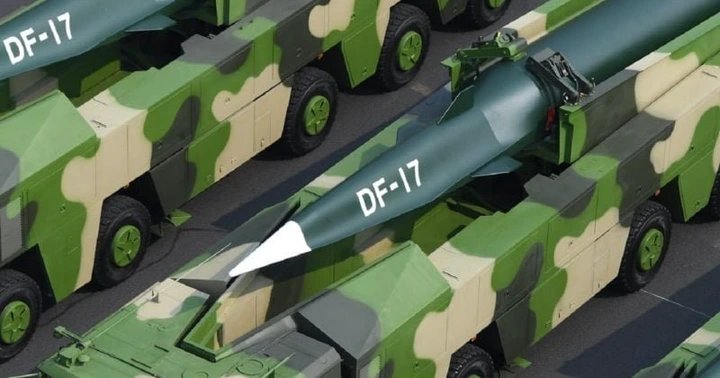 China develops hypersonic weapon to hunt US command aircraft thousands of miles away
Ultimate Uganda
China develops hypersonic weapon to hunt US command aircraft thousands of miles away
Ultimate Uganda
0 Comments