
Museveni to outline vision for 7th term in State of Nation Address
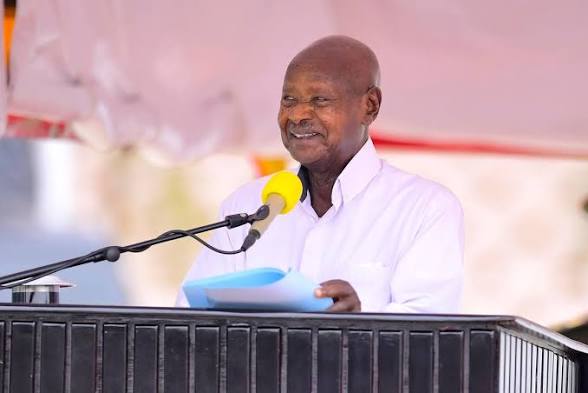

When President Museveni delivers the State of the Nation Address on Thursay, Ugandans will be listening keenly for the direction he plans to steer the nation in the first year of his seventh term.
The SONA is a constitutional mandate under Article 101 (1), delivered at the beginning of each session of Parliament. Here, the president issues a status of key sectors and plans to move the country forward.
To pundits, Museveni must speak to matters affecting livelihoods like the state of the economy, service delivery gaps, corruption, and youth unemployment. Other critical areas include governance and security, infrastructure.
The address comes at a critical time where the country is battling shocks, including the high fuel prices and the outbreak of the Ebola Disease that has yet again brought the tourism sector to its knees. Tourism is one of the country’s top foreign exchange earners. Since the outbreak was confirmed on May 15, Mr Amos Wekesa says over 70 percent of the bookings have been cancelled, attributing this to a poor national communication response.
“100 per cent of Americans have cancelled. The rest have gone down by about 70 per cent. What that means is that suppliers of food, entertainment, and others are going to supply less. Now this year is gone. We must rethink our response strategy,†he said.
He hopes the president will address the nation on the matter to clear out misreporting by international bodies and media houses that have painted a damning picture of the status. Mr Wekesa says Museveni needs to lay out a national communication strategy and how his government plans to position Uganda for external business opportunities.
“We need foreign money. We need to earn it through tourism and exports. If we don’t earn it, then we borrow it, which just sinks us.†He said
By June 3, the ministry had reported 15 cases. On May 22, Parliament reversed its invitations to dignitaries, diplomats, and guests due to the outbreak.
Only MPs of the 12th parliament and select parliamentary staff will be allowed at Kololo Ceremonial Grounds for the national event.
Mr Adolf Mwesige, the Clerk to Parliament, in a statement, said this is in adherence to the Standard Operating Procedures put in place to curb the spread of Ebola
Dr. Brian Sserunjogi, a research fellow at the Economic Policy Research Center at Makerere University, says several sticking issues, like the skyrocketing public debt. He argued that many Ugandans in the informal sectors are hesitant to pay tax because they do not see the value.
“He should be very deliberate on improving services. Let's have reliable electricity. Let's have the roads. Let's have the water. Let’s have garbage collection. The road infrastructure is bad, and poor urban infrastructure has consequences. The moment the provision is bad, the issue of fiscal legitimacy comes in. What does my tax do? For as long as I don’t feel the importance of what the taxes I pay do. I will never give you my money.†He said.
He added, “A big percentage of our budget goes to servicing debt. And that means that we cannot invest in services. And that's why you see here people crying about public service delivery, the roads, the power, and all these things because of too much money going to service debt,â€
As of April, the public debt stands at Shs 130 trillion.
Dr Sserunjogi also urged the president to ensure transparency in the oil and petroleum revenues.
“The President should be talking about how we are going to leverage this oil to grow the economy. Can we can the President be deliberate in making sure that it gives us a road map, a clear road map of how we can use this money to create jobs, to grow our infrastructure, but also to reduce the debt that is going to choke us and is taking away money for public services provision? He said
Ms Perry Aritua, the Executive Director of Women's Democracy Network-Uganda, says the President needs to lay out a plan for ensuring the youth are productive.
“It would be interesting to see what the assessment has been in terms of the investment in the youth, youth productivity, and all these different programs that have been put in place. You know, what is new? You know, what is new? How can we ensure that this big demographic of our country is made more productive?,†she said
Uganda, with more than half of its population under the age of 30 is grappling with an unemployment rate of 16.1per cent for Ugandans between 18 and 30 years who number a little over 10 million persons, according to the National Population and Housing Census, 2024.
Among the unemployed youth, more females (18.7 per cent) than males (13.4 per cent) are affected. The numbers further show that 48.8 percent of the unemployed youth, aged 18-30, had been looking for work or trying to start a business for over one year.
Ms Aritua also wants President Museveni to lay out a strategy for widening the tax bracket, saying only a few Ugandans shoulder the burden of paying tax.
Mr Julius Mukunda, the executive director at the Civil Society Budget Advocacy Group says, “I want the present to explain how more resources will reach the ordinary person. We have PDM, but more money is still spent at the center, even though it would go to the local governments.â€
He added “He should also address how he plans to improve service delivery. We don’t have enough years and enough health workers. Roads take years to be completed. How are we going to improve the service delivery?â€
To Mr Marlon Agaba, corruption ranks high among the issues Mr Museveni needs
“I want to know the scorecard in terms of fighting corruption, and how much we are recovering.†He said
Speaking at his inauguration, early this month, Museveni christened this a term of no sleep and warned leaders against corruption. Mr Agaba argues that such proclamations have been made before, yet the vice has persisted. According to the Inspectorate of Government, more than shs10 trillion of taxpayer money is lost annually to theft
In the 2025 address, Museveni pledged emphasis on peace and security, accelerating industrialization, export promotion, strengthening the private sector and youth skilling.
Key issues
· Service delivery
· Corruption
· Unemployment
· High fuel prices
· Ebola outbreak
· Public debt
· Cost of living
· Infrastructure
· State of the Economy
· Security
· Governance


 Government will not gazette Kijanangoma as King of Tooro for now - Attorney General insists
Ultimate Uganda
Government will not gazette Kijanangoma as King of Tooro for now - Attorney General insists
Ultimate Uganda
 King Oyo’s Body to Arrive Thursday
Ultimate Uganda
King Oyo’s Body to Arrive Thursday
Ultimate Uganda
 Besigye, Lukwago expected to meet Gen. Salim Saleh today at Kapeeke
Ultimate Uganda
Besigye, Lukwago expected to meet Gen. Salim Saleh today at Kapeeke
Ultimate Uganda
 Rwabwogo Advised to ‘Eat His Bishop’ As MK Prepares to Enter State H’se: PREZ MUSEVENI ON HIS WAY OUT
Ultimate Uganda
Rwabwogo Advised to ‘Eat His Bishop’ As MK Prepares to Enter State H’se: PREZ MUSEVENI ON HIS WAY OUT
Ultimate Uganda
0 Comments