
Muganga Graveyard Visit Sparks Backlash
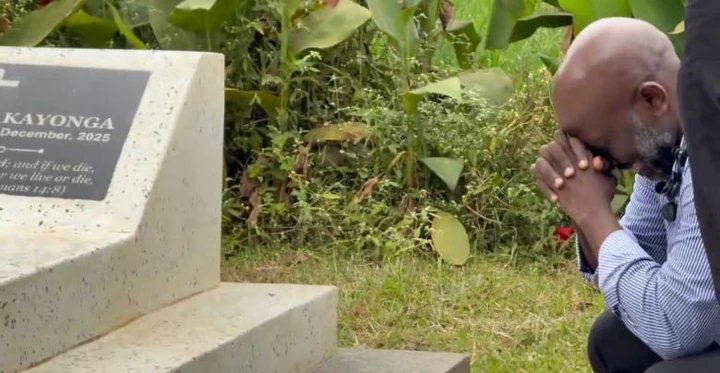

KAMPALA — Dr. Lawrence Muganga’s emotional visit to his late mother’s grave in Mukono has triggered a fresh wave of criticism, with many Ugandans accusing the former ministerial nominee of attempting to transform a citizenship dispute into an ethnic grievance.
The Victoria University Vice Chancellor, accompanied by Bavandimwe activist Frank Gashumba, visited his ancestral home and parents’ graves in Seeta, Mukono, where he sought to demonstrate his Ugandan roots following Parliament’s rejection of his nomination as State Minister for Internal Affairs.
But the move has been met with sharp criticism online, with commentators insisting that the issue before Parliament was never Muganga’s ethnicity or birthplace but questions surrounding his citizenship status and eligibility for public office.
“A whole PhD humiliating himself at his parents’ graves over a ministerial position in a dysfunctional country,†wrote social commentator King Melvin.
“To be clear, the issue was never about his Ugandanness. Nobody contested that. The issue is whether someone who currently holds allegiance to another country can sit at the table making decisions on immigration, citizenship and internal security.â€
Melvin added that Muganga’s repeated references to tribal identity were distracting from the real issue.
“This jazz about his tribe is all a distraction. His Canadian passport is the actual problem and every Ugandan should know this. Don’t fall for his antics.â€
The criticism comes after Parliament’s Appointments Committee reportedly relied on a verification report from the Ministry of Internal Affairs indicating that Muganga was associated with Ugandan, Canadian and Rwandan citizenship.
Committee members asked Muganga to provide documentary evidence that his foreign citizenships had been formally renounced.
Other nominees facing similar questions, including Adonia Ayebare, Calvin Echodu and Sharsti Musherure, reportedly produced acknowledgment records from foreign authorities showing they had initiated renunciation procedures and were subsequently approved.
Muganga’s case, however, became contentious after MPs concluded that key questions surrounding his citizenship status remained unresolved.
Political analyst Hussein Kashillingi accused Muganga of undermining a legitimate legal debate.
“Muganga is undermining a legitimate debate by framing it as discrimination against him as a Munyarwanda. That is not the issue,†Kashillingi wrote.
“The question is whether Uganda’s Constitution and laws permit a person with that citizenship history to hold certain offices, including that of Minister. That is the debate—not ethnicity.â€
History
Several commentators, including some Ugandans of Rwandan heritage, argued that Banyarwanda have historically held senior public offices in Uganda and that ethnicity was never the basis of Parliament’s concerns.
“Ugandan Banyarwanda have previously served as ministers and that is not in question,†wrote Peter Gwayaka.
“He should come clean on his citizenship without making it a tribal issue.â€
Others argued that by introducing ethnicity into the debate, Muganga risked inflaming tensions unnecessarily.
“We’ve lived, worked and eaten together regardless of our tribal diversity. We must not be dragged back by individuals that seem to evade the main discussion—the position of the law,†wrote Rugaba Agababyoona.
The backlash has also exposed growing divisions over efforts by some Bavandimwe activists to portray the dispute as discrimination against the Banyarwanda community.
Critics insist the issue before Parliament was straightforward: whether Muganga satisfied the legal requirements for appointment to a sensitive ministry responsible for citizenship, immigration and internal security.
President Museveni’s brother, Sedrack Nzeire argued that the matter should now be left to President Museveni, who nominated Muganga in the first place.
“Parliament has done its vetting. Let the appointing authority decide what serves Uganda best,†Nzeire said.
As the controversy grows, public discussion appears to be shifting away from Muganga’s emotional appeals and toward the legal questions that dominated his vetting.


 The women who have been in King Oyo’s life
Ultimate Uganda
The women who have been in King Oyo’s life
Ultimate Uganda
 Ex Kagame Guard Commander Tom Byabagamba Dies in Rwandan Prison After 12 Years
Ultimate Uganda
Ex Kagame Guard Commander Tom Byabagamba Dies in Rwandan Prison After 12 Years
Ultimate Uganda
 Government begins salary payments for public sector workers – Reform Committee
Ultimate Uganda
Government begins salary payments for public sector workers – Reform Committee
Ultimate Uganda
 Temangalo land: NSSF, Nzenyi reach agreement
Ultimate Uganda
Temangalo land: NSSF, Nzenyi reach agreement
Ultimate Uganda
0 Comments