
Ugandan banks blacklist over 100 MPs over contested election victories
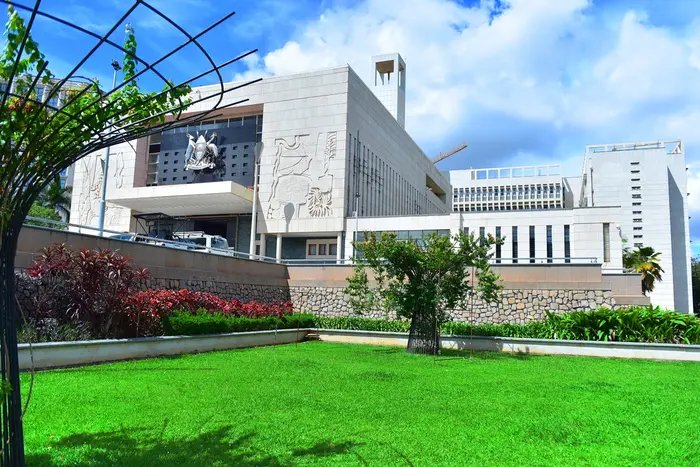

Banks have reportedly blocked loans to over 100 MPs facing election petitions as financial institutions seek to avoid losses if courts overturn their victories.
More than 100 Members of Parliament, including several ministers, have reportedly been denied access to loans by commercial banks as courts prepare to hear election petitions arising from the recently concluded general elections.
Reports indicate that financial institutions have placed restrictions on lawmakers whose victories have been challenged in court, citing the risk of losing money if their elections are later nullified.
"Banks have blacklisted at least 100 MPs, including ministers, barring them from accessing loan facilities until election petitions challenging their victories have been resolved by the courts," a source was quoted by the New Vision.
The move follows lessons learnt from previous parliamentary terms, during which some newly elected legislators obtained substantial loans shortly after being sworn in, using their expected parliamentary salaries and benefits as security.
According to banking sources, some MPs seek mortgages, vehicle financing and business loans based on the assumption that they will serve a full five-year term.
"These members come with big appetites. They want mortgages, car loans, business capital all based on a five-year term. When the petition succeeds and the court nullifies their election, banks are left holding the debt. The member is out of Parliament, stripped of their salary and perks and they simply disappear. Recovering those funds becomes an extremely difficult and expensive process," the source said.
As a result, many banks are reportedly waiting for courts to determine the petitions before extending credit facilities to affected lawmakers.
Several high-profile election victories are already facing legal challenges.
Godfrey Aine Kaguta's election as Mawogola North MP has been challenged by Jet Tumwebaze. Health minister-designate Dr Chris Baryomunsi is facing a petition from Sam Kajjo Arinaitwe over the Kinkizi East parliamentary race.
In Kampala Central, National Unity Platform (NUP) secretary general David Lewis Lubongoya has petitioned the High Court seeking to overturn the victory of Kampala minister-designate Minsa Kabanda Nabbengo.
NUP's Gerreth Namugga has challenged the election of Mawogola South MP Dez Oswald Byuma.
Former Defence Minister Vincent Ssempijja has also petitioned the court against Kalungu East MP Yusuf Nkerentanyi. Ssempijja alleges that Nkerentanyi unlawfully deprived him of victory and claims the election was marred by irregularities.
Alex Waiswa Mufumbiro, the detained deputy spokesperson of NUP, has filed a petition challenging the election of Nakawa East MP Frederick Ruhindi, the former deputy Attorney General. Mufumbiro alleges electoral fraud and wants court to nullify Ruhindi's victory.
Former counter-terrorism police chief John Ndungutse Ngaruye has also challenged the election of Kinkizi West MP James Niringiyimana Rwogi Kaburuka.
Judiciary spokesperson James Ereemye recently outlined the process for handling election petitions. He said proceedings begin with the filing of petitions, service of summons and responses from respondents.
He explained that parties have 15 days from the date of publication of election results in the Uganda Gazette to file petitions.
After the pleading stage, statistics on all petitions will be compiled and submitted to the Principal Judge, Justice Frances Abodo, who will assign judicial officers to hear the cases.
Ereemye said the High Court is required to conclude election petitions within six months after hearings commence.
The outcome of the petitions could determine not only the composition of Parliament but also whether affected legislators regain access to financing that has been temporarily withheld by cautious lenders.


 Government will not gazette Kijanangoma as King of Tooro for now - Attorney General insists
Ultimate Uganda
Government will not gazette Kijanangoma as King of Tooro for now - Attorney General insists
Ultimate Uganda
 King Oyo’s Body to Arrive Thursday
Ultimate Uganda
King Oyo’s Body to Arrive Thursday
Ultimate Uganda
 Besigye, Lukwago expected to meet Gen. Salim Saleh today at Kapeeke
Ultimate Uganda
Besigye, Lukwago expected to meet Gen. Salim Saleh today at Kapeeke
Ultimate Uganda
 Rwabwogo Advised to ‘Eat His Bishop’ As MK Prepares to Enter State H’se: PREZ MUSEVENI ON HIS WAY OUT
Ultimate Uganda
Rwabwogo Advised to ‘Eat His Bishop’ As MK Prepares to Enter State H’se: PREZ MUSEVENI ON HIS WAY OUT
Ultimate Uganda
0 Comments