
Govt Allocates Shs2.26 Trillion to Agro-Industrialisation in Largest-Ever Agriculture Investment
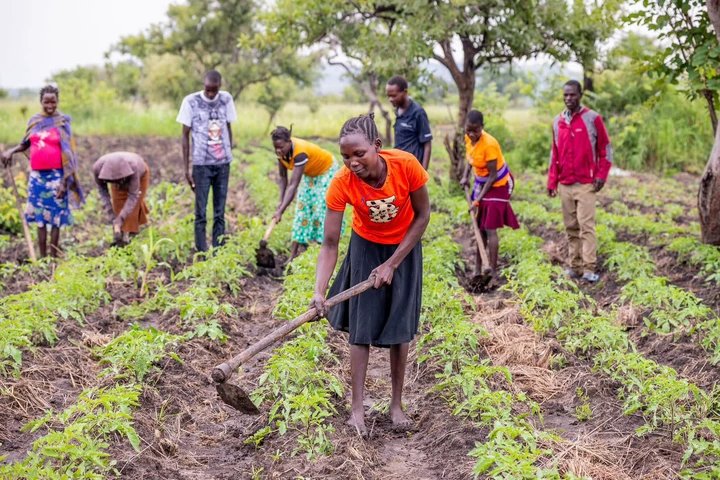

The government has earmarked Shs2.26 trillion for agro-industrialisation in the 2026/27 financial year, targeting irrigation, value addition, agro-processing and agricultural research as part of efforts to transform Uganda’s agriculture sector into a more commercial and export-driven engine of growth.
The government has allocated Shs2.26 trillion to the agro-industrialisation programme in the 2026/27 financial year, in what officials described as the largest investment ever directed to the agricultural sector.
The announcement was made by Henry Musasizi while presenting the national budget to Parliament on Thursday.
Musasizi said the funding is aimed at accelerating value addition in agriculture, improving productivity and strengthening Uganda’s position in regional and global export markets.
He noted that although agriculture remains the backbone of Uganda’s economy and a major source of employment, continued reliance on raw commodity exports has constrained earnings from the sector.
“Uganda’s future prosperity will not come from producing more raw commodities alone. It will come from increasing productivity, expanding value addition, strengthening agro-processing and improving market access,†Musasizi said.
According to the minister, the new allocation will support interventions across the entire agricultural value chain, including production, storage, processing and market development.
A significant share of the funding will be directed towards irrigation and water-for-production infrastructure as government seeks to reduce the impact of climate variability on agricultural output.
Musasizi highlighted ongoing irrigation developments, including the Kabuyanda Dam in Isingiro District and irrigation schemes at Atari, Wadelai, Acomai, Namaitsu, Chembombai and Sipi. He also said solar-powered irrigation systems are being rolled out in different parts of the country to support year-round farming.
The Ministry of Finance said these investments are intended to stabilise agricultural production, particularly in regions that frequently experience drought and erratic rainfall.
Government also reported progress in agricultural research and innovation, including the operationalisation of an anti-tick vaccine production facility at the National Livestock Resources Research Institute in Nakyesasa.
Officials said the facility is expected to produce up to 36 million vaccine doses annually and cover approximately 18 million livestock in its first phase, a development expected to improve animal health and boost livestock productivity.
In the coffee sub-sector, one of Uganda’s leading foreign exchange earners, government reported continued expansion in production capacity and export performance.
Officials said Uganda earned a record USD 2.46 billion from coffee exports in the 12 months ending March 2026, driven by increased production volumes and strong global demand.
To sustain growth, government has established two coffee mother gardens and distributed more than 1.4 million seedlings to farmers, particularly in Northern and Eastern Uganda, to expand acreage under coffee cultivation.
The agro-industrialisation programme also prioritises extension services, post-harvest handling, quality assurance systems and agro-processing infrastructure, all of which are considered critical to reducing losses and improving competitiveness in export markets.
Musasizi said the Shs2.26 trillion allocation reflects government’s continued commitment to transforming agriculture from subsistence-oriented production into a commercial and export-driven sector.
He said the overall objective is to increase farmers’ incomes through higher productivity, better market access and greater participation in value-addition activities.
However, agricultural experts have previously cautioned that the success of agro-industrialisation programmes will depend on effective implementation, access to affordable financing and the ability of smallholder farmers to integrate into organised value chains.
The latest allocation comes as government continues to prioritise agriculture under the National Development Plan, which identifies the sector as a key driver of employment creation, export growth and industrial development.


 Government will not gazette Kijanangoma as King of Tooro for now - Attorney General insists
Ultimate Uganda
Government will not gazette Kijanangoma as King of Tooro for now - Attorney General insists
Ultimate Uganda
 King Oyo’s Body to Arrive Thursday
Ultimate Uganda
King Oyo’s Body to Arrive Thursday
Ultimate Uganda
 Besigye, Lukwago expected to meet Gen. Salim Saleh today at Kapeeke
Ultimate Uganda
Besigye, Lukwago expected to meet Gen. Salim Saleh today at Kapeeke
Ultimate Uganda
 Rwabwogo Advised to ‘Eat His Bishop’ As MK Prepares to Enter State H’se: PREZ MUSEVENI ON HIS WAY OUT
Ultimate Uganda
Rwabwogo Advised to ‘Eat His Bishop’ As MK Prepares to Enter State H’se: PREZ MUSEVENI ON HIS WAY OUT
Ultimate Uganda
0 Comments