
BoU Allays Fears of Cash Withdrawal Caps at Banks

The recent announcement by the Bank of Uganda introducing new limitations to over-the-counter cash withdrawals and check payments have has raised questions over the motives behind it. ‎The banks have been given the next six months to transition to the new policy adjustment.
‎The new measures that will be implemented effective January 1, 2027, introduce a daily transaction limit of 50 million shillings and a weekly limit of 250 million shillings for individual account holders. For corporate entities and business accounts, a daily transaction limit of 500 million shillings and a weekly cap of 2.5 billion will apply.
‎Concerns by the public include the caps or limitations, questioning why and what informed the decision, while others are worried about the safety and the costs involved in transferring or making payments using the electronic channels.
‎BOU says that this is in alignment with global trends and the national digitisation agenda, and that under this, the limits aim to promote a cash-lite economy, a transitional financial system that reduces, but does not entirely eliminate, the use of physical cash.
‎The agenda instead prioritises digital payment methods like mobile money, debit and credit cards, and bank transfers for everyday transactions while still providing physical cash as an available backup.
‎It also aims to reduce risks and costs associated with handling large amounts of cash, enhance financial transparency, and encourage the adoption of digital payment channels.
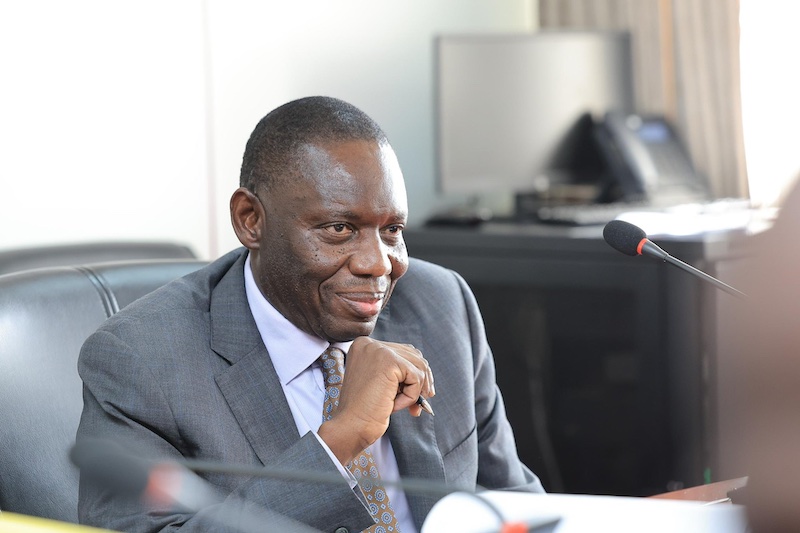
‎Andrew Kawere, BoU Director of the National Payments Systems Department, says the caps were informed by a survey that showed that the numbers of people using the affected means of cash withdraw were dropping, with over the counter transactions accounting for just about 20 percent of the total. ‎
‎However, he says that in terms of volumes, they still account for up to 60 percent. ‎He explains that this is not aimed at limiting public or business access to liquidity or limit money movement since the other channels: digital or electronic, remain in use with no limitations to the sums involved.
‎The regulator has provided for situations where a customer has an express need to withdraw more than the set cap. ‎The Bank of Uganda has issued guidance to the financial institutions on how to handle exceptional waivers to the limits. “If you need to withdrawal cash above the limit, please contact your bank for guidance,†it says.
‎‎The banks will also determine risk levels regarding individual customers and lower the limits. They are required to develop customer risk profiles as part of their internal risk management frameworks. Based on these profiles, a financial institution may set customer-specific withdrawal limits that are lower than the BoU ceiling.
‎The other options that BoU is urging the public to utilise include the Real Time Gross Settlement System (RTGS), Electronic Funds Transfer (EFT), Mobile Money, and Digital Banking options.
‎Kawere says they will use the six months to sensitise the public about these options, the risks involved and how to avoid them.‎ ‎Many Ugandans are still cautious about using some electronic channels for some transactions, as they worry over the safety of their funds. ‎‎Kawere, however, says that the platforms are safe for as long as the user projects their bio data and especially the passwords or personal identification numbers (pin).
‎According to the set guidelines, customers who have multiple accounts and have the need to withdraw above the ceiling, can take advantage of this. The limitations are on individual accounts not the account holder. This means, therefore, that a customer can withdraw amounts from the various accounts provided the amounts withdrawn at each account does not go beyond the ceiling.
‎The Uganda Bankers Association says it welcomes this development as it enhances safety and security of funds. It is also expected that it will reduce their operating costs. ‎The high cost of electronic transactions, especially between the bank and mobile money wallets, is one of the major hindrances to the growth of digital money.
‎Mobile money companies have recently been pushing for government intervention, including reduction on taxes or sharing of the levies between the mobile money platforms and the bank, to ensure a reduction in costs which are usually transfered to the customers.
‎BoU says that the limits introduced on over-the-counter transactions will lead to increased digital transactions. This will in turn lead to a reduction in transaction costs as a result of the economies of scale.
‎BoU’s National E-Payments Strategy (2021-2026) and related efforts like the National Switch concepts and shared infrastructure, target high costs stemming from limited interoperability, which forces duplicative systems and raises settlement expenses passed to customers. Greater interoperability and public-private partnerships are emphasized to reduce these frictions and support affordability-URN.


 Starlink goes live in Uganda; price comparisons against MTN, Airtel
Ultimate Uganda
Starlink goes live in Uganda; price comparisons against MTN, Airtel
Ultimate Uganda
 NSSF sets September 24 for Annual Members Meeting as savers await interest rate declaration
Ultimate Uganda
NSSF sets September 24 for Annual Members Meeting as savers await interest rate declaration
Ultimate Uganda
 Boda boda riders launch e-commerce, digital loans platform
Ultimate Uganda
Boda boda riders launch e-commerce, digital loans platform
Ultimate Uganda
 Rwanda: We Cannot Sit and Watch As Illicit Alcohol Kills People - Kagame
Ultimate Uganda
Rwanda: We Cannot Sit and Watch As Illicit Alcohol Kills People - Kagame
Ultimate Uganda
0 Comments