
EC Receives Sh56 Billion For Long-Awaited LC1, LC2 Elections
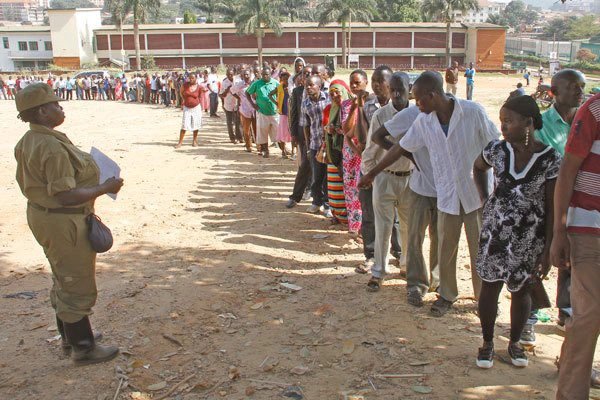

The Electoral Commission (EC) has received Sh56 billion from the Ministry of Finance to facilitate the long-awaited Local Council One (LC1), Local Council Two (LC2), and Village Women Council elections across Uganda.
The Ministry of Finance Deputy Secretary to the Treasury, Patrick Ocailap, confirmed that the funds were released on June 12, clearing the way for the Electoral Commission to commence preparations for the grassroots elections.
Ocailap said the required funds had been released and that the next step now lies with the Electoral Commission to organize the elections.
EC Secretary Richard Kamugisha also confirmed receipt of the funds, noting that the commission is now set to determine the election dates.
Kamugisha said the funds had reflected on the commission’s system and that preparations were underway to fix the dates for the elections. He explained that the Electoral Commission had initially planned to conduct the elections in March but was unable to proceed due to lack of funding.
EC Chairperson Justice Simon Byabakama said the commission has long been prepared to conduct the elections and that lack of funding was the only obstacle delaying the exercise. He noted that election dates would be announced soon because the commission had already completed the necessary preparations.
The release of the funds is expected to end months of uncertainty surrounding the elections, which have been postponed several times despite concerns over governance gaps at the village and parish levels.
The current LC1 and LC2 leaders were elected in 2018, and their five-year term expired in 2023. Since then, Parliament has extended their tenure six times through six-month extensions.
Uganda has more than 71,000 villages, with LC1 leaders serving as the first point of contact between citizens and government. They play a critical role in resolving land and family disputes, mobilizing communities for government programmes, supporting local security efforts, and certifying residents for various public services.
Members of Parliament have repeatedly expressed concern over the delays, warning that prolonged extensions undermine the legitimacy of grassroots leadership structures. Kiboga East MP Keefa Kiwanuka recently raised the matter in Parliament, noting that local leaders perform essential functions in communities, including handling domestic violence cases, resolving disputes, mobilizing residents, and supporting intelligence and security operations.
The Electoral Commission has announced plans to recruit approximately 142,500 temporary polling officials to support voter register display, voter verification, crowd management, polling procedures, and vote tallying. The recruitment exercise is expected to provide short-term employment opportunities for thousands of Ugandans, particularly young people and unemployed individuals who have previously participated in election-related activities.
Kamugisha defended the cost of the elections, explaining that the exercise involves several activities beyond the lining-up voting method commonly associated with LC elections. These activities include compiling and printing village voter registers, displaying and cleaning the registers, recruiting polling officials, and facilitating electoral operations in all villages across the country.
With funding now secured, attention now turns to the Electoral Commission as Ugandans await the official election roadmap and polling dates for the long-overdue grassroots elections.


 Government will not gazette Kijanangoma as King of Tooro for now - Attorney General insists
Ultimate Uganda
Government will not gazette Kijanangoma as King of Tooro for now - Attorney General insists
Ultimate Uganda
 King Oyo’s Body to Arrive Thursday
Ultimate Uganda
King Oyo’s Body to Arrive Thursday
Ultimate Uganda
 Besigye, Lukwago expected to meet Gen. Salim Saleh today at Kapeeke
Ultimate Uganda
Besigye, Lukwago expected to meet Gen. Salim Saleh today at Kapeeke
Ultimate Uganda
 Rwabwogo Advised to ‘Eat His Bishop’ As MK Prepares to Enter State H’se: PREZ MUSEVENI ON HIS WAY OUT
Ultimate Uganda
Rwabwogo Advised to ‘Eat His Bishop’ As MK Prepares to Enter State H’se: PREZ MUSEVENI ON HIS WAY OUT
Ultimate Uganda
0 Comments