
South Africa prepares for potential Ebola outbreak
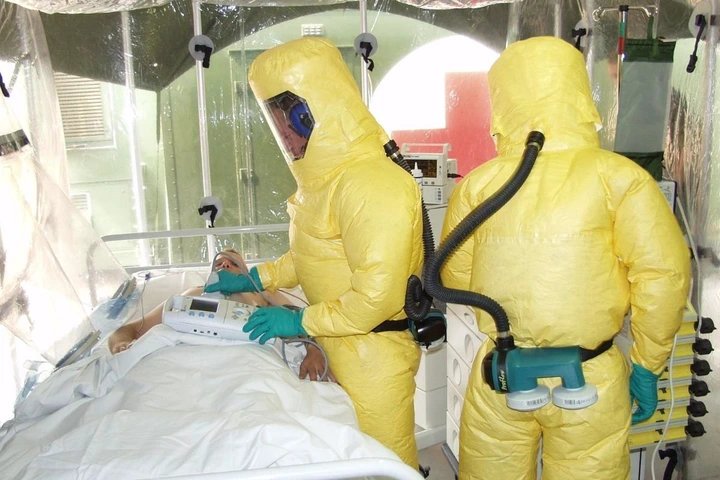

South Africa's Ministry of Health is scaling up readiness interventions to handle any potential Ebola outbreak. Image: Pixabay.
The South African Ministry of Health is ramping up measures in the case of an Ebola outbreak in South Africa.
Measures include identifying both private and public hospitals that can be used in the event of an outbreak, as well as setting up three committees.
Additionally, the Port Health Authority has been transferred from the Department of Health to the Border Management Committee. They are reportedly screening people as they enter the country.
This came to light in a recent interview conducted by eNCA with Minister of Health Aaron Motsoaledi.
On May 16, 2026, the World Health Organisation (WHO) reported eight laboratory-confirmed cases, 246 suspected cases and 80 suspected deaths in the Democratic Republic of the Congo (DRC).
They also found two laboratory-confirmed cases in Kampala, Uganda.
The WHO determined that the outbreak is caused by the Bundibugyo species of the Ebola virus.
On 17 May 2026, the WHO Director-General determined that the outbreak constitutes a public health emergency of international concern (PHEIC).
In figures published in UN News, the WHO’s representative to the DRC, Dr Anne Ancia, said that the number of confirmed cases has since risen to 1 561 confirmed cases.
Speaking about the DRC outbreak, she notes that it is yet to stabilise. She goes on to confirm that authorities have so far reported 506 deaths.
There are currently no approved Bundibugyo virus-specific therapeutics or vaccines, according to the WHO.
Why South Africa should fear Ebola
The DRC and South Africa have daily flights between the two countries.
Additionally, South Africa has a large enough number of migrants from the DRC that President Ramaphosa reportedly called it “one of the key issues discussed†during a bilateral meeting between the two countries on July 2, 2026.
Although this was in response to the recent migrant protests in South Africa, it does highlight the fact that the movement of people into South Africa from the DRC occurs at a level that warrants presidential action.
The potential for Ebola to enter South Africa – a disease that can kill between 25% and 90% of people who become infected, according to Doctors Without Borders – requires obvious action by the government.
Current measures in place
Health Minister Motsoaledi’s measures include selecting 12 private hospitals and 24 public hospitals. These are set for use in the event of an outbreak.
In the eNCA interview mentioned above, he named three committees. These are the Hospital Readiness Committee, the Incident Management Team, and the Public Health Emergency Preparedness Team.
They also report that they will screen people entering South Africa at various ports of entry.
Additionally, the National Institute for Communicable Diseases operates the only suit biosafety level 4 facility on the continent.
According to the centre, this “places it both strategically and critically in a position to assist in response to highly dangerous emerging and re-emerging zoonotic pathogens.â€
Ebola is one such pathogen.


 DRC opposition urges Tshisekedi to abandon constitutional changes
Ultimate Uganda
DRC opposition urges Tshisekedi to abandon constitutional changes
Ultimate Uganda
 US military transport plane lands in Moscow
Ultimate Uganda
US military transport plane lands in Moscow
Ultimate Uganda
 Putin puppet slaps UK with terrifying 2-word warning over drone factories
Ultimate Uganda
Putin puppet slaps UK with terrifying 2-word warning over drone factories
Ultimate Uganda
 China develops hypersonic weapon to hunt US command aircraft thousands of miles away
Ultimate Uganda
China develops hypersonic weapon to hunt US command aircraft thousands of miles away
Ultimate Uganda
0 Comments